THE ART OF CERAMICS IN GUBBIO
Many production activities, more than relying on the hydraulic energy derived from the waters of the Camignano River, required thermal energy obtained from the use of fire; this is particularly true for the crafts of potters and blacksmiths. The earliest written documentation of pottery in Gubbio dates back to the 12th century, but the presence of numerous ceramic artifacts and remnants of ancient kilns attests to a widely practiced tradition in the area since the Bronze Age. The reason for this can undoubtedly be traced back to the high quality of the local clays, which were marly and rich in limestone and iron oxide; the best deposits were located in the lower part of the Eugubian basin, along the Saonda River. Manufacturing activity gained significant momentum starting in the mid-15th century, when numerous local potters were joined by foreign masters from other important centres of ceramics, resulting in interesting cross-pollinations of styles and techniques.
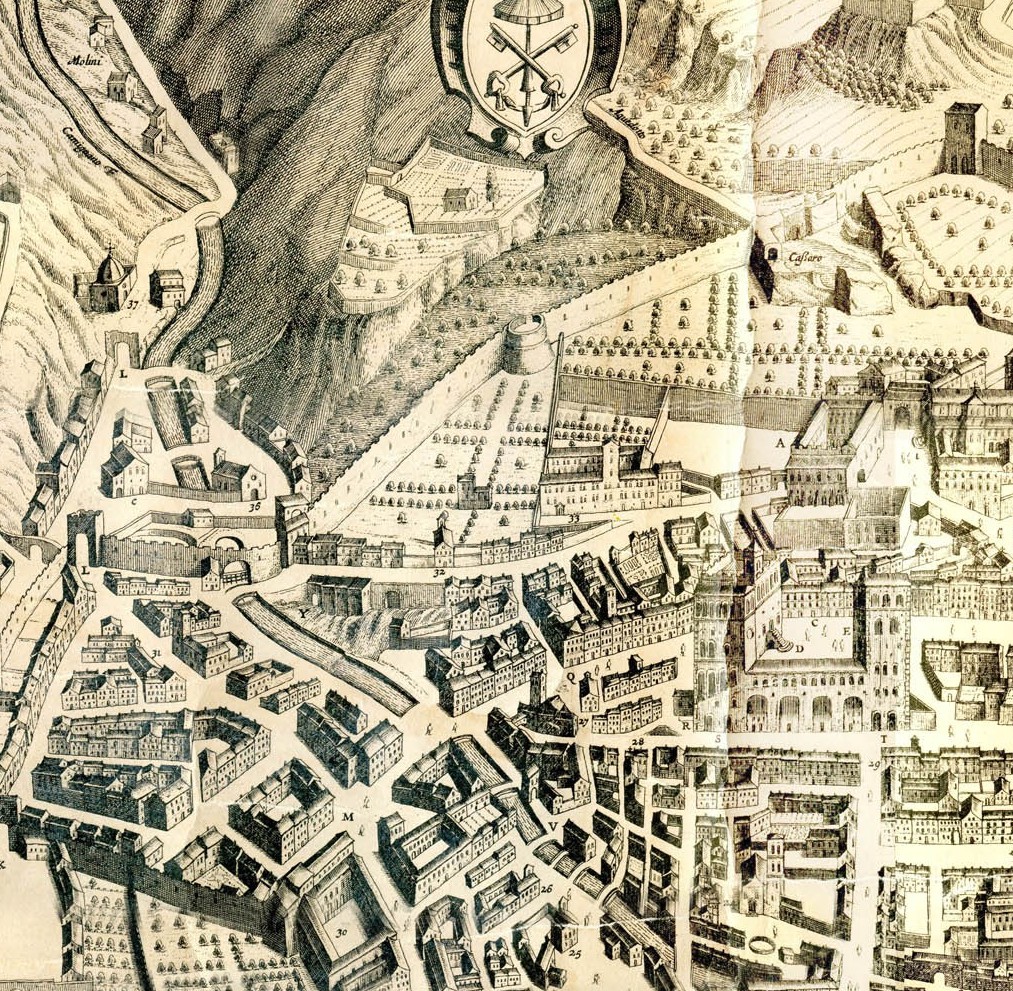
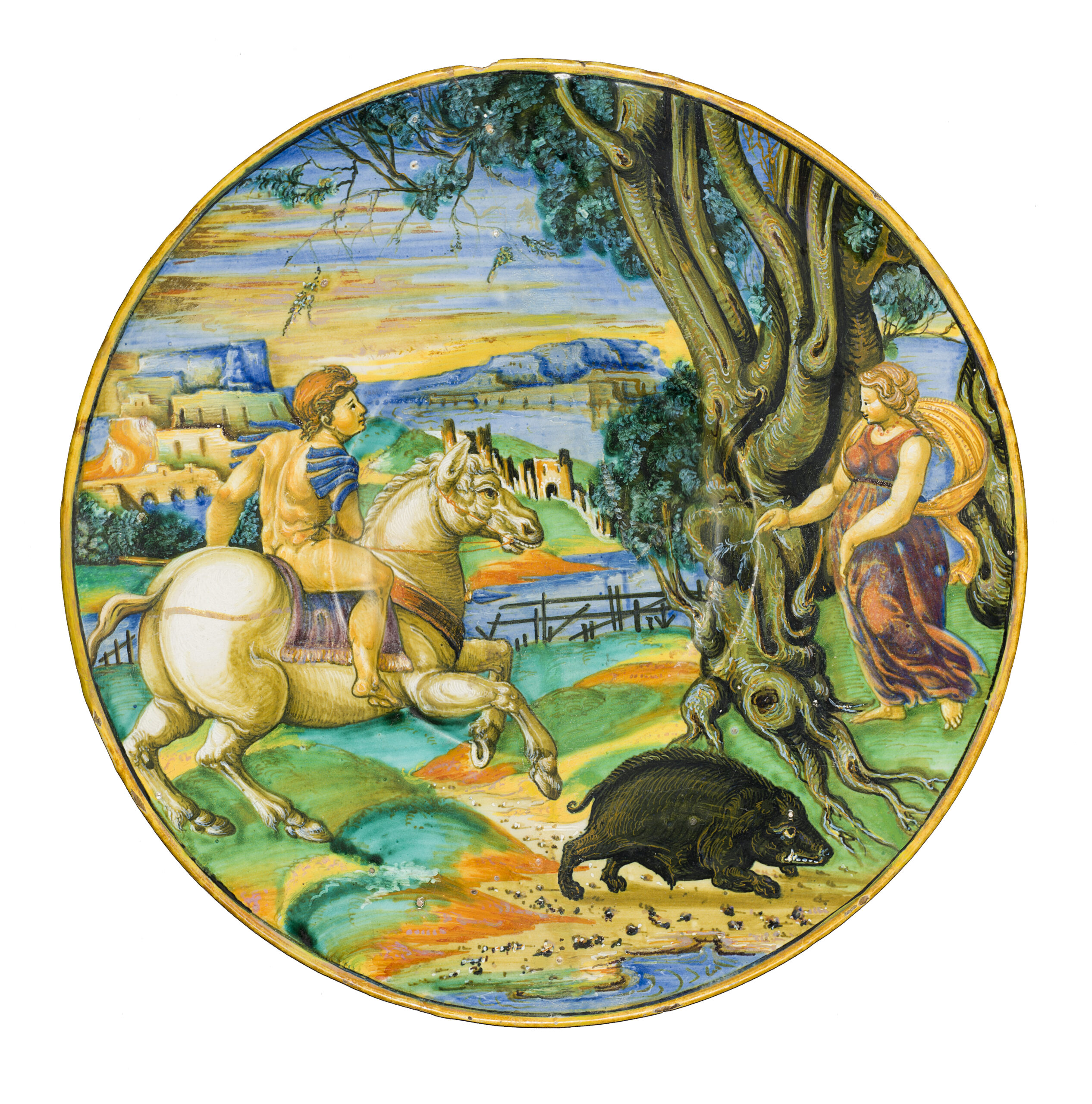
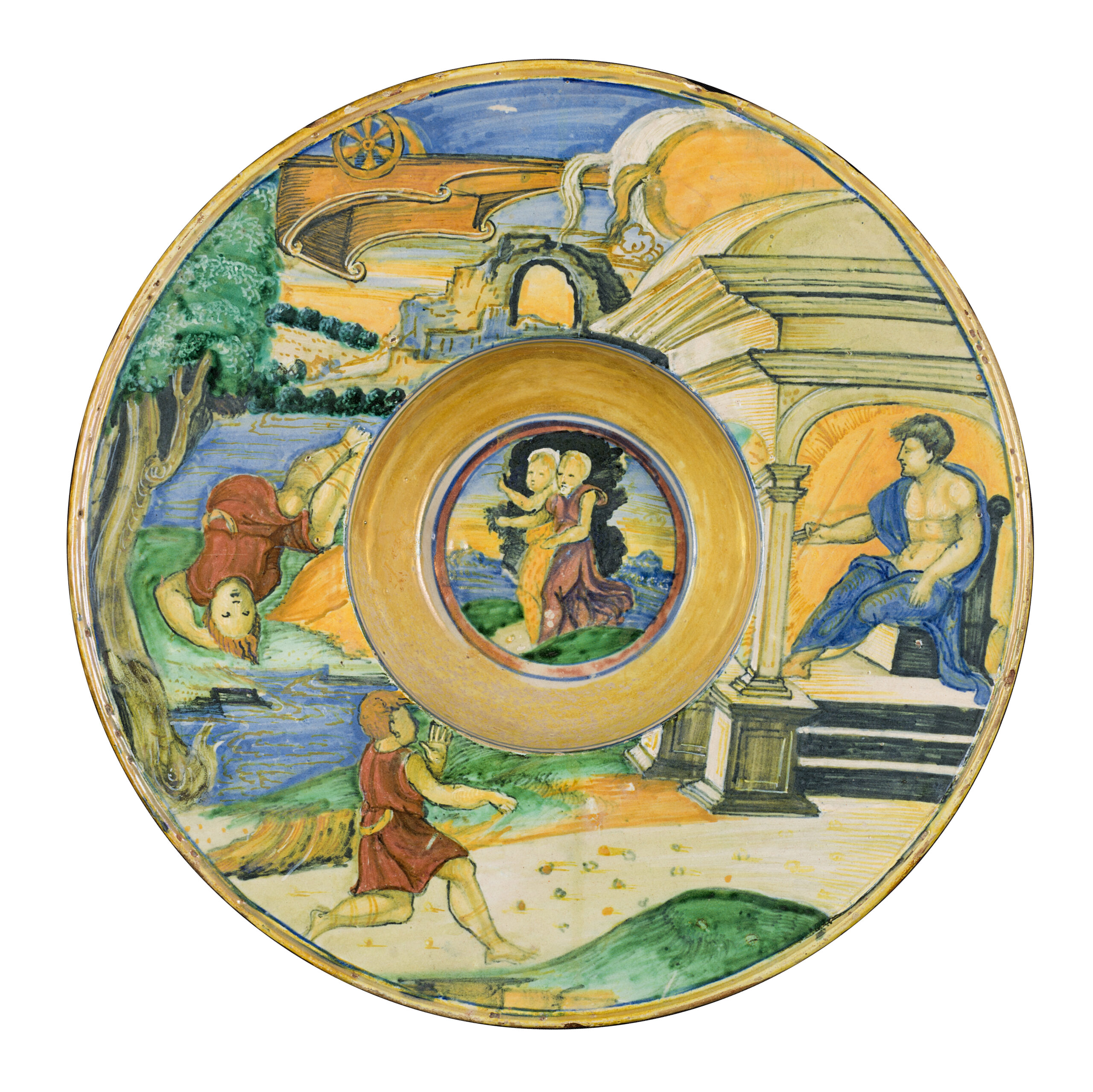
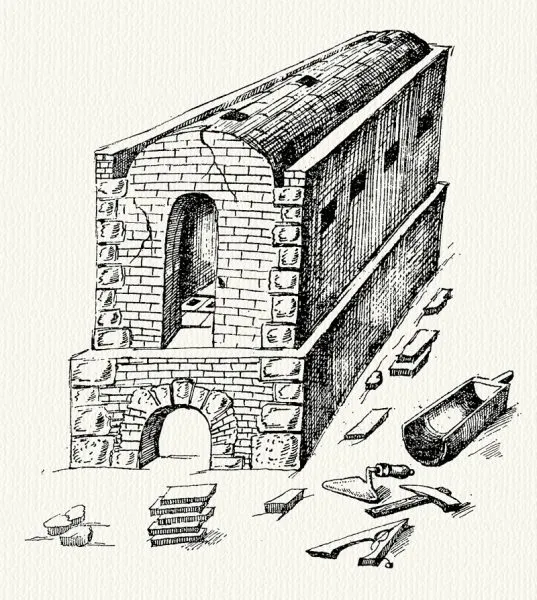
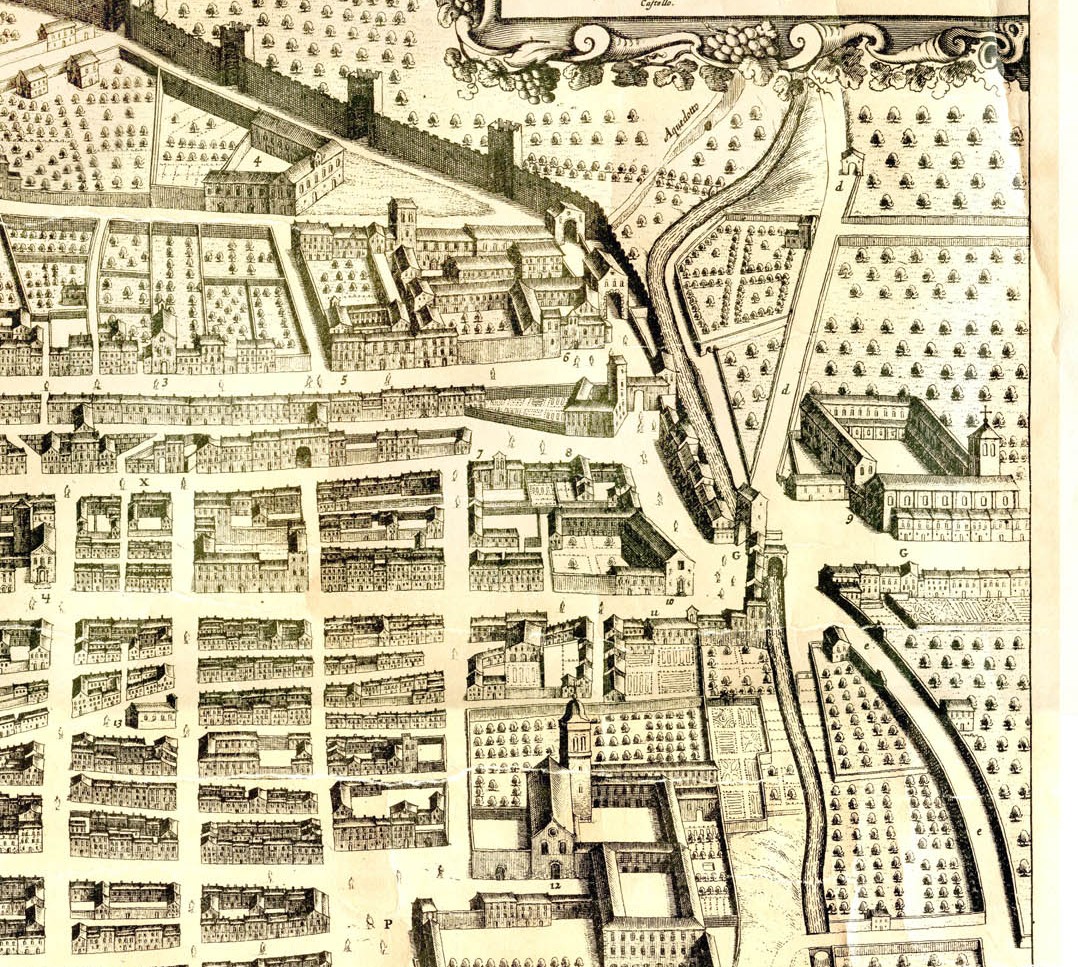
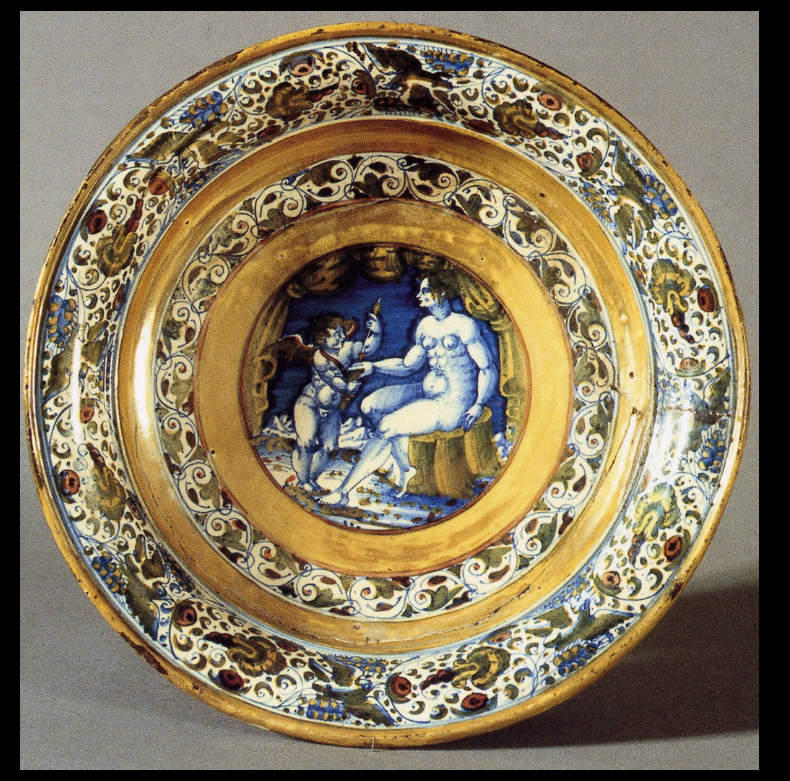
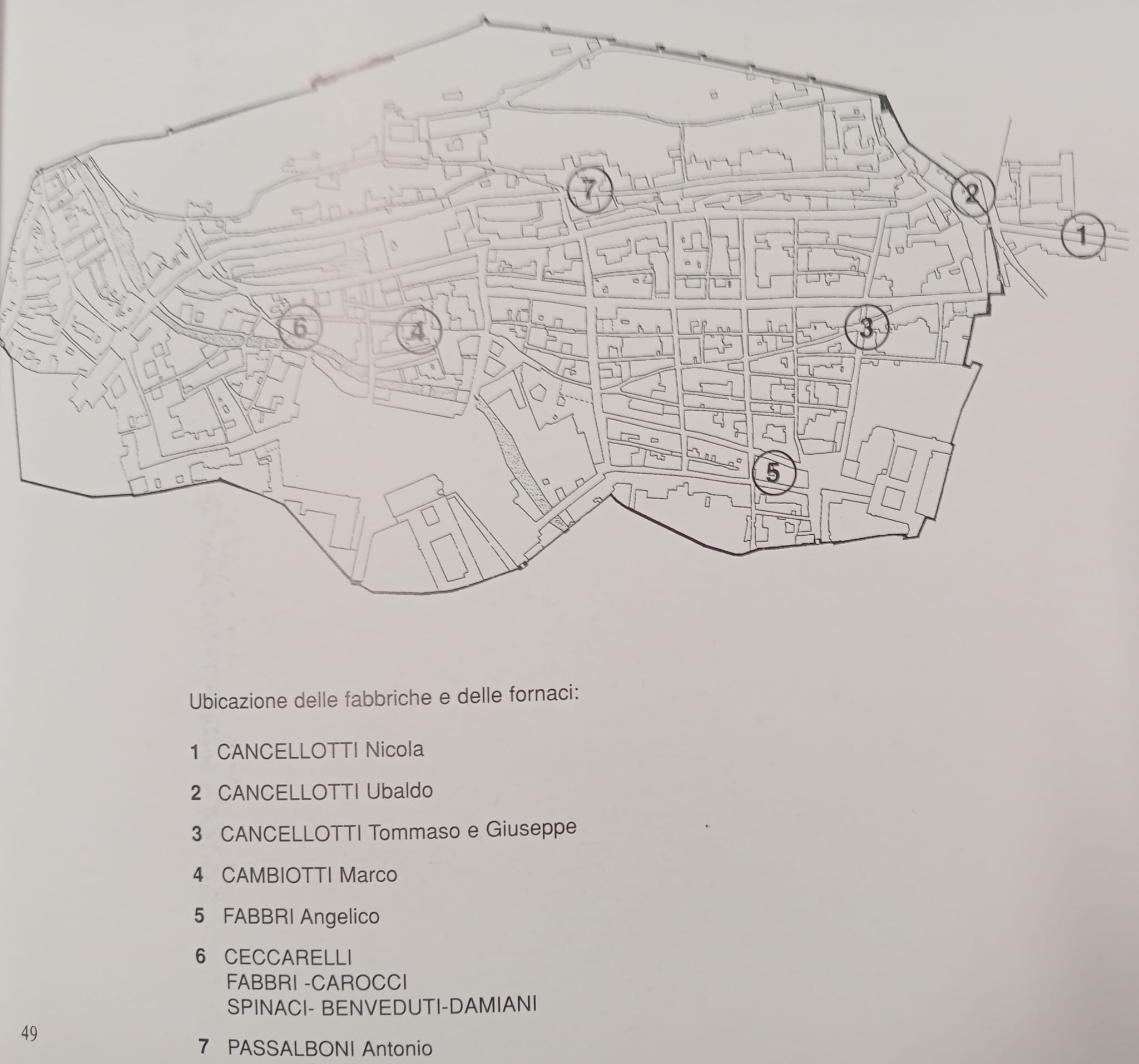
By the late 15th century, one of the prominent potters in Gubbio was certainly Giacomo di Paoluccio, owner of a prestigious workshop located in the St. Giuliano district along Via della Ripa, close to the city walls (photo 1). Paoluccio’s workshop was well-known and frequented by prestigious clients, and the technique of luster glazing was already practiced there at the time. It was here that Master Giorgio Andreoli began his work in Gubbio; a native of Intra on Lake Maggiore, he, along with his brothers Salimbene and Giovanni, formed a partnership with Paoluccio for the production of tableware while awaiting citizenship. It is likely that it was in this workshop that Master Giorgio learned the technique of metallic luster, of Arab origin, known at the time as “Maiolica,” which he would later interpret masterfully. His production is renowned for the use of ruby red luster, but he also experimented with other tones: gold yellow, tawny, silver, and metallic green. Recent nanotechnological research on the chemical composition of the luster layer present on the artifacts from his workshop has revealed the presence of bismuth, a chemical element known as “testum argenti,” which, when in contact with layers of silver, indicated its presence in the rocks; its use in the luster color-making process, as a substitute for real silver, allowed ceramists to significantly reduce production costs. Simultaneously, the use of bismuth, as an important distinctive marker of Master Giorgio’s production, enables scholars to distinguish Italian Renaissance luster ware from the Hispano-Moresque ceramics from which it was derived, that lack this element. His workshop was also famous for the production of painted maiolicas, for which he often collaborated with skilled painters of the time, primarily from Urbino and Casteldurante (now Urbania) (photos 2, 3). The legacy of Master Giorgio was carried on directly by his sons Ubaldo and Vincenzo; it was in the workshop of Gubbio of the latter, known as “Mastro Cencio,” that Cipriano Piccolpasso went to describe in his manuscript on the art of pottery the process for obtaining red luster (photo 4). Master Giorgio had his home and workshop in the St. Andrea district, near the area of the Bishop’s residence, close to the city walls; today, a small square in that area is named after him. The production of ceramic tableware required kilns that emitted fumes and could pose a fire hazard. For this reason, since 1349, there has been a consular regulation in Gubbio prohibiting anyone from owning kilns for firing pottery in their homes; hence the decision to establish zones outside the city or near the city walls to organize workshops and kilns. From the mid-14th century, a “burgus fornaciariorum” is documented outside the S. Agostino gate, adjacent to the walls of the eponymous church and convent of the hermits, in the eastern part of the city at the foot of Mount Ansciano (photo 5). The choice of this location to the east of the city was not random, but linked to the presence of the Cavarello stream, which was intended to collect all the runoff water from the city; contaminated waters not destined for the supply of the city’s fountains. In the Borgo, the kilns, workshops, and homes of the Floris or De Floribus and the Traversi were located, two dynasties of Eugubian ceramists and potters who, along with the Andreolis, were protagonists of the golden age of local ceramics; in particular, the Floris workshop was active for seven generations, from the first half of the 15th century to the mid-17th century, and within it, other professions such as blacksmithing specialized. Notable figures in their ceramic production included Vittorio di Filippo, known as il Prestino, Sabatino di Giovanni, and Filippo di Sabatino, who maintained relationships with other local workshops, such as that of Master Giorgio, and nearby areas such as S. Sepolcro, Urbino, Casteldurante, and Deruta. Thanks to the abundant archival documentation related to the commissions received by the aforementioned workshops, we can outline the typical production of an Eugubian potter of the time; alongside various household wares, we find pharmaceutical ware linked to the presence of numerous apothecaries associated with the municipal administration, monasteries, and confraternities, as well as arts and guilds. Equally important was the production of bricks (tiles, flat tiles, bricks) and terracotta tubes used for creating drains or conduits in ancient homes. The Floris also distinguished themselves in the production of prestigious luster ceramics, with the figure of il Prestino likely being one of the last masters in Gubbio (photo 6). Continuing down Via Dante and a short stretch of Corso Garibaldi, one reaches on the left, through Via Armanni, the St. Pietro district, where near the church of the same name, at the little gardens, was the home of Angelico Fabbri; a chemist-pharmacist as well as an influential politician, Fabbri is credited with having initiated the rediscovery of luster maiolica in Gubbio in the mid-19th century. The strong demand from foreign collectors and antiquarians for luster maiolica from the workshop of Master Giorgio Andreoli was undoubtedly decisive in this regard. Fabbri, the author of the publication “Come si ottengono i lustri ad iride,” continued his experiments with the young Luigi Carocci, a chemist who later dedicated himself to perfecting the luster technique at the ceramic factory of Luigi Ceccarelli, located near the Abbondanza, along the Camignano stream. Bibliographic sources have highlighted the prominent role of the Ceccarelli factory in the refinement of metallic iridescent glazes (photo 7). Further refinement of Eugubian lusters occurred, from around 1865, in the factory directed by Giovanni Spinaci, who seems to have learned the secret of this craft from Carocci. Starting in the early 1980s, the ceramic establishment of Antonio Passalboni was also active, producing characteristic plates with intense lusters and refined relief decorations. Reflective maiolicas, but also and above all in polychrome, were produced until the early 20th century by Giuseppe Magni, who was for a long time a drawing teacher in the technical schools of Gubbio.
The St. Pietro district is also noteworthy for being the area where the blacksmith Ubaldo Petrini, known as “Giurancavallo,” operated in the 18th century; a figure recognized from documentary sources as well as through the memories of other blacksmiths from more recent times; a nearly mythical character, it is said that he had the habit of going to Mount Ingino to seek herbs for use in ironworking. Giurancavallo was the trusted blacksmith of the Olivetan Monks of St. Pietro, for whom he supplied nails, locks, fastenings, balustrades, as well as the iron framework for the church of St. Pietro, which we can still admire inside the building.