Gubbio is one of the most significant cities in the life of Francis, particularly for his flight from Assisi and the episode of the encounter with the Wolf. The city and the surrounding territory bear vivid traces of his passage, of his incredible ability to build relationships and connections. Through its most meaningful places, along an imaginary itinerary, one can retrace the roads, the countryside, and the settlements that witnessed Francis’s presence and that, in the following years, celebrated his revolutionary imprint. Eight places for eight stories that guide us along the traces of Saint Francis.
BISCINA – In the Chiascio Valley, nestled among wooded slopes, lies Biscina. The castle once cost Guidubaldo da Montefeltro his freedom; he was ransomed from captivity at the end of the fifteenth century for one hundred thousand ducats and two castles, one of which was Biscina itself. Once the fief of the Counts of Coccorano, the fortress lies between Gubbio, Perugia, and Assisi. Perched on a gentle hill and surrounded by vegetation, the imposing structure has dominated the Chiascio Valley since the twelfth century. Having passed through various owners—including the Montefeltro, lords of Gubbio in the fifteenth century—it stands today in all its monumentality, notable for the impressive size of the entire complex, solemn and impregnable, distinguished by a magnificent Guelph-style crenellated tower. Entering the courtyard through the main gate, one can identify the keep, set at an angle and projecting outward from the flanking buildings. The history of Biscina (photo 1), already in the time of Francis, is tied to numerous rulers: the structure was coveted by many because it offered an extraordinary vantage point for detecting and repelling enemy attacks. Today, it houses an agritourism establishment.
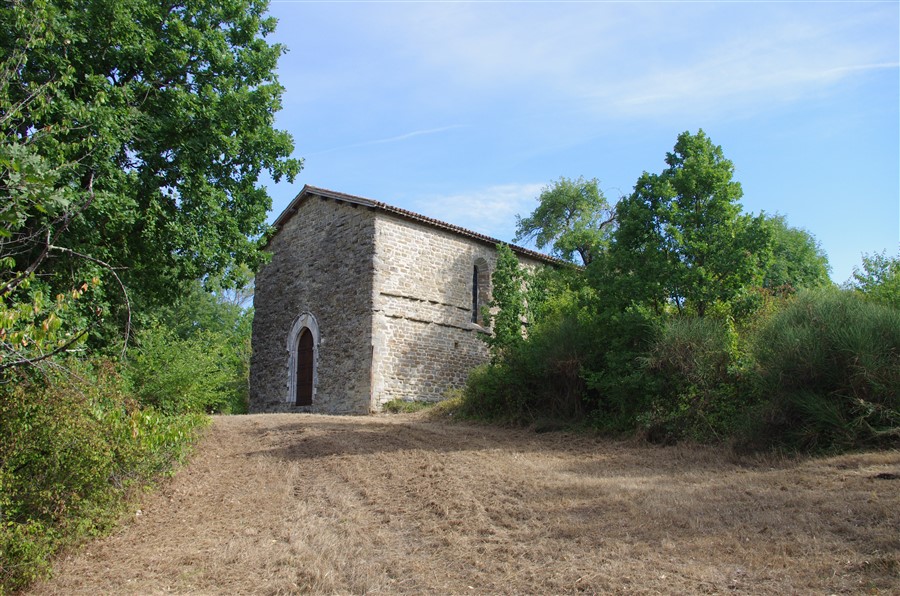
CAPRIGNONE – On the ruins of a church dating back to the late eleventh century and of a pagan temple located north of today’s Pieve di Caprignone (photo 2), the Franciscans rebuilt a larger church and a small cenobium, which, already at the time of its foundation, became part of the custody of Gubbio. Of the two structures, the small church is still visible today, while from the few remains of the monastery one can make out the orientation and size of the building. There are several theories regarding the origin of the name Caprignone: one proposes a pagan meaning tied to the Lombard tradition of sacrificing a goat; another refers to the temple of the deity Cupra. The absence of decoration, the unified space outlined by bare surfaces, and the use of local materials are emblematic of Franciscan essentiality and of the mendicant stylistic canons typical of the religious architecture of central Italy in that period. It is said that the small church hosted in 1223 the first chapter of the Franciscan Order to be convened outside Assisi.
SAN PIETRO IN VIGNETO – Walking along a dirt road full of cobblestones, one encounters the Benedictine monastery of San Pietro in Vigneto (photo 3). The abbey, located along the municipal road that in the thirteenth century connected Assisi to Gubbio, looked more like a fortification than a religious building. Constructed by the Benedictines using materials recovered from the ruins of a pagan temple dedicated to Mars Cyprius, it was a perfect refuge for pilgrims who, exhausted from travel and hunger, would spot it from the valley below and find hospitality from the monks of Montelabate. The small church, which preserves fifteenth-century frescoes inside, blends completely with the other structures of the complex, restored in the 1990s. For more than two centuries, the enormous structure was inhabited by a single monk, until its annexation to the Chapter of the Canons of Gubbio in 1463. Even today San Pietro in Vigneto is inhabited. In recent years, the hermitage has been restored and revitalized by the hermit Father Basilio Martin, who for a long time offered spiritual assistance to pilgrims stopping there to pray.
ABBAY OF VALLINGEGNO – The fascinating Benedictine abbey of San Verecondo di Spissis stands on the hill of Vallingegno and is mentioned in documents beginning in the twelfth century. Verecondo was a young Gallic knight who converted to Christianity and was martyred in the seventh century. The church—one of the largest in the area—the monastery, and the bell gable, erected on the wall of the tower, form the complex that stands today. Many events in Francis’s life are linked to this imposing structure, visible even from afar. A widely accepted reconstruction identifies the abbey as the place where Francis sought refuge after being attacked near Caprignone. The welcome from the prior was far from warm: the monks found themselves facing a dirty, shivering, tattered beggar and assigned him scullery duties. “He asks for alms like a beggar and receives it like a contemptible stranger,” writes Saint Bonaventure. Years later, when Francis’s fame had spread throughout the region, the prior returned to ask his forgiveness. Thus, during his frequent journeys toward La Verna, Francis often received hospitality at Vallingegno. It is also told that in the monastery stable, Francis was moved to tears by the death of a little lamb killed by the bite of a cruel sow. The saint could not forgive the animal and cursed it; the sow died three days later after much suffering. Near the abbey, surrounded by a defensive wall and reinforced by outworks, stands the castle of Vallingegno, probably built around the eleventh century. At the center of the complex rises a tower about 20 meters high, once used as a military garrison; on the outer sides stand two smaller towers. Today the castle is privately owned.
SAN FRANCESCO DELLA PACE – Built in the first half of the 1600s on the site where, according to tradition, the Wolf of Gubbio lived until its death, the Church of San Francesco della Pace (photo 5) is located in Via Savelli and is still under the care of the University of Masons and Stonemasons, the guild responsible for its construction. Inside, one can see the stone—now used as an altar table—on which, according to tradition, Francis preached to the people of Gubbio and sealed the pact between them and the wolf. Inscribed upon it are the words: “Having with the humbled holy cross tamed outside Gubbio that wolf who devoured men and beasts, to the amazement of the people he led her here, and upon this stone, preaching, he had her give her pledge with her paw, with the agreement that she cause no further harm and with the promise that the city nourish her, so that she then dwelled obedient in the nearby cave.” Also preserved inside are the Ceri mezzani and the small statues of St. Ubaldo, St. George, and St. Anthony, placed atop the Ceri in the famous festival of May 15. The painting depicting the Madonna and Child with Saints is by Giovanni B. Michelini of Foligno.
CHURCH OF SAN FRANCESCO – Among the first churches dedicated to the Poor Man of Assisi is the Gubbio church of San Francesco, built on part of the property of the Spadalonga family. The exact starting date of the construction of the church and the attached convent is unknown, but the building was strongly desired by the people of Gubbio soon after the saint’s death, as a sign of their profound bond and devotion to him. The Church of San Francesco of Gubbio (photo 6) stands out immediately for its grandeur—one of the largest in Umbria—and for its elegant architecture. The basilica structure with three naves is built on the outside with blocks of white and pink stone, which glow with rare brightness on sunny days, while inside the octagonal pillars and the fresco cycles of the apse do not detract from the overall sobriety typical of Franciscan churches. The left chapel houses one of the most important late-Gothic fresco cycles in Umbria: a work by Ottaviano Nelli, executed between 1408 and 1413 and dedicated to the Virgin. In the right chapel are the remains of the ancient warehouse where, according to tradition, the “rediscovered” friend Spadalonga clothed Francis in his first habit—the simple garment of the Order that would spread throughout the world along with the message of the Poor Man of Assisi. Next to the church stands a large convent which, due to its size, is known as Centocelle (“One Hundred Cells”).
CHURCH OF LA VITTORINA – Tradition holds that here the Saint of Assisi tamed, with the sign of the cross, the fierce wolf that terrified the inhabitants of the Gubbio countryside around 1222. The miraculous episode narrated in the Fioretti is one of the most famous in the world, and its historical authenticity has long been debated. It is possible that the wolf—or she-wolf—was a metaphor for a bandit reconciled with the city through Francis, but many scholars affirm it was a real animal. When he first arrived in Gubbio, the friar from Assisi had no fixed residence; only in 1213 did Blessed Villano, the city’s bishop, grant the friars permission to establish a residence in the ancient church of Santa Maria della Vittoria. The original construction of the little church is believed to date back to the ninth century, at the spot where the people of Gubbio had defeated the Saracens. For this reason, it was called Vittorina (photo 7). Inside, the walls of the single nave were enriched in the fifteenth century with fresco decorations, while the fourteen small paintings depicting stories of the Virgin date back to the seventeenth century.
CHURCH OF SAN BENEDETTO VECCHIO – In the hills, far from the town of Pietralunga, the pilgrim comes upon the abbey of San Benedetto Vecchio (photo 8). Dating back to the eleventh century, it was founded by the hermit monk and doctor of the Church, Saint Peter Damian. Due to the many alterations it has undergone, the basilica structure no longer preserves its original appearance, of which only the sculpted decorations of the cornices above the pillars remain. In the fourteenth century, the municipality of Gubbio built a fortified tower there, which served as a small military garrison. In 1451 the abbey was granted in commendam and transformed into a parish. It is believed that Saint Francis passed through the abbey of San Benedetto di Podio. In fact, Father Luke Wadding, in his Annals, Vol. I, folio 280, writes that the Seraphic Father, returning from La Verna in 1224, traveled through Gubbio, and that the municipal road that at that time led from La Verna and Città di Castello to Gubbio passed by Pietralunga and San Benedetto Vecchio, where stood the monastery of San Benedetto—one of the most flourishing in the territory of Gubbio—and two hospices near the rivers: one in the village of San Benedetto Vecchio called de Massis, and the other in the parish of Loreto, which still bears the name Ospitaletto.
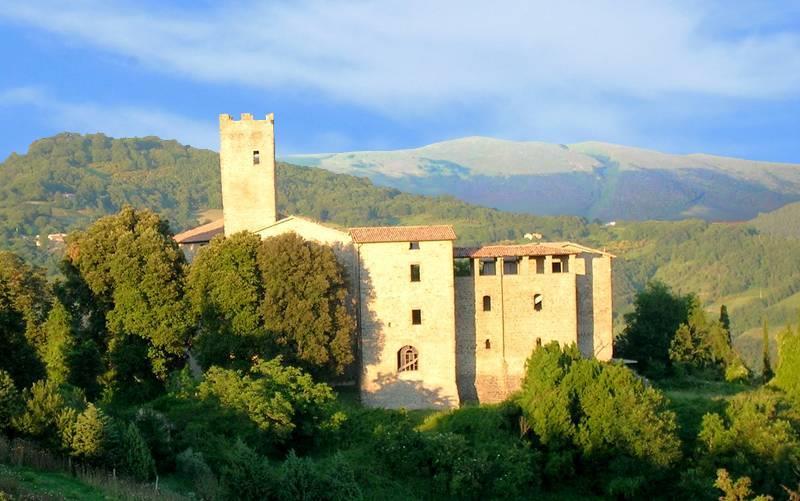
FOTO 1 BISCINA
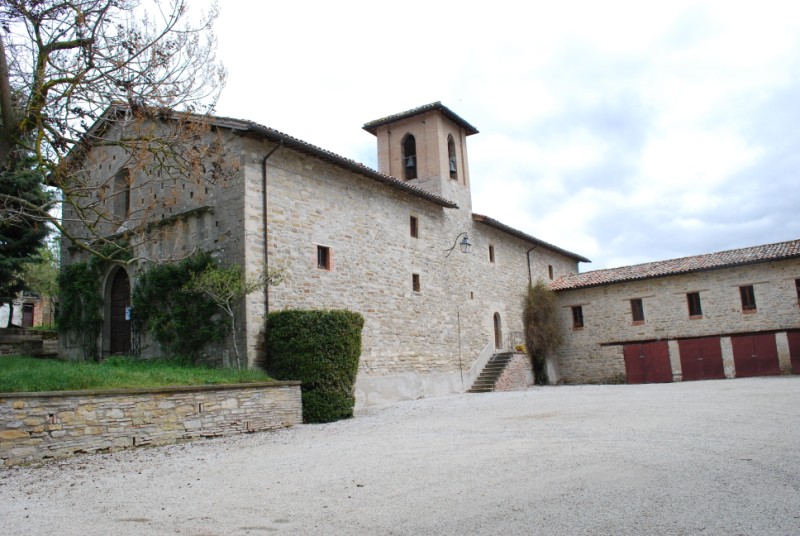
San Benedetto Vecchio, foto 8
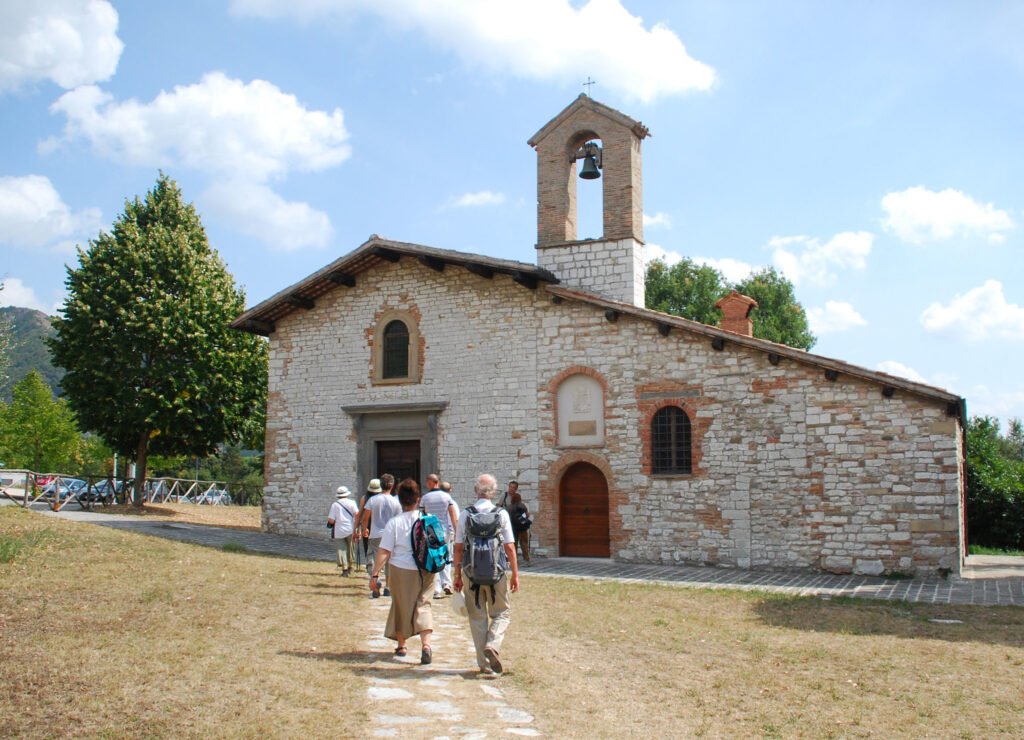
FOTO 7 VITTORINA
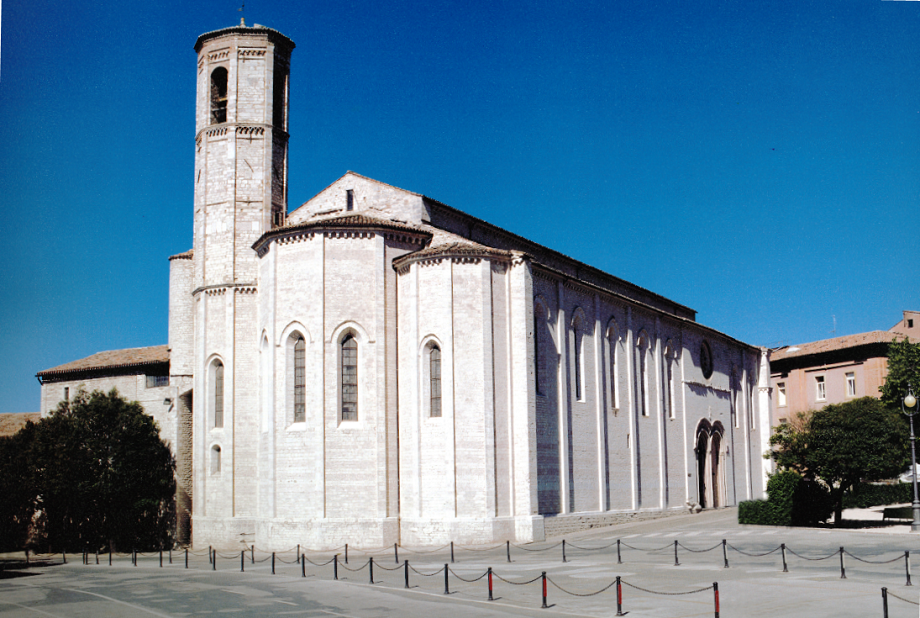
FOTO 6 CHIESA DI SAN FRANCESCO
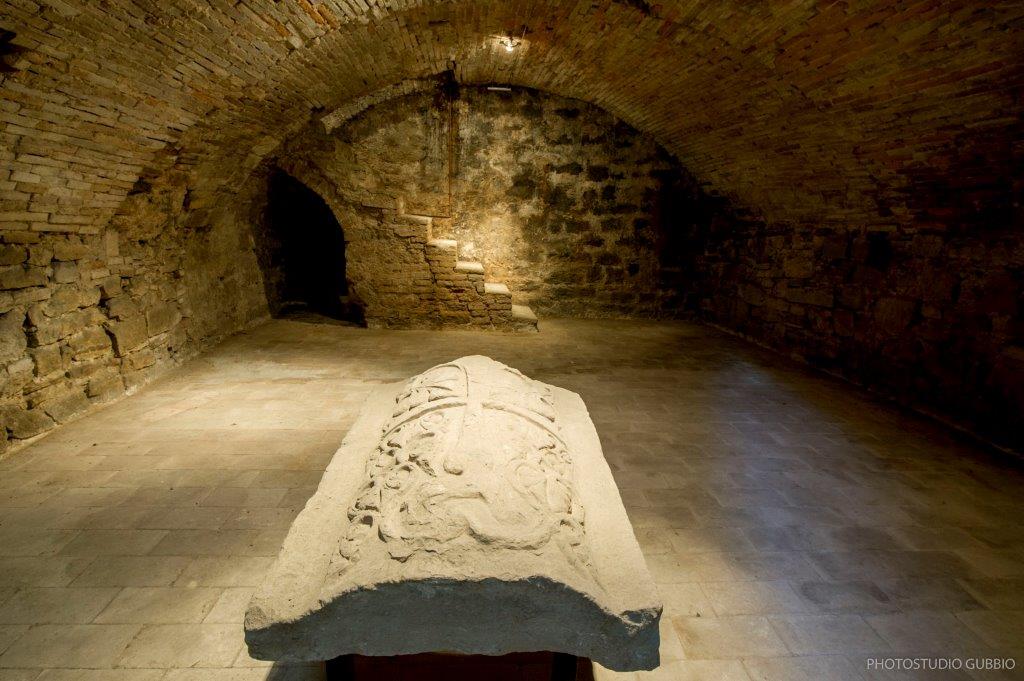
FOTO 5 SAN FRANCESCO DELLA PACE
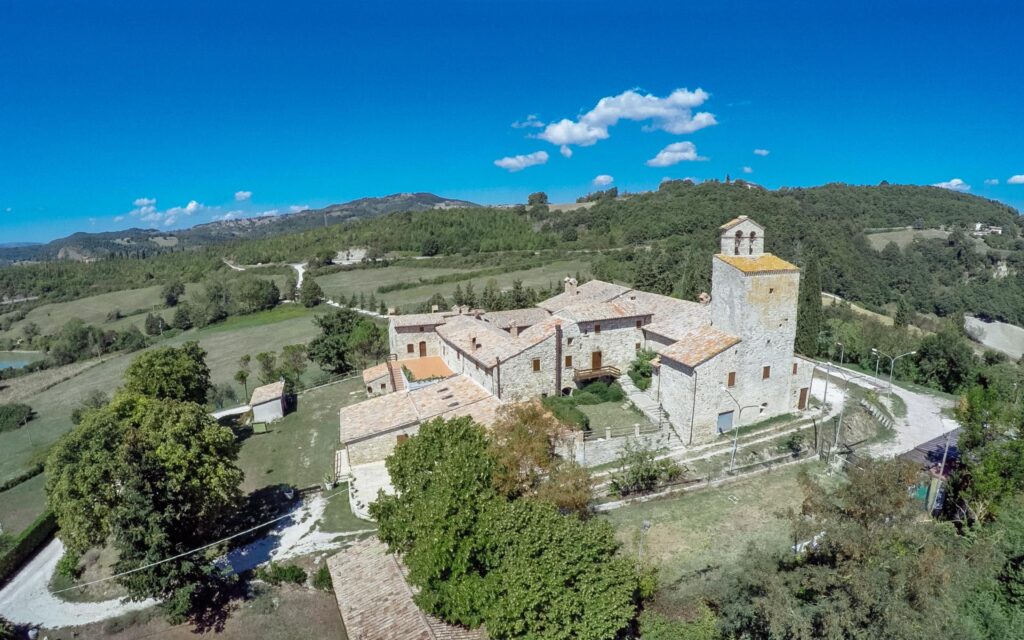
FOTO 4 ABBAZIA VALLINGEGNO
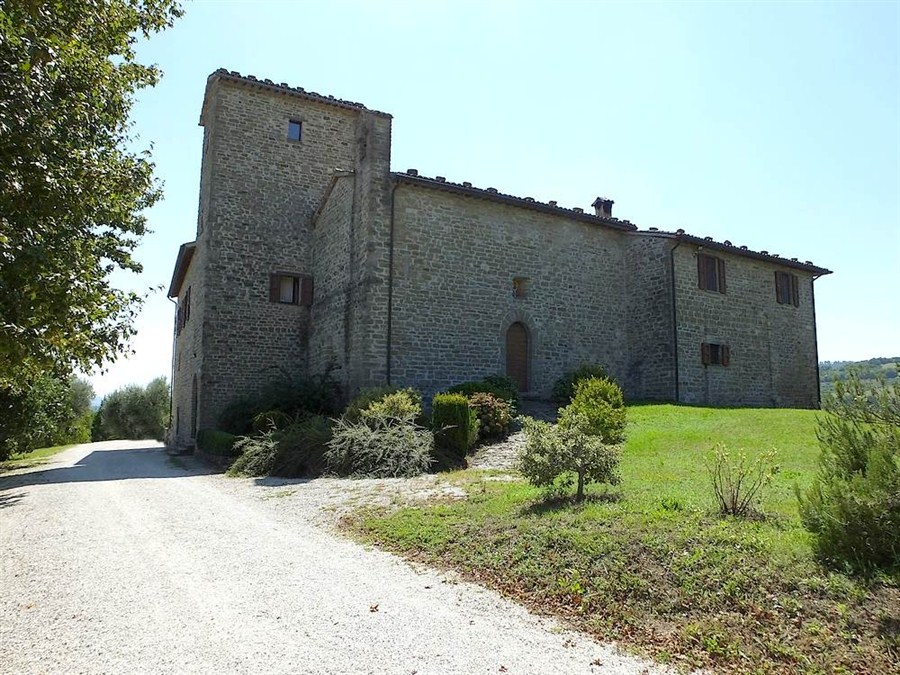
FOTO 3 SAN PIETRO IN VIGNETO