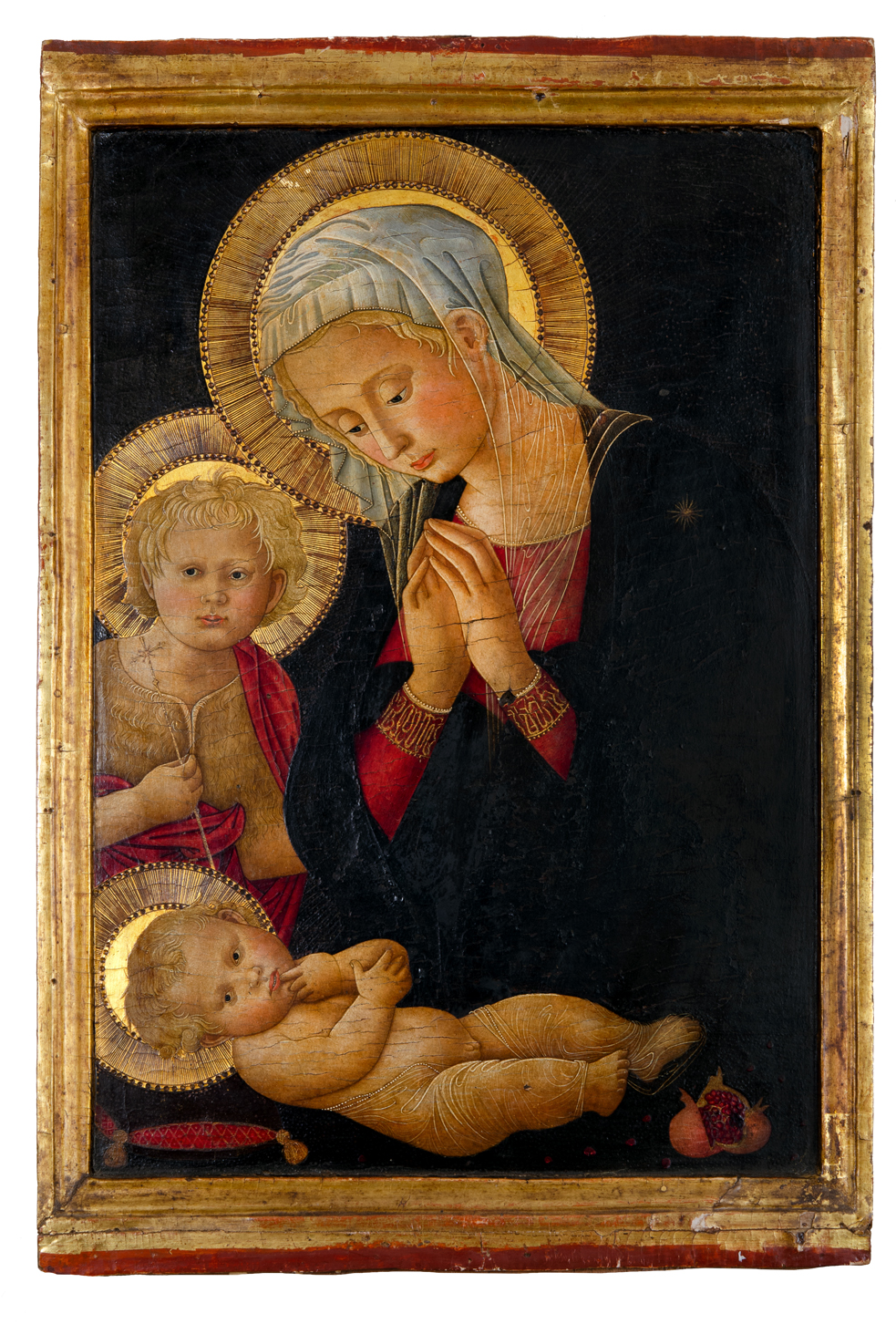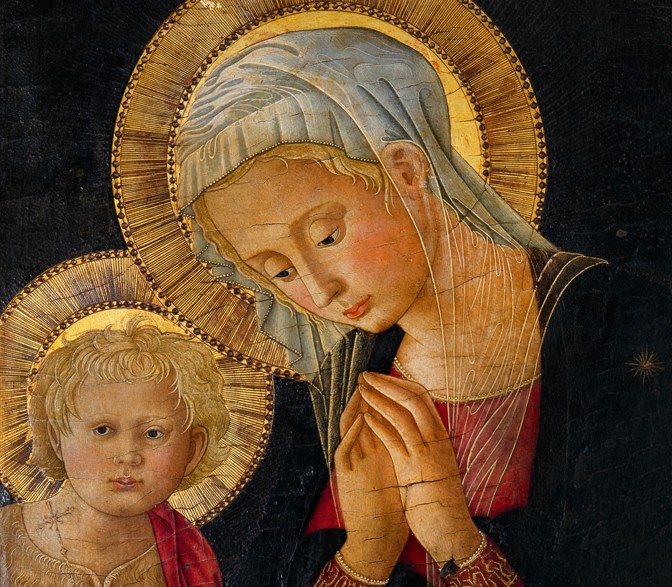
Under the name of ‘Pseudo Pier Francesco Fiorentino’ lies a conspicuous corpus of works by an anonymous Florentine master and his workshop which, in the second half of the 15th century, were intensely active in the production of refined compositions taken from the iconographic repertoire of the great masters of the time, in particular Fra Filippo Lippi (1406-1469) and Francesco di Stefano, known as ‘Pesellino’ (1422-1457).
According to some scholars, he should be identified as Piero di Lorenzo del Pratese, a collaborator of Pesellino. Others have proposed, instead, the name of Riccardo di Benedetto di Niccolò di ser Rucco da Rondinaia, mentioned in a list of Florentine workshops in 1470 with the nickname ‘Riccardo delle Nostre Donne’. It is, however, probable that behind the pseudonym Pseudo Pier Francesco Fiorentino lies in truth an entire workshop and various imitators of famous models by Filippo Lippi and Pesellino.
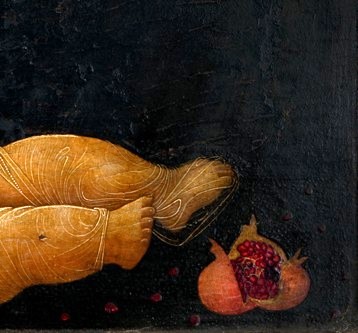
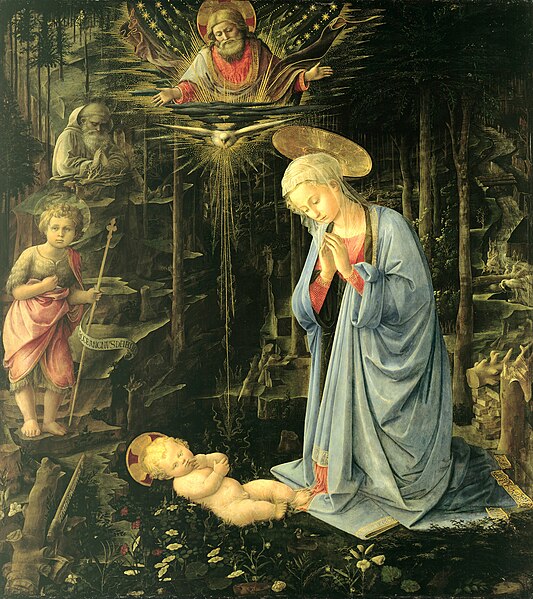
The Madonna of the Pomegranate is an example of those ‘chamber paintings’ that gained widespread popularity in the second half of the 15th century. These were images derived from Marian iconography intended for private devotion and placed in the residences of the bourgeois and aristocratic classes. The painting in the museum in Gubbio is part of the numerous variants produced by the master and his workshop and taken, with various combinations, from Fra Filippo Lippi’s masterpiece depicting the Adoration of the Child, painted between 1458 and 1460 for the chapel of Palazzo Medici in Florence and today conserved in the Gemäldegallerie in Berlin.
The iconographic element that gives the painting its name, the pomegranate, recurs frequently in sacred artistic representations between the late Middle Ages and the Renaissance. The symbolic significance of the fruit has very ancient roots, going back in Western culture to Greek antiquity. In fact, the pomegranate appears in the myth and cult of Demeter and Persephone, deities connected to fertility and the life/death/rebirth sequence. The red colour of its juice recalls the blood and the future death and resurrection of the young Jesus, a promise, for the faithful, of an afterlife.
On the night of 18-19 March 1979, the Pomegranate Madonna was stolen from the Art Gallery. According to reports from that time, the thief (or thieves) hid on an outside balcony when the building was closed to the public. During the night, he could steal the painting undisturbed from the Pinacoteca, located on the upper floor of the building, and abseil down with a climber’s rope to street level (about 30 m difference in height!), where one or more accomplices had been witing in a car to facilitate the escape. The museum was equipped with an alarm, but unfortunately, a long-standing malfunction of the system prevented the thieves from being detected inside the art gallery. Due to the characteristics of the crime and the exclusive involvement of a single work, it is likely that this was a commissioned theft.