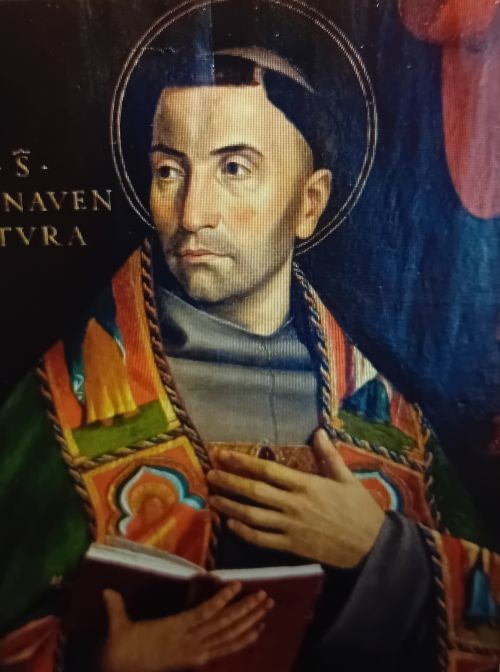
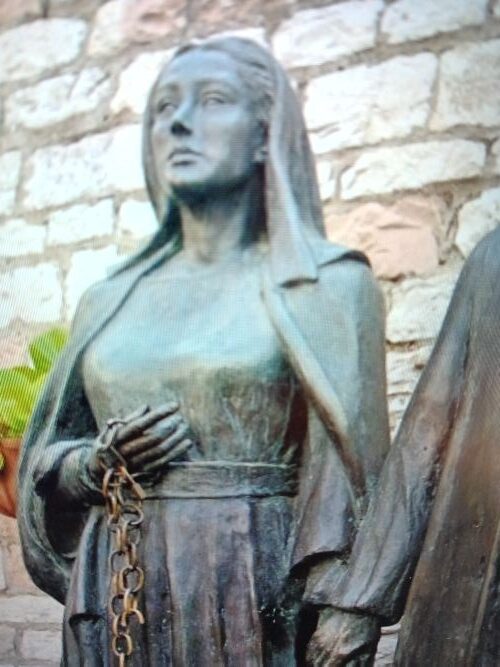
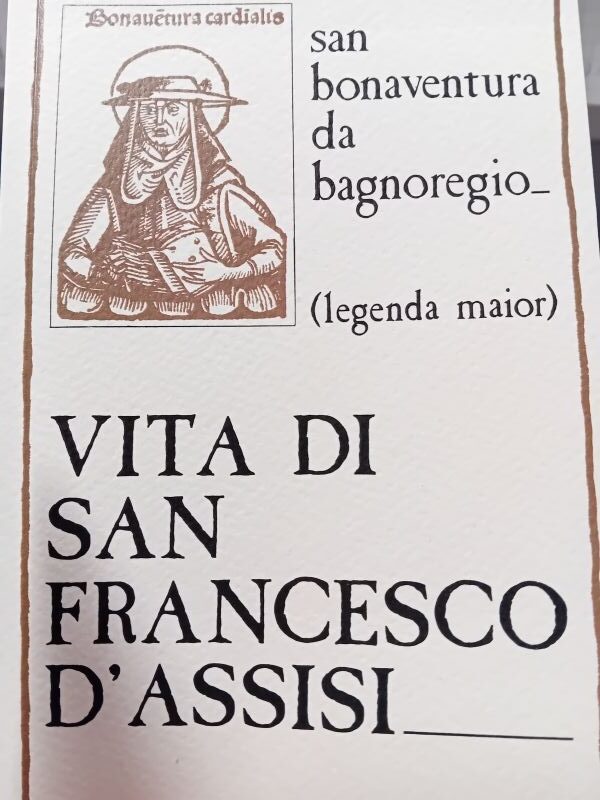
In the life of Saint Francis, a fundamental yet little “illuminated” role by historiographical light is that of his mother: Giovanna, known as Pica or Pica di Bourlemont, according to a particular school of thought. In the “Legenda minor,” possibly composed in Paris by Saint Bonaventure of Bagnoregio (1217–1274) between 1260 and 1262, contemporaneous with the “Legenda maior,” it is recorded that Francis was “called Giovanni by his mother, and later Francis by his father” (“Legenda minor” I, 1). The maternal name has sparked discussions and dissertations, with varying opinions and conclusions: in the 17th century, Father Claudio Frassen (1620–1711), of the Great Convent of the Observance in Paris and a doctor of the Sorbonne, narrates that Pica belonged to the Bourlemont family of Provence and married Pietro di Bernardone de’ Moriconi, who had traveled to those regions for his mercantile affairs. However, other scholars challenge this theory; notably, Father Stanislao Melchiorri (1791–1871), a Franciscan native of Cerreto d’Esi. Nicolò Papini Tartagni (1751–1834), a priest and author of a two-volume “History of Saint Francis of Assisi,” published in Foligno between 1825 and 1827, confirms the Provençal hypothesis, seemingly reinforced by the mention of a date, 1703, during which the archives of the Bourlemont family supposedly still held the marriage contract document between Pietro and Pica. A careful examination of the text and comparison of sources reveal that this reconstruction is based on assertions and theories put forward by earlier scholars, primarily following Frassen’s lead, and there is no concrete, tangible trace of such a document. Many have spoken of it, but no one has actually seen or shown it to others. To complicate the picture further, an article in the Neapolitan newspaper “Il Mattino,” dated November 6, 1926, attributes the genealogy of Monna Pica to the Anglusires Des Stoges, aristocrats from the Champagne province, from whom, in 1468, the Bourlemont lineage allegedly descended. Another historiographical and hermeneutic line of inquiry focuses on the Piceno-Umbrian area: the name Pica is strongly associated with this region (the totemic animal of the Piceni was, as is well known, the woodpecker). How then can we explain the Frenchisms? Bourlemont would be the Francoisation of Belmonte Piceno or, alternatively, Monte Burella, a hill near Nocera Umbra on which there was a relay station or, in Latin, a mansio. Whatever the true noble roots of Monna Pica may be, it is interesting to reflect on the portrait of her offered by Saint Bonaventure in the “Legenda maior” (II, 3): before us stands a gentle, understanding figure, in constant, empathetic correspondence with her son Francis’s desires and irresistible vocational call. When he expresses his intention to renounce all wealth and become poor among the poor, he is struck and chained by his father in the basement of the family home (near what is now the “Chiesa nuova”). It is then that his mother, with a resolute and courageous gesture—taking advantage of her husband’s temporary absence—liberates him and encourages him to follow his heart. A mother, in her modest way, heroic and determined, who resonates with other female figures from past and present history.