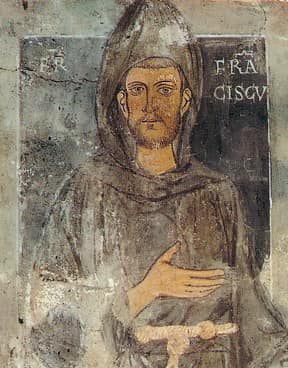
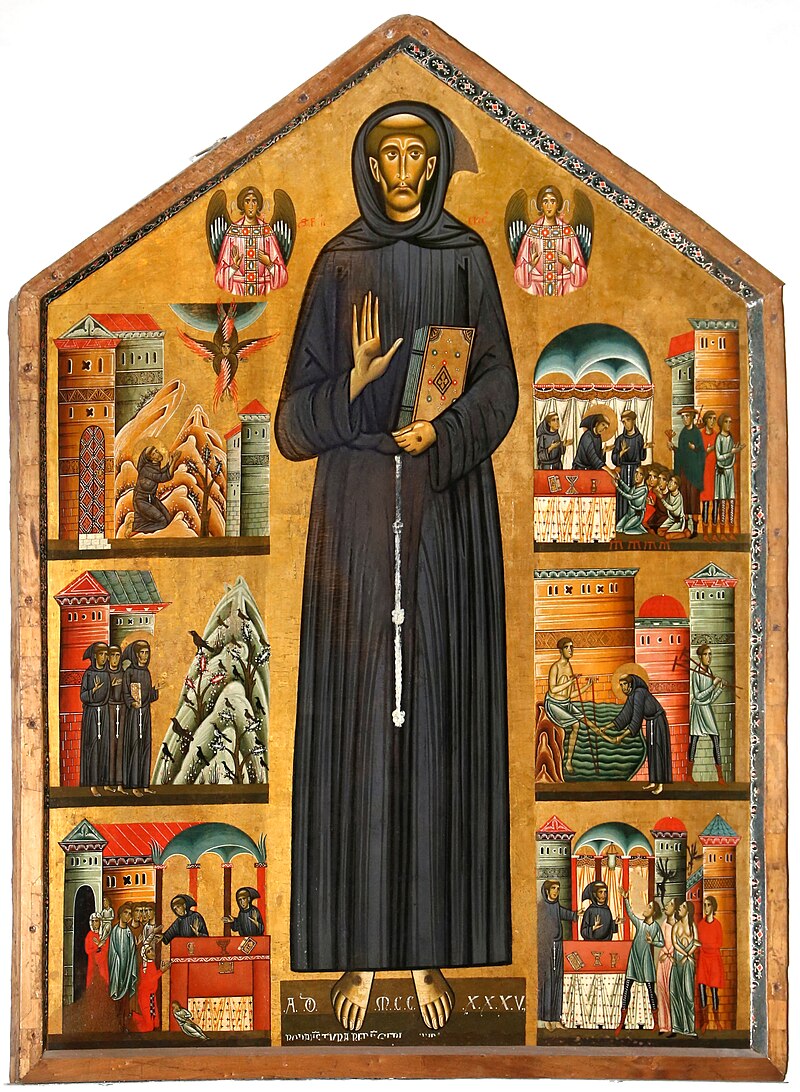
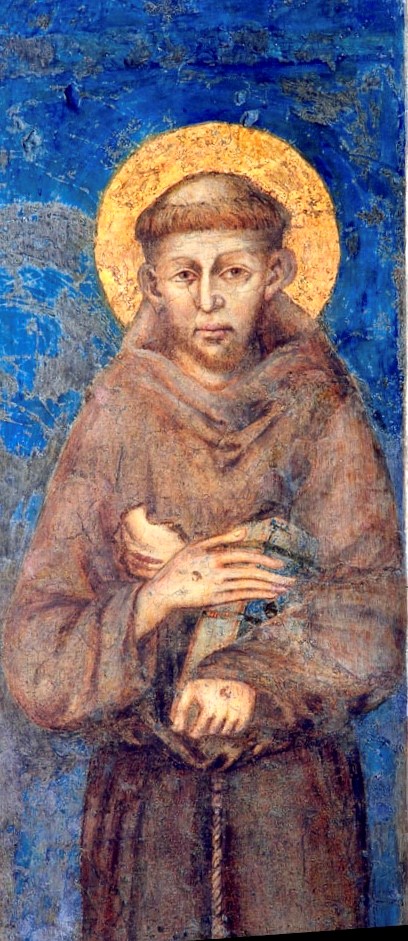

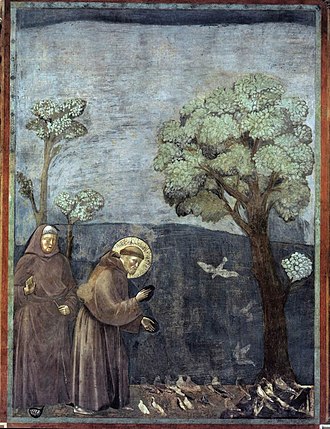

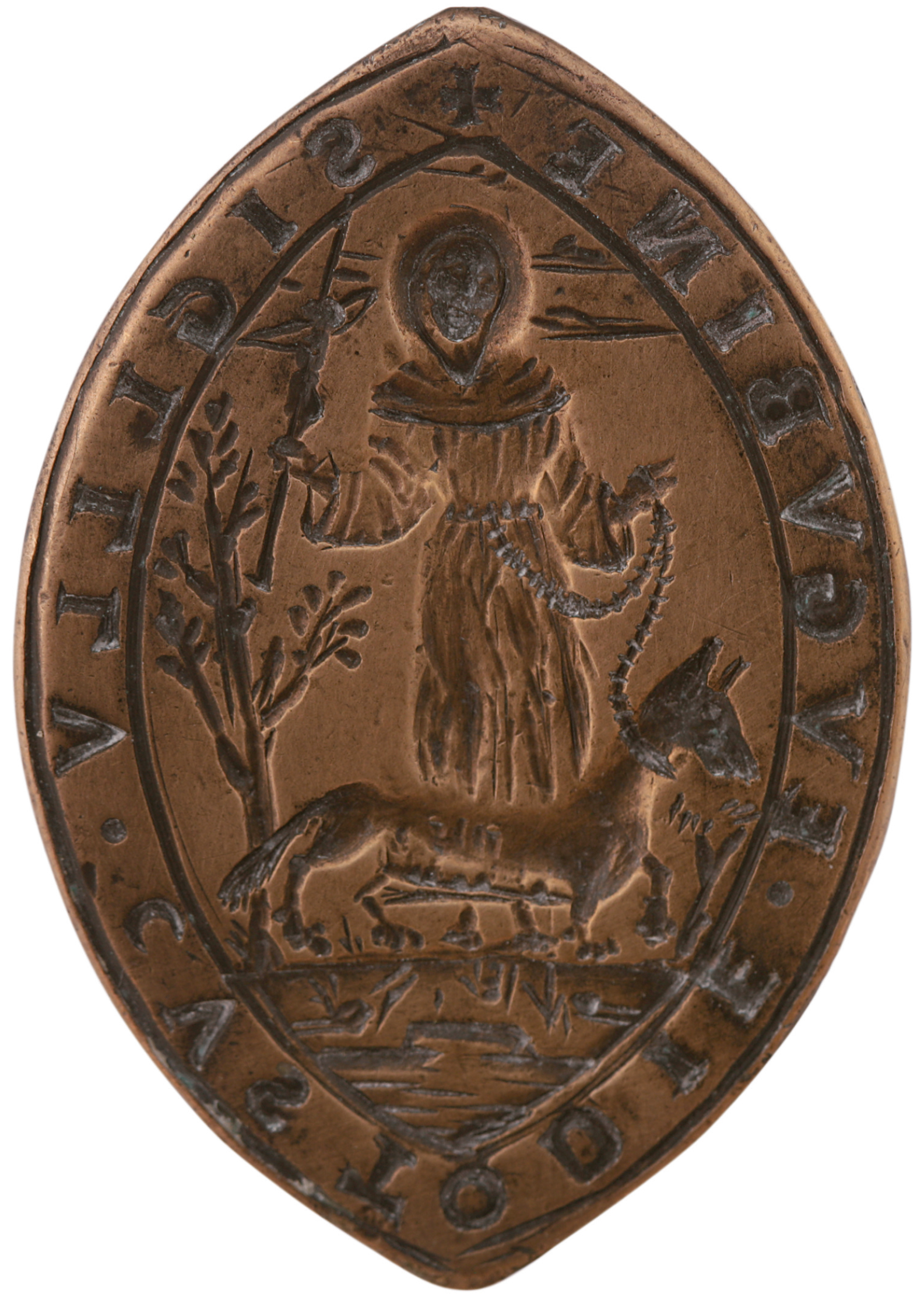

The first to depict the physical appearance of Saint Francis was Thomas of Celano, his first biographer. Thomas knew him personally and described him as “of average stature, rather short; with a darkish complexion; a round head, a protruding face; a broad and small forehead; arms somewhat short; and small feet.” In early figurative representations, the saint appears accordingly to Celano’s description. A portrait of Francis is depicted in the Sacro Speco of Subiaco, where, according to an ancient tradition, in 1223 the Saint visited to venerate the founder of Western monasticism, Saint Benedict. This image is considered the oldest known painting of Saint Francis in the world: in the fresco, he appears as an ordinary friar — not yet canonised — without stigmata or halo, wearing a tunic cinched with a rope and a tall cowl (Fig. 1). The famous Tabula of Pescia, dating to around 1235 (Fig. 2), created by Bonaventura Berlinghieri, shows the figure of the Saint inserted between two half-figure angels and some small scenes from his life. Francis’s figure is exaggeratedly elongated and seems to float in the air. As in the earlier portrait, his face is elongated, with dark eyes, a blond beard cut to a point, and a sharp nose. In this painting, the typical iconographic attributes begin to emerge: the stigmata, the cord with three knots (alluding to the three vows of the Rule: poverty, obedience, and chastity), the hood, and the book of the Rule. A well-known fresco dating from approximately 1280–90, located in the right transept of the Lower Basilica of Assisi and attributed to Cimabue (Fig. 3), is also highly significant. Although the Tuscan painter, born in 1240, never met Francesco d’Assisi, who died in 1226, this work is traditionally considered the most faithful depiction of the saint’s actual appearance as described by Franciscan sources in Umbria. With Giotto, in the frescoes of the Upper Basilica of Assisi (1290–95), there is a genuine transformation: beyond introducing a three-dimensionality and unprecedented realism, the painter focuses on expressing inner emotion through facial and bodily movements. Among the episodes from the saint’s life, Giotto depicts the scene of Francis receiving the stigmata during a vision on Mount Verna in 1224 (Fig. 4), and the scene of his sermon to the birds, both considered iconic attributes of his representation (Fig. 4). Known for his unconditional love and respect for all animals, which he regarded as brothers and sisters, Francis would communicate with them, urging them to pray to the Lord. The twenty-first Fioretto narrates how he tamed the fierce wolf of Gubbio: this episode became so famous that the iconography of Saint Francis with the wolf spread from the Tuscan regions. Still visible today in the church of San Francesco in Pienza is a depiction of Saint Francis and the Wolf (Fig. 6), among the apse frescoes attributed to the Sienese artists Cristoforo di Bindoccio and Meo di Pero, created around 1380. This episode links the saint to Gubbio through his actual presence in the city (after having divested himself of all possessions, he set out from Assisi publicly to Gubbio), as well as the episode of the Eugubine Spadalonga dressing the friar, a tradition dating back further. Iconographically, this episode was eventually superseded by the portrayal of the taming of the wolf, due to its compelling elements of fascination, and was later chosen to appear on the Seal of the Custody of the Conventual Friars of Gubbio (Fig. 7). The episode of the wolf, universally recognised as a symbol of reconciliation and peace, has since become the most prevalent motif in Eugubine art. Other iconographic attributes associated with Saint Francis include the skull, a reminder of mortality and the fleeting nature of earthly life—a “memento mori” emphasising the importance of spirituality over material possessions—and the Cross with the Tau letter, a Franciscan symbol of salvation.
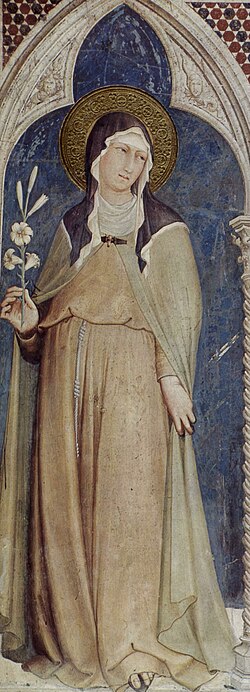
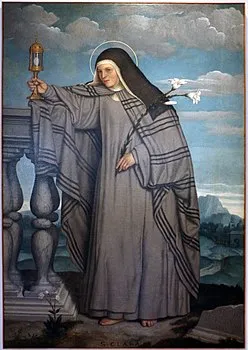
The other Franciscan saints are also recognisable through specific symbols. Saint Clare of Assisi, founder of the Order of the Clarisses, is often associated with Saint Francis, whose way of life she admired and emulated. In art, she is depicted with symbols and attributes that recall her life and spirituality: the Franciscan habit, a brown or grey gown with a cord and three knots (symbolising her vows), the black or white veil (symbolising her virginity and consecration), the lily or a branch—both symbols of purity—the monstrance or bread, which refer to the miracle of the Eucharist during the Saracen siege of Assisi, when the presence of the Blessed Sacrament drove away the enemies. She is also frequently portrayed with a book—the Rule of the Order of the Clarisses, which Clare herself wrote and followed. A rather rare attribute is the lantern (Fig. 8), referring to her name.
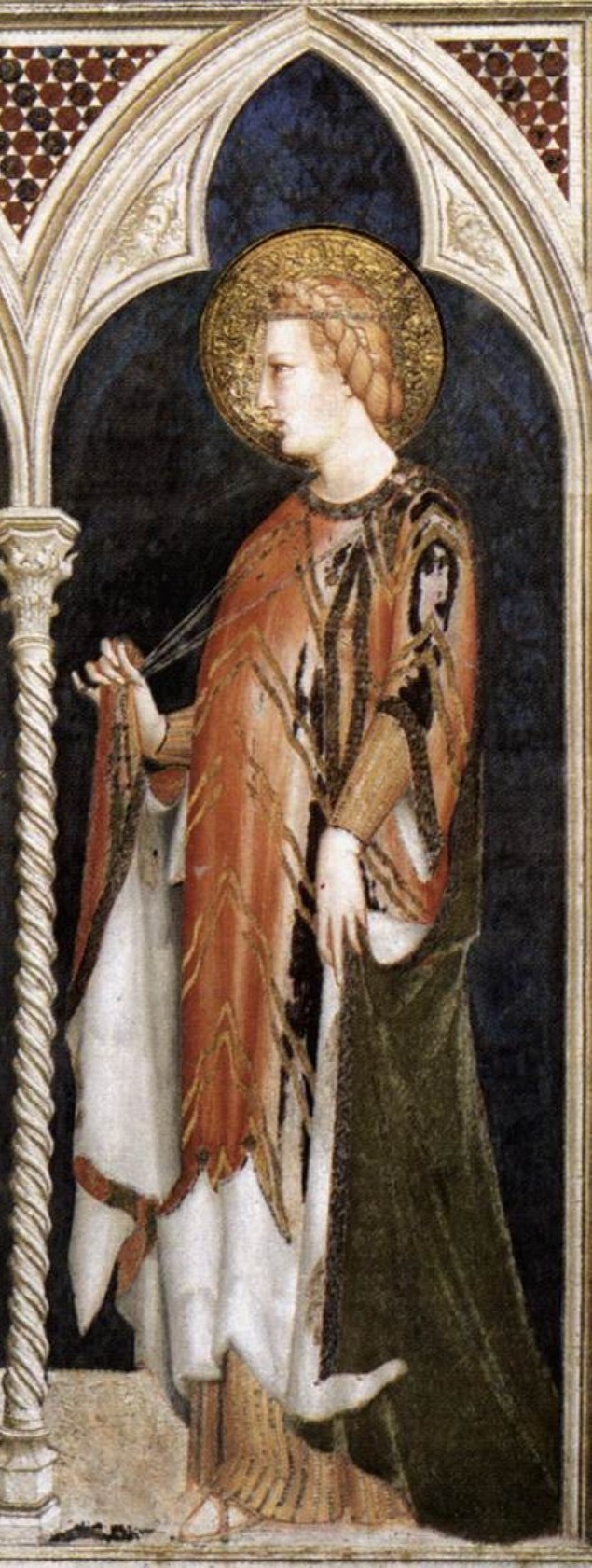
Saint Elizabeth, a Hungarian princess, entered the Third Order of Saint Francis following the death of her husband, Hermann I, Landgrave of Thuringia. She is sometimes depicted in regal attire with a crown (Fig. 8), emphasising her noble origin, and sometimes in monastic dress in memory of her entry into the convent. Another recurring iconographic symbol is the apron (Fig. 9), often depicted full of roses, alluding to the miracle of the loaves transformed into flowers: legend recounts that while carrying food to the poor in her apron, the provisions transformed into roses—an event considered miraculous, expressing her faith and generosity. In art, Elizabeth appears with the Cross, a common element in Christian iconography, symbolising her devotion and sacrifice, but her image may also be associated with representations of churches or buildings, such as hospitals, indicating her charitable activities and the construction of facilities for the needy; she is the patron and protector of nurses and charitable societies, and is also linked to the symbol of alms.
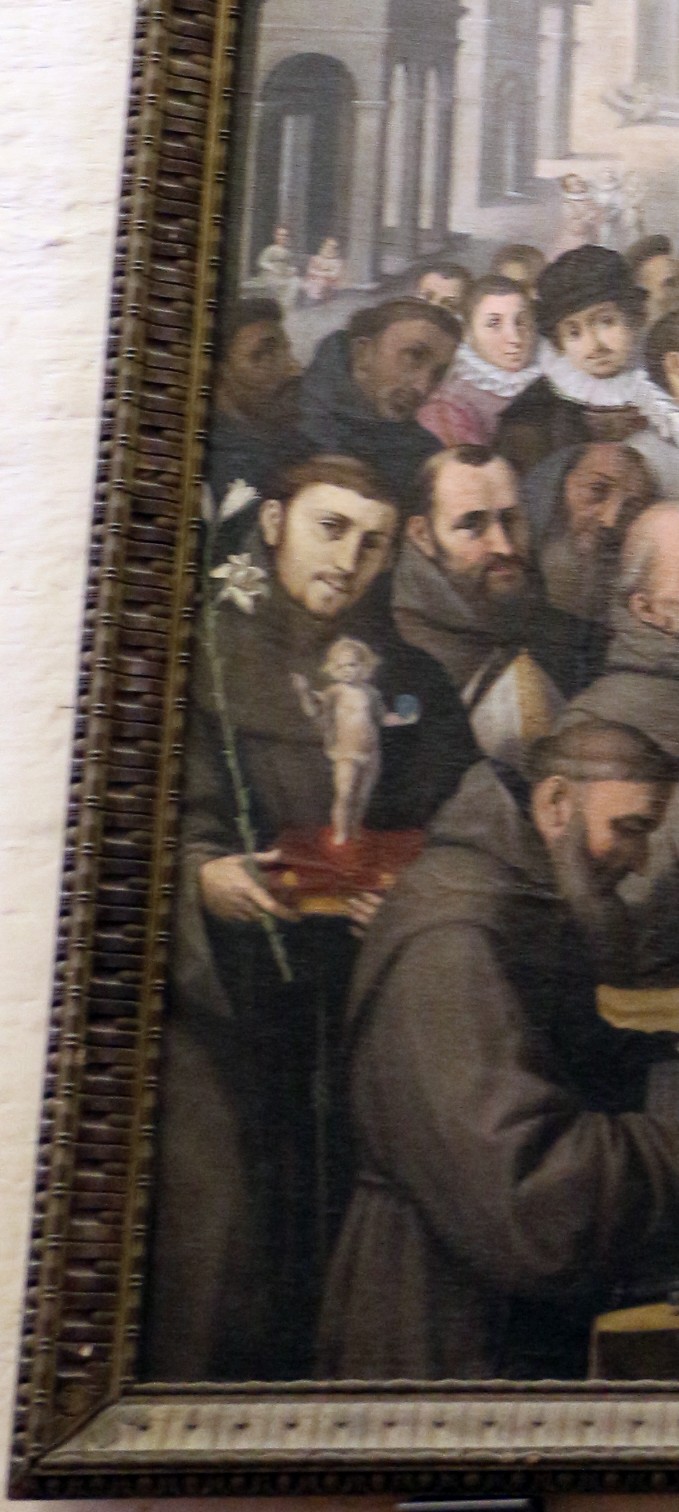
Saint Anthony of Padua, born Fernando Martins de Bulhões in Lisbon in 1195, was a young noble who initially joined the Order of the Canons Regular of Saint Augustine in Coimbra. However, the martyrdom of some Franciscan brothers on a missionary expedition to Morocco, whose bodies were transported to Coimbra, decisively prompted him to join the Order of Saint Francis in 1220. In art, he is depicted as a young friar with a luminous gaze, with tonsure and a dark habit. He holds a lily, symbolising purity, chastity, and innocence, and either holds the Child Jesus in his arms or gazes at him in adoration (Fig. 10). Anthony experienced a vision in which Jesus appeared to him in the form of a child while he was reading, an event described as one of the most significant mystical experiences of his life. Other symbols include the book, representing his profound knowledge of the Holy Scripture and his preaching activity, and the rosary, highlighting his devotion to the Virgin Mary. Saint Anthony is also associated with several miracles, often depicted in paintings, including the episode in Rimini where a hungry mule knelt before the Eucharist, refusing hay—an illustration of the real presence of Christ.
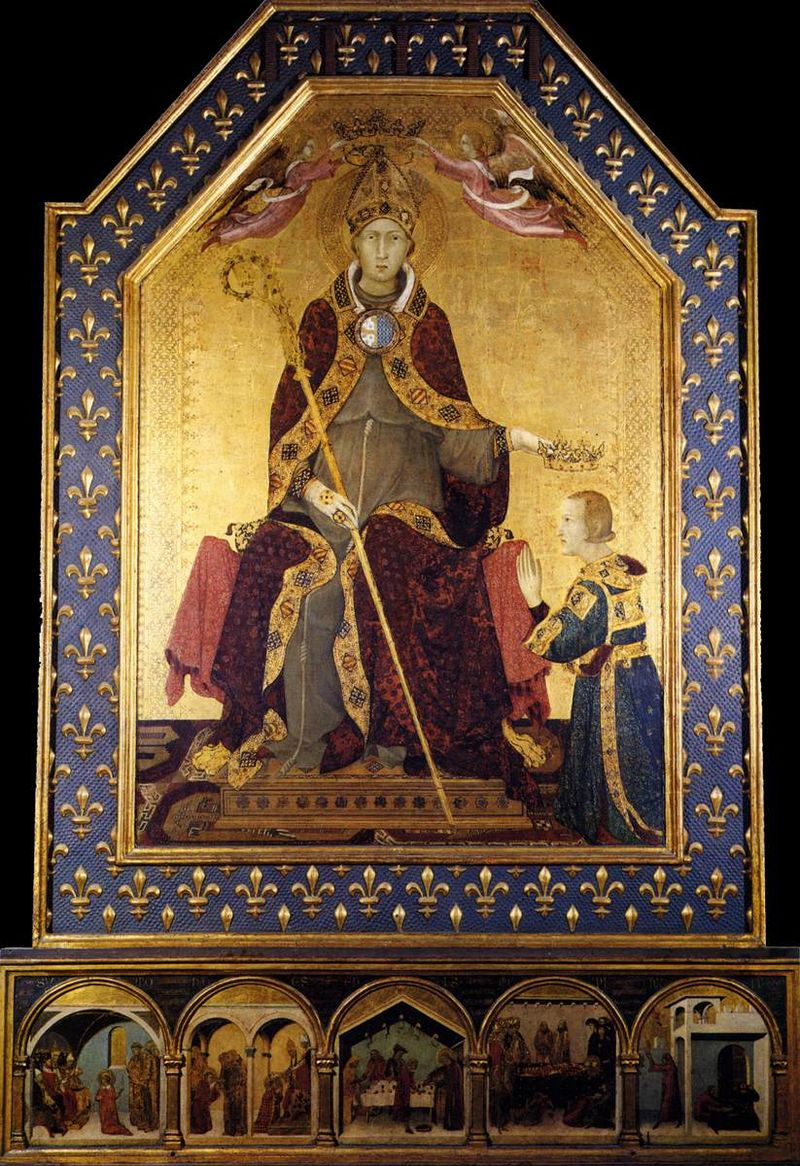
Of noble lineage was also Saint Louis of Toulouse, second son of Charles II of Anjou, King of Sicily, and Maria of Hungary. He is remembered for his ascetic choice to abandon worldly power for a life of faith and Franciscan poverty. His iconographic attributes include the habit of the order and episcopal insignia—mitre and pastoral staff—symbols of authority and spiritual guidance, indicating his role as Bishop of Toulouse. He is often depicted holding the book of the Franciscan Rule, reflecting his dedication to the order of the Friars Minor, and crowning his brother Robert of Anjou (Fig.), symbolising his renunciation of the throne of Naples.
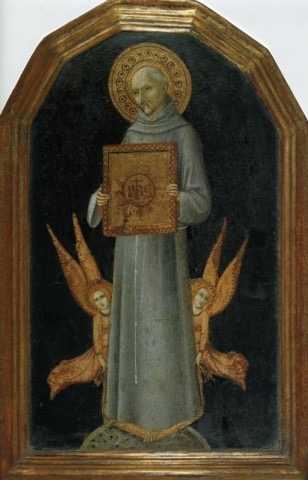
Saint Bernardino of Siena is considered one of the greatest communicators of his time, capable of gathering large crowds. His preaching was intense; it is said he could explain the Gospel in simple words that touched hearts. To promote devotion to the Name of Jesus, he devised the Christogram (IHS), which entered common iconography and became familiar to the people: believers listening to his sermons were made to kiss wooden tablets carved with the monogram IHS topped by a Cross and surrounded by a sun (Fig). This symbol became his principal attribute and, because of its conception and dissemination—now regarded as an early “logo” anticipating modern communication strategies—he is the patron saint of advertisers and communicators. Bernardino is also depicted wearing the Franciscan habit, with the book, and sometimes with three mitres or pastoral staffs at his feet, referencing the three episcopates he refused during his lifetime, symbols of humility and rejection of ecclesiastical power.
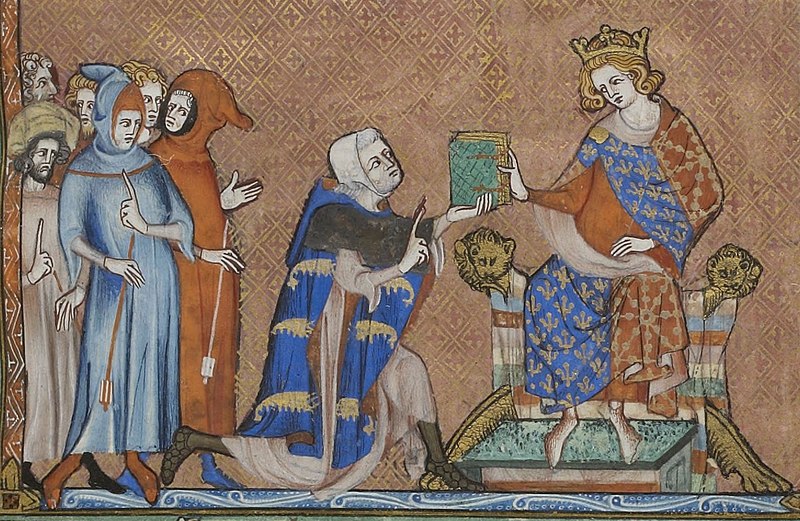
Saint Louis IX, later canonised as Saint Louis of France, was the forty-fourth King of France, the ninth of the Capetian dynasty, ruling from 1226 until his death. He was the first French king canonised, venerated as the “model sovereign” for his combination of profound spirituality and regal authority, embodying the figure of the “holy king.” In Italy, the earliest pictorial references to Saint Louis date from the 14th century, appearing in churches of the Franciscan order. Giotto portrayed him with a lily sceptre and the Franciscan cord in the Bardi Chapel of the Church of Santa Croce in Florence, while Simone Martini depicted him in royal attire holding a globe, symbolising imperial and divine authority, in the Chapel of Saint Martin of the Lower Basilica of Assisi (Fig). Even in modern times, the iconography of Saint Louis often features the crown and sceptre, but gradually the image of the pious, penitential king becomes predominant. In the 17th century, he is depicted as an example of perfect religiosity, yet also as a figure of ecstasies and visions. Some miniatures show him seated on a throne adorned with lion’s heads and paws, symbols of justice and the capacity to moderate passions. He is also remembered as the “builder king” for his extensive building activities, participation in the Crusades, and for acquiring the Holy Crown of Thorns.
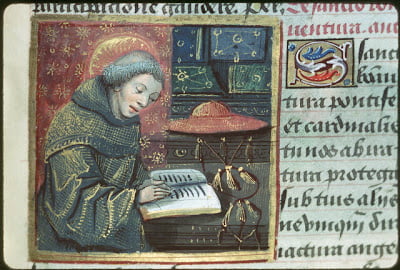
Saint Bonaventure of Bagnoregio, born Giovanni Fidanza, is regarded as one of the most important biographers of Saint Francis of Assisi. His biography, the Legenda Maior, served as the inspiration for Giotto’s cycle of paintings depicting the life of Francis in the Basilica of Assisi. From 1257, and for the following seventeen years, he served as the General Minister of the Franciscan Order, considered one of its founders or perhaps a second founder. Under his leadership, the Narbonnese Constitutions were published, serving as the basis for all subsequent constitutions of the Order. He was a bishop and cardinal, and after his death, was canonised and proclaimed a Doctor of the Church. He is often depicted with a book, symbolising his theological teachings and profound knowledge. Since the early 14th century, Bonaventure has been portrayed as a middle-aged, tonsured friar, either bald or with a short beard, dressed in a Franciscan habit cinched at the waist with a cord and sandals, usually with a halo. In some images, he wears the galero or the mitre, recalling his role as Bishop of Albano; the cope and pastoral staff became constant attributes only after his canonisation, particularly in the 15th century. Previously, the solitary image of Bonaventure was rarely venerated by the faithful, as he was esteemed primarily for his theological and mystical work rather than for episodes of saintly or miraculous life that would inspire popular devotion. Naturally, this was different among the Franciscans, who from the early 14th century included Bonaventure among the beatified members of the Order. Within the Franciscan context, his depiction remained limited throughout the 14th century, mostly confined to representations related to or associated with the *Lignum Vitae*: he is portrayed writing this theological and mystical treatise that recounts the story of Christ.