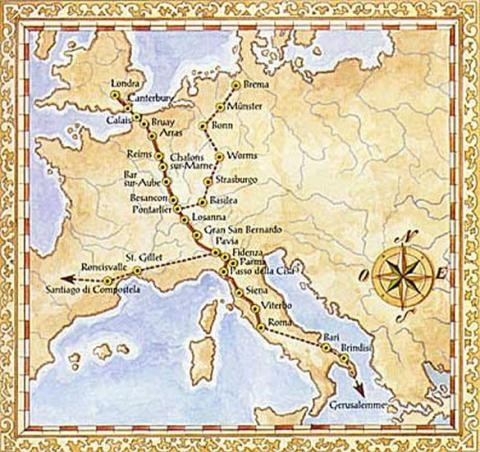
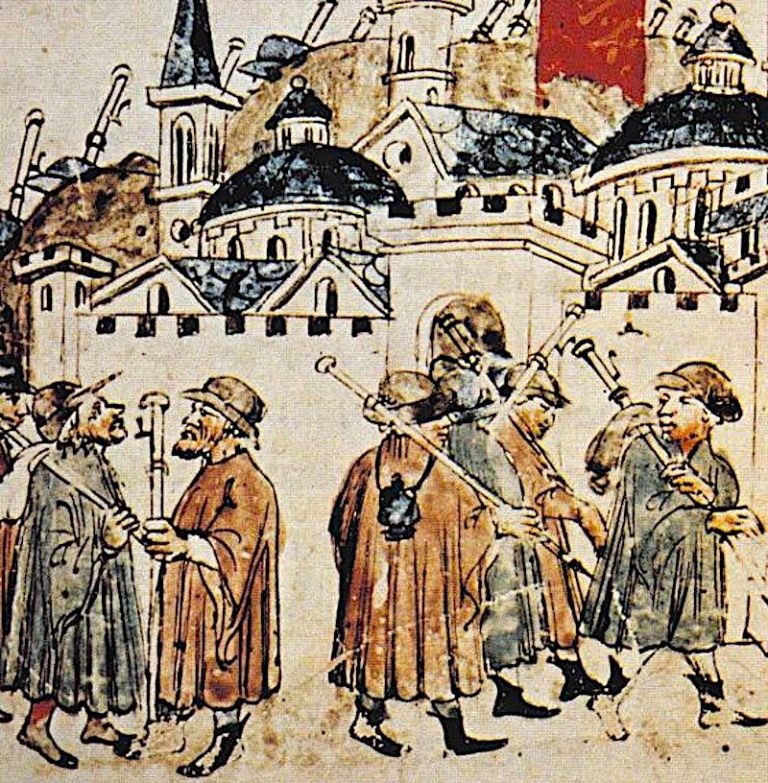
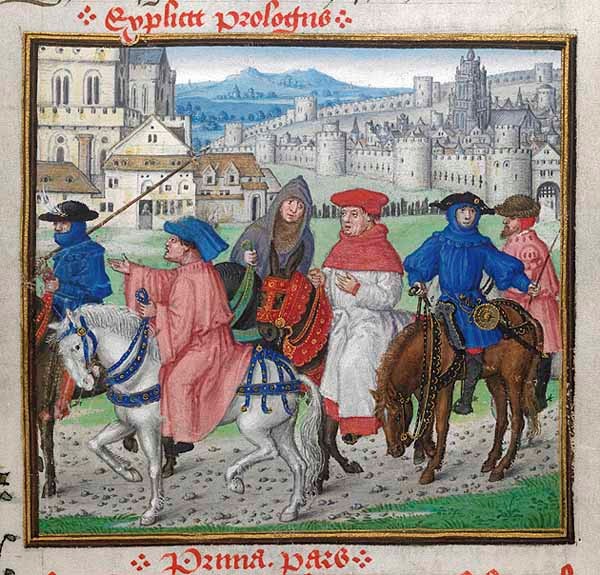
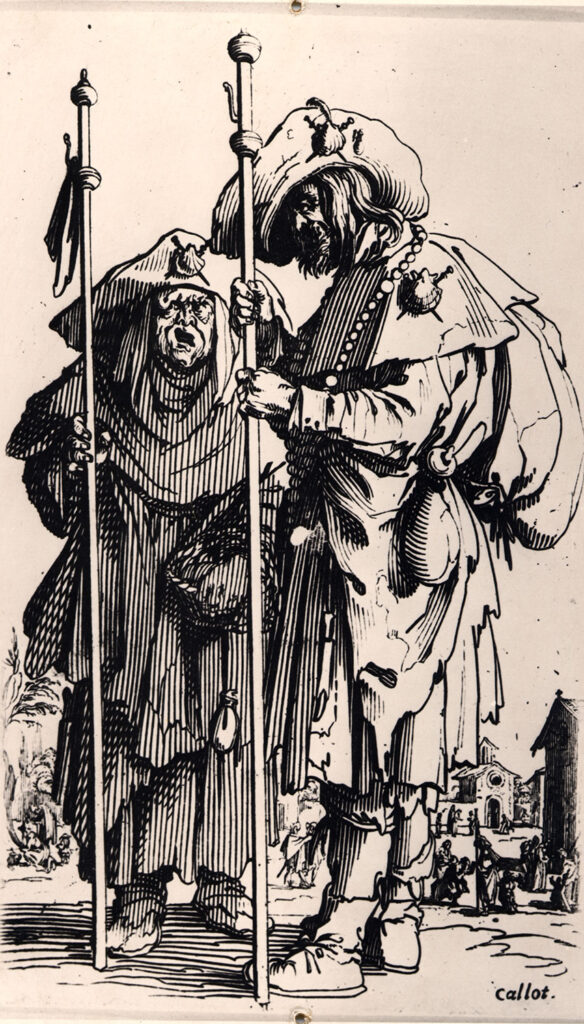
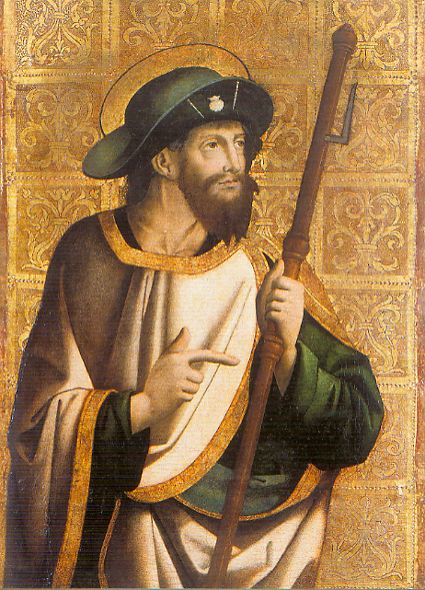
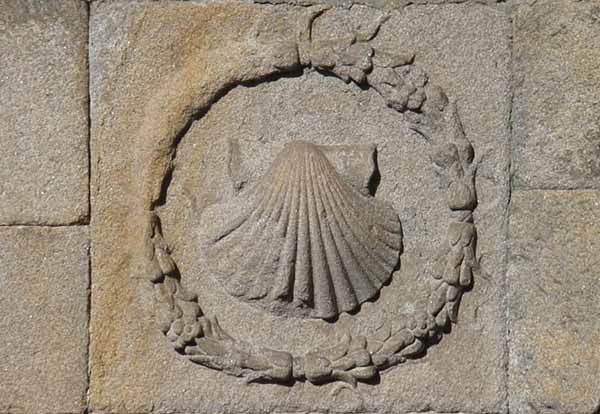
The Middle Ages was a period characterised by extensive travel, contrary to the common perception of an era marked by insularity and narrow horizons. In reality, almost everyone journeyed — from peasants who, following crop rotation schedules, traversed long distances each morning to work fields and often did not return until several days later; to merchants moving between manufactories, markets, and fairs in pursuit of trade; to pilgrims visiting the great sanctuaries of Christendom. There was also the aristocracy, perpetually on the move accompanying their feudal lords, especially members of the martial nobility engaged in battles or crusades. Even monarchs frequently travelled, often because their realms lacked fixed capitals; consequently, the entire court — including knights, dignitaries, clerics, family members, and servants — would relocate accordingly. Europe was crisscrossed by roads through which people, goods, and ideas circulated. However, until approximately 1200, these routes were not the paved imperial roads of the Roman world but rather simple dirt tracks. It was from the thirteenth century, spurred by a vigorous revival of commerce, that new, more reliable routes were developed, suitable even for innovative four-wheeled carts which had replaced two-wheeled wagons and could carry substantially heavier loads. Nonetheless, these routes were often fraught with hazards that could impede travellers — for example, rivers lacking stone bridges or ferries, necessitating the search for ford crossings; the threat of theft or attack by brigands, which prompted merchants and pilgrims to travel in groups. To facilitate such collective journeys, organisations emerged dedicated to organising and maintaining these companies of travellers. Travel was also invariably costly, burdened by various tolls and levies: fees to cross bridges, fords, mountain passes; taxes to enter towns or traverse certain territories. Merchants bore the highest toll burdens, as they also paid customs duties on their goods. Conversely, clergy were exempt from all tolls, and pilgrims, if they could demonstrate that they were travelling towards Jerusalem or Santiago — for example, by displaying a palm branch or a scallop shell — were partially exempt. Along their routes, medieval travellers encountered places of rest and refreshment: hospitals (hospitia) and inns (tabernae), as well as the network of ecclesiastical structures such as xenodochia, which provided hospitality to strangers. Starting from the twelfth century, specialised paid lodging facilities appeared — inns and taverns — where, in addition to accommodation, travellers could also purchase wine and food. Certainly, pilgrims represented a distinctive aspect of medieval mobility. They embarked on journeys for various reasons, primarily to demonstrate their devotion, or to perform penance and seek purification from sin. Another motivation was the hope of divine healing. Such motivations motivated not only Christians but also adherents of other religions; Muslims, for instance, were required to visit Mecca at least once in their lifetime, while Jews visited Jerusalem and other sacred sites during Passover or the Feast of Tabernacles. All pilgrims bore a characteristic attire: a cloak that could reach the waist or ankles; a broad-brimmed hat called a pentaco, made of felt; a leather satchel; a dried gourd for water; and a staff, often long and ending in a metal point, used as a support, for gathering fruit from trees, creating pathways through dense vegetation, carrying a sack of belongings, or even defending against wild animals or brigands. Embarking on a pilgrimage was no trivial matter. Before setting out, pilgrims were required to consult a notary to draw up a will, settle all debts, obtain the necessary permissions from their lord or local authority, and secure the appropriate passports and passes.