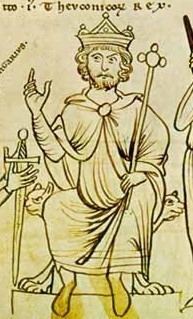
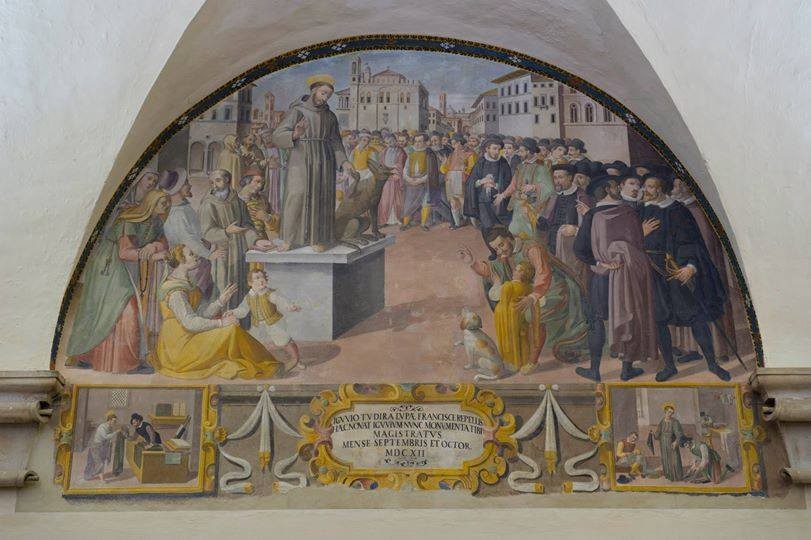
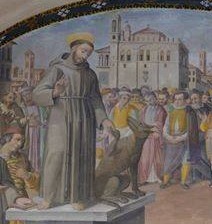

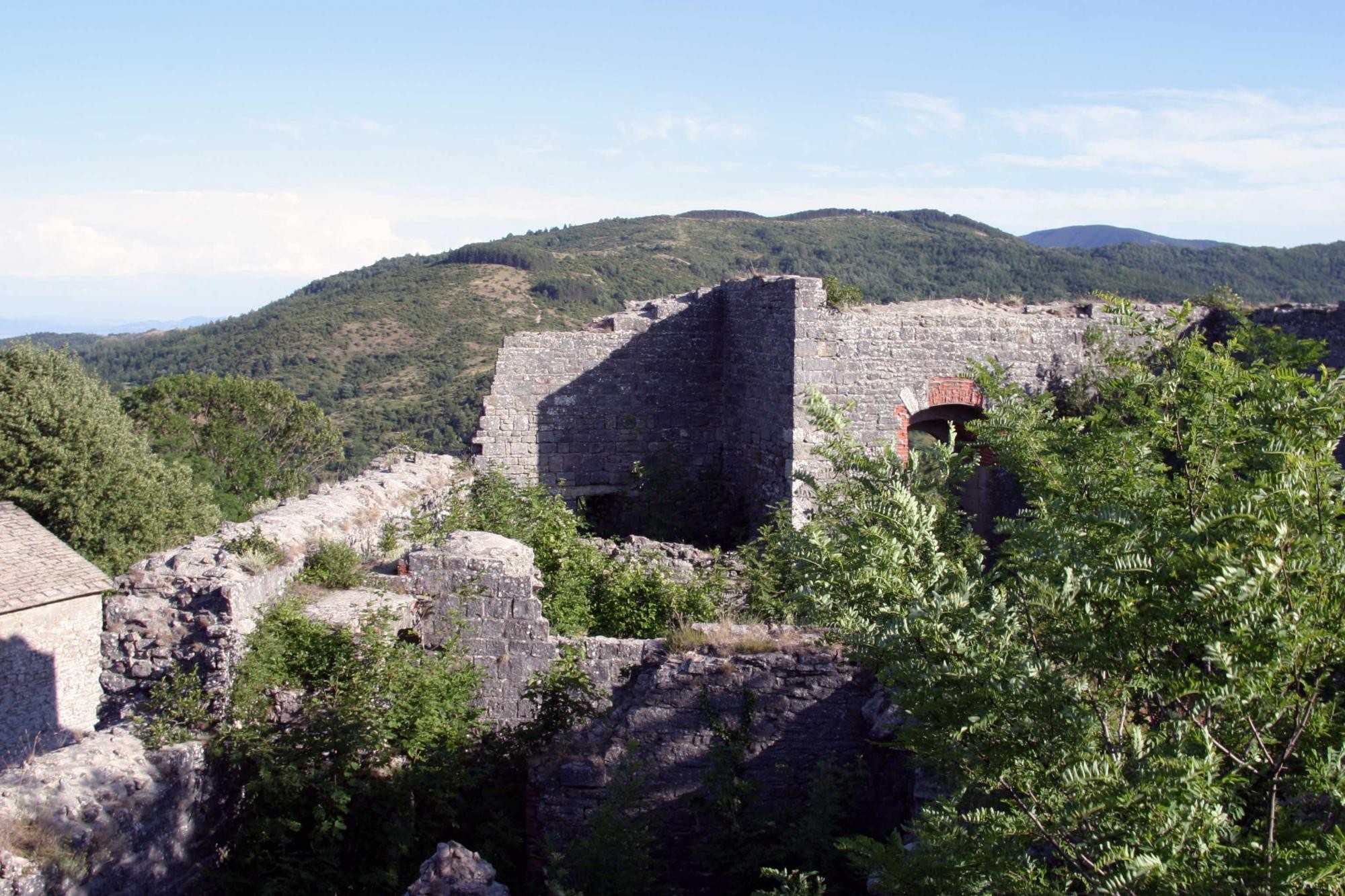
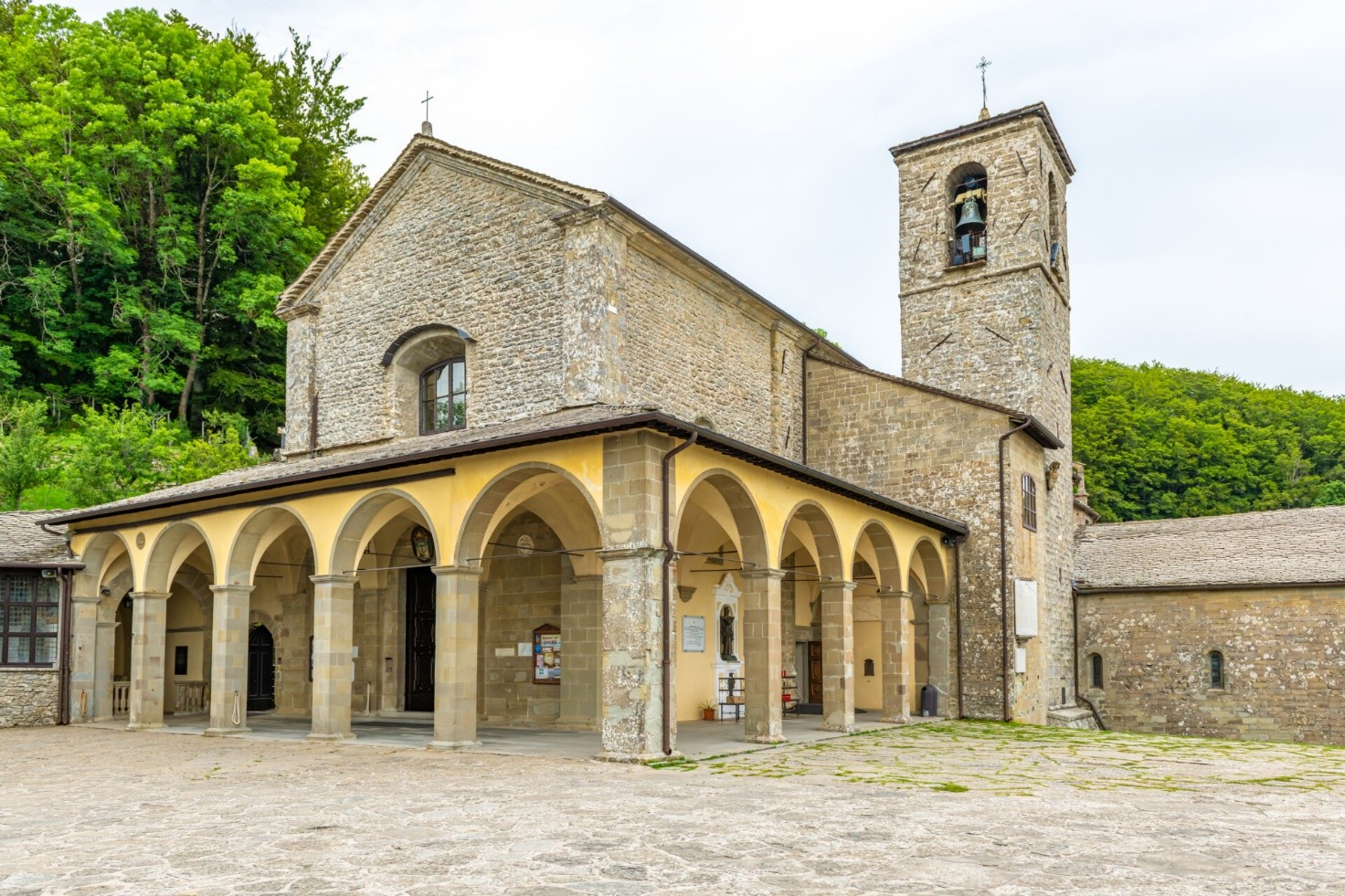
Francis, throughout his spiritual and physical journey (the two aspects coincided more than ever in his figure), encountered both prominent and lesser-known individuals, noble and humble in origin. He was able to converse with everyone, engaging and interacting, receiving and taking the best from each person—a hallmark of every virtuous life. Among the illustrious lineages and distinguished figures who wove the fabric of Franciscan biography, we must include, on one hand, the Spadalonga family, and on the other, Count Orlando Cattani of Chiusi. Regarding the former, this family traces its origins to the House of Spada, which, as the last historically verified emblem, bore, particularly in the Roman and Bologna branches, three crossed swords with the hilts at the top and blades downward from left to right on a red field; the crest also featured three lilies on a blue background, according to the detailed description provided by Oderigi Lucarelli in his work *Gubbio, Memorie e Guida Storica*. The Spada family, according to a manuscript of the Armanni preserved in Gubbio and cited by Lucarelli—who suggests it is a copy of a more complete original held in Rome—would be linked to legendary figures such as Alerano or Aleramo and Alasia, daughter of Emperor Otto I. The presence within the Spadalonga genealogy of various figures named Alerano, Alasia (wife of Lord Pamfilio Panfili), and Adelasia seems to support, at least, the plausible historical basis of the legendary hypothesis. In a historiographical context less prone to uncertainty, we find, in the 13th century, several documents mentioning a Berto called Spadalonga—possibly the father of Federico, Antonio, and Giacomello, the three brothers who, according to tradition, hosted and clothed Francis in their warehouse, located today within the area occupied by the Church of Saint Francis in Gubbio, in Piazza 40 Martiri, built in the 13th century. Evidence of the Saint’s visit to Gubbio and the hospitality offered by this noble family is also vividly preserved at the Palazzo dei Consoli, within the section of the Pinacoteca housed in the old council chamber. Here, an fresco from 1612 by Federico Brunori depicts Saint Francis, the Wolf (presented to the Eugubini as narrated in Chapter XXI of *Fioretti*), the Palazzo dei Consoli in the background (likely the intended setting or chronological point), and, within the panels, scenes of his vesting described both in the *Vita* by Tommaso da Celano and the *Legenda maior* by Bonaventura da Bagnoregio. The Spadalonga family, merchants of fabrics and textiles—just like Francesco’s father Pietro di Bernardone—thus appears to be at the origin of the story of the Franciscan habit. Turning towards the Tuscan-Romagna area, we find the episode linked to Count Orlando dei Cattani of Chiusi della Verna: when Francis arrived in San Leo to preach, he is said to have captivated the assembled crowd with a skill worthy of the best showman and animator. Particularly struck by the charisma of the Saint was Count Orlando, owner of several properties in Casentino, who decided to donate the Monte della Verna to Francis on 8 May 1213. This site included a castle belonging to the Cattani family, mentioned in a privilege granted by Otto I on 7 December 967, which confirmed various castles—including the one in question—to the noble Goffredo, son of Ildebrando. The Poverello ascended the Casentino mountain for the first time a year after this donation, in 1214, warmly welcomed by the magnanimous lord. Ten years later, it was here that he received the stigmata. The Cattani family, like the Spada, gave rise to various branches: for instance, the Cattani of Brisighella in Romagna descended from the original Chiusi lineage, including Cattaneo de’ Cattani, Bishop of Rimini in 1433, and, four centuries later, Giacomo, Archbishop of Ravenna and Cardinal from 1879 to 1888. Returning to the Middle Ages, and more specifically to the original Chiusi family, their prominence gradually waned in the second half of the 13th century, due to factional struggles, envy, and the hegemonic ambitions of the Church. On 29 October 1261, Guglielmo degli Ubertini, Bishop of Arezzo, declared the Cattani Counts to be deposed and seized the Castle of La Verna. Nevertheless, this religious site—an enduring beacon of spirituality and a vital point of reference for pilgrims—remained intact and even expanded: Pope Alexander IV (1254–1261) placed it under his protection, inaugurating in 1260 the restored Church of Santa Maria degli Angeli, which was complemented by chapels and a small convent. In 1274, on 9 July, a notarized deed—long debated by some regarding its authenticity but supported by contemporary and subsequent historical events—reconfirmed the donation of the Monte Penna site to the Franciscans by the children of Count Orlando: Orlando, Cungio, Bandino, and Guglielmo (or Guglielmino).