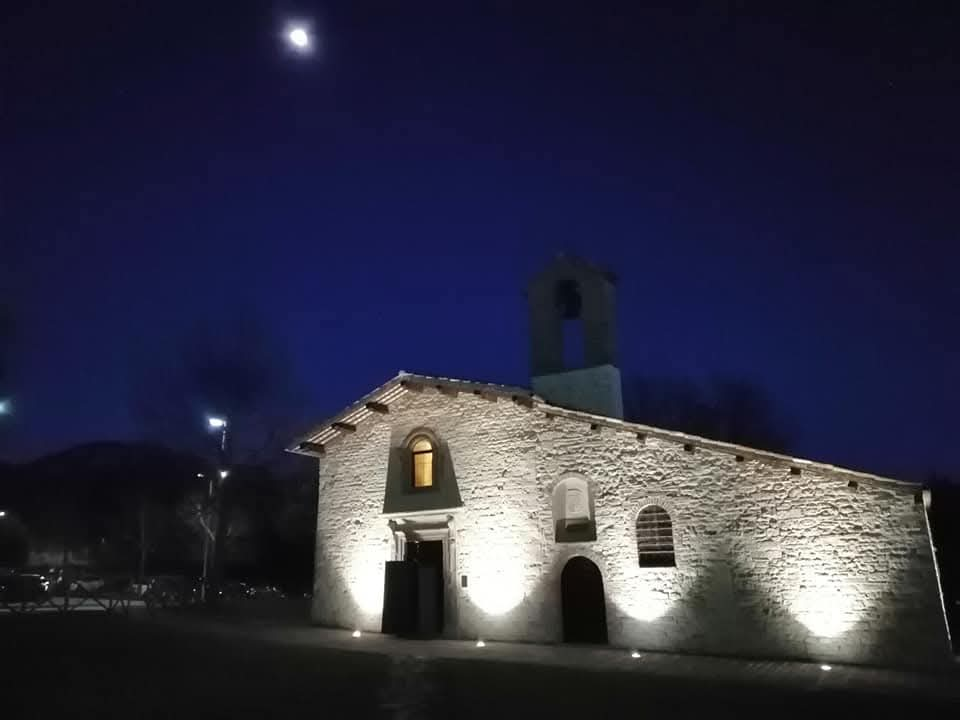
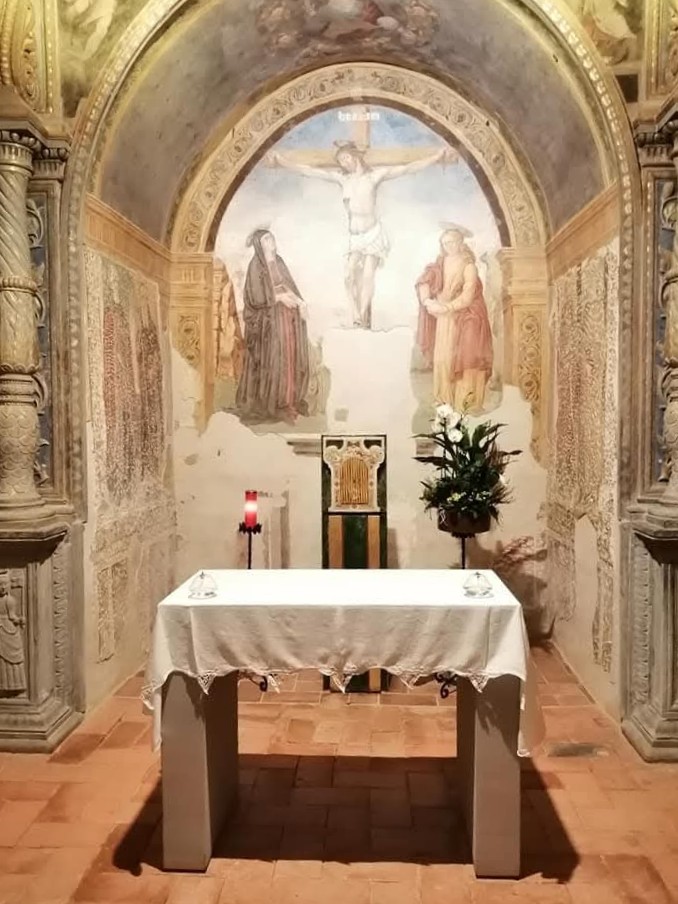
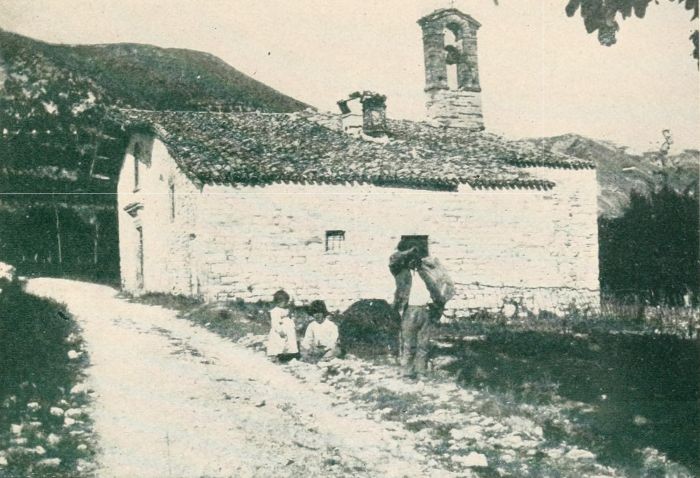
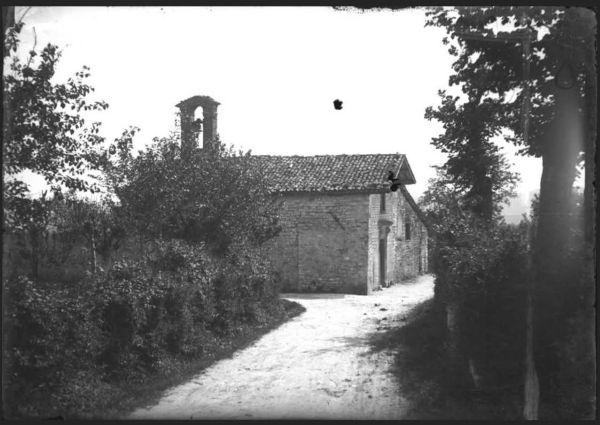
Historical records and oral tradition tell us that Saint Francis, who came to Gubbio amidst a series of adventures and perils, paid particular attention and care to the impoverished and, in particular, to lepers cared for at the leper hospital dedicated to Saint Lazarus of Bethany. This charitable, and as far as possible with the resources of the time, salvific institution was located at the site where the Church of Saint Paul would later be built, at the end of Via della Piaggiola on the right (descending from the Porta di San Pietro). The leper hospital of Saint Lazarus of Bethany was one of at least four leper asylums in Gubbio: the others included the Hospital of Grimo (located in the “plain” of Gubbio, at the mysterious place called Pozzogemolo, whose exact location remains difficult to determine), the Hospital of Santa Maria di Fonte Salice, towards San Vittorino, that of Santa Maria Maddalena of Fassia, and the Hospital of Raggio, whose names clearly indicate their locations to the south and east of the territory. Contrary to a persecutory and marginalising outlook, which persisted among a segment of the population from the early Middle Ages, Franciscanism promoted a humanitarian and humanising vision towards the destitute, the ill, and those suffering from ailments and conditions that were then difficult or impossible to cure. This vision was rooted in charity understood as immediate assistance and in recognising the inherent dignity of every person. At the heart of Saint Francis’s philosophy was the individual—the brother whom one must love and help—not the “marked by God,” to be quarantined not so much because of their illness, but because they carried within them the presumed marks of sin and a series of “guilt” not necessarily their own, a perspective shared by a significant portion of the clergy and secular world of the time. Such a viewpoint often led to violent reactions driven by fear of contagion.
Certainly, Saint Francis established a kind of shelter in Gubbio, making him not a pioneer of assistance per se, but undoubtedly a revolutionary and innovative figure, given what has been outlined above. The Jewish and Christian spiritual heritage also offered inspiring examples within its scriptures, such as the biblical story of Naaman, healed through the prophet Elisha after performing a providential bathing in the waters of the Jordan (2 Kings 5), and later, the healing miracles of Christ, who cured lepers (Matthew 8:1-4; Mark 1:40-45; Luke 5:12-14; 17:11-19).
Thus, San Lazzaro in Gubbio becomes a site of Franciscan charity, which, in essence, was deeply embedded in the historical fate of the saint after whom it is named: Lazarus of Bethany, or Eleazar, who was the central figure in the well-known miracle performed by Our Lord. His name has been present for centuries in the liturgy of the Roman rite, particularly in the prayer “In Paradisum” of the Requiem Mass. The Villa of San Lazzaro (meaning a collection of dwellings with associated farms or estates) was larger than what is currently understood as the San Lazzaro area, encompassing an extensive territory that, as late as the 18th century, covered approximately 6.6 square kilometres. It stretched from the north, starting at the Ortacci Gate, southwards to the settlement of Cipolleto, and eastwards from the Ponte della Trave di Zappacenere (near the border between Cipolleto and Zappacenere, marked by waterways and connecting roads and paths) to the west at the Coppiolo (below the former Enel power plant, heading towards Fontanelle).
Included within this territory were parts of the Guastuglia (partially), Ferratelle, Orto Guidone, and other localities that can still be visited today along the courses of the Camignano stream and the Zappacenere river, despite the changes brought about by urban development and landscape modifications over time. A significant portion of the historic territory of the Villa of San Lazzaro remains aligned with the route of the Franciscan E VEDE Trail, particularly marked by the presence of the Church of Vittorina.
Notable Historical Notes Regarding the Leper Hospital:
– 29 June 1320: The Hospital of San Lazzaro “de Plano Eugubii” received a bequest from Donna Ricciabella, widow of Pietro Gabrielli, previously wife of Armannuzzo de Lazzaronis, amounting to “q. S.A. 12 denari” (twelve denarii).
– 1327: A document attests to the hospital’s ownership of the Vocabolo Miliano.
– 1335: A document records a bequest of twenty Ravenna pounds to benefit the hospital.
– 10 January 1440: The Gonfaloniere and the Consuls of Gubbio addressed the hospital’s needs through various measures. The previous year, a document dated 16 August 1439, reported the hospital’s state of neglect and decided to incorporate it into the possessions of the Hospital of Santa Maria del Mercato.