THE WOOL AND TEXTILES GUILD IN GUBBIO
The Wool guild had a particular prestige in Gubbio, closely tied not only to the craft itself, with its shared heritage of knowledge and expertise, but also to specific families, dynasties that were custodians of traditions and secrets accumulated over the centuries. An essential element for the activities related to the Wool guild was water, with its driving force, combined with that of animals. This power was applied within the complex network of canals and mills situated both in the urban core and in the adjacent areas by the city walls, as well as in the surrounding countryside. The first comprehensive mention of the existence of the Art of Wool in Gubbio dates back to December 27, 1326, the day, month, and year when the Guild received its official banner from the Gonfaloniere and the Captain. Thus, in 14th-century Gubbio, the corporate association of wool and weaving experienced a prosperity perhaps never matched since: a surviving Matricola from that period mentions as many as 150 active wool workers. The Municipality strictly protected their work, with corresponding honors and obligations: for instance, it was forbidden to pawn wool or products made from the same raw material (“wool or bombicem bactutum or storcolatum or filatum”), but when, during the plague of 1348, some wool workers and garment makers (artisans who created clothing and skirts from cotton and other raw materials) refused to contribute to making garments to cover the body of St. Ubaldo, the city council ordered effective measures to ensure the collection of the necessary funds. The wool supply chain was fully present in our City, encompassing all phases from raw product to the creation of garments, ornaments, and various objects, passing through the intermediate stages of weaving and dyeing. In 1349, a year after the outbreak of the devastating plague epidemic recorded in every historical account, among the taxed goods entering Gubbio, within the urban belt, were:
– Woad (the plant known as Isatis tinctoria, from which a blue pigment suitable for dyeing fabrics was derived).
– Cotinus (commonly known as the smoke tree, scientific name Cotinus coggygria, which produced a yellowish essence).
– French cloths, Milanese fabrics, Foligno rags, Spoleto textiles, gloves, and various dyes, as well as the widely used wool from Viterbo, the queen of imported wool in Gubbio, robust and long-haired, in contrast to the softer lamb’s wool.
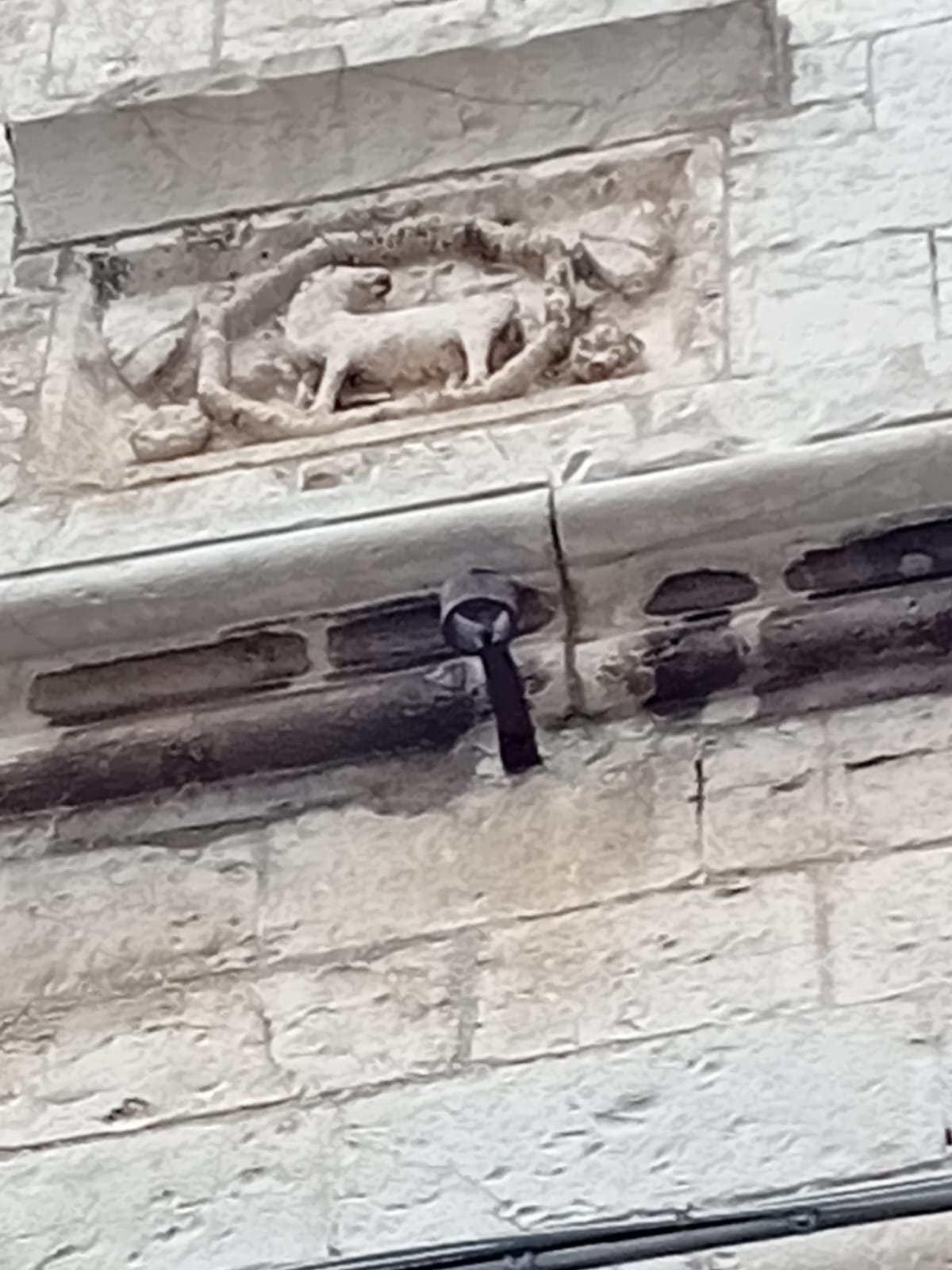
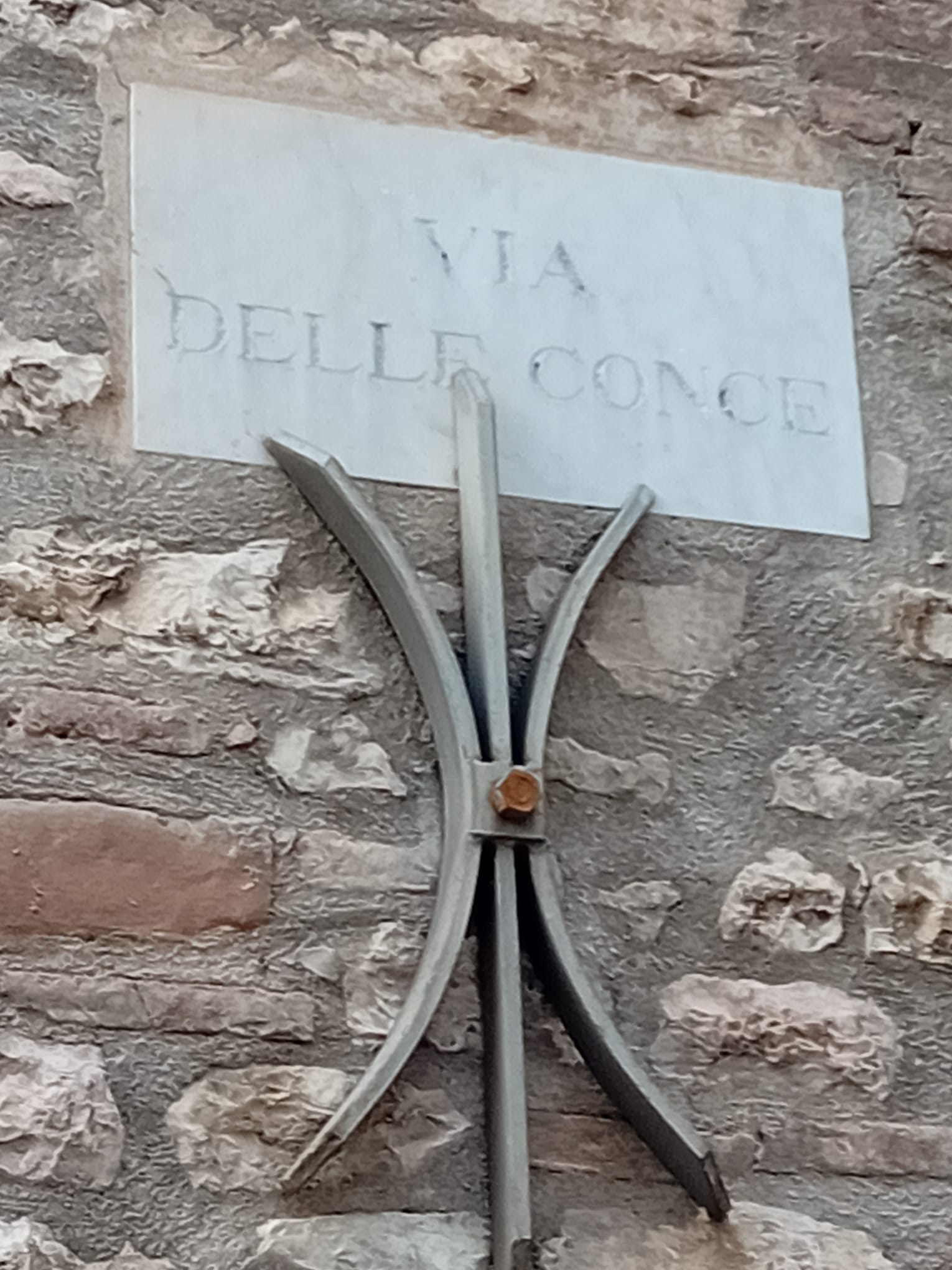
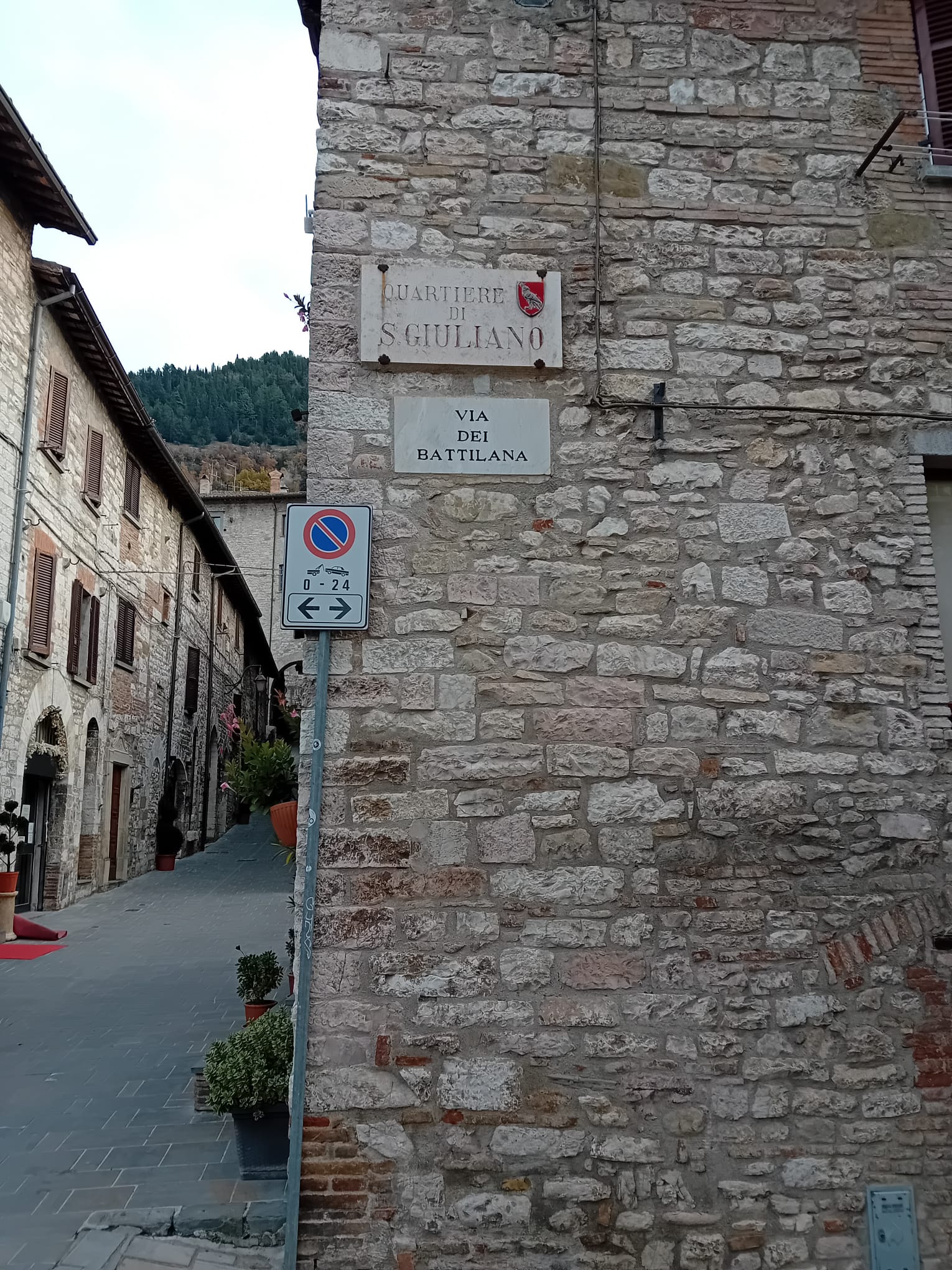
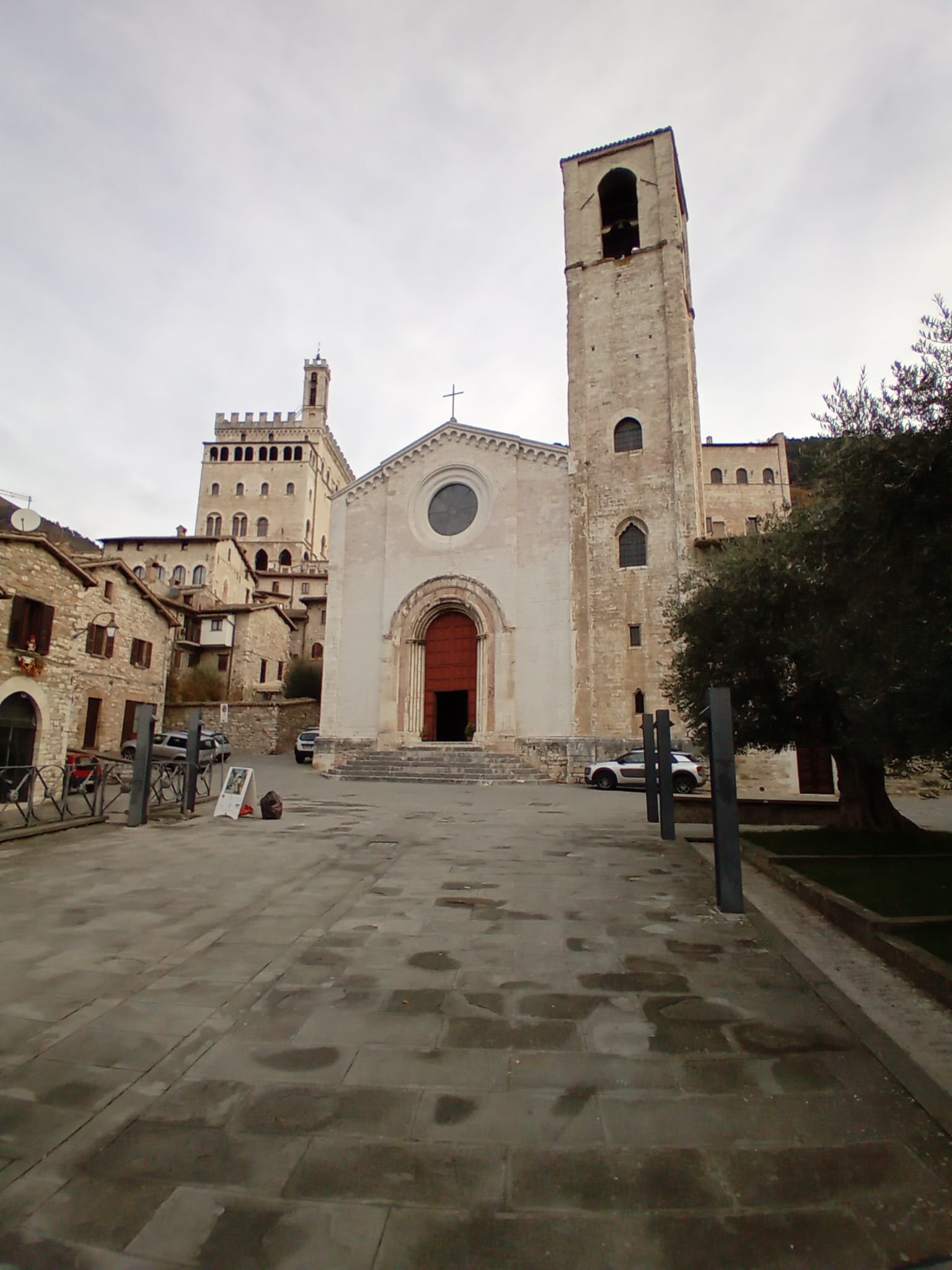
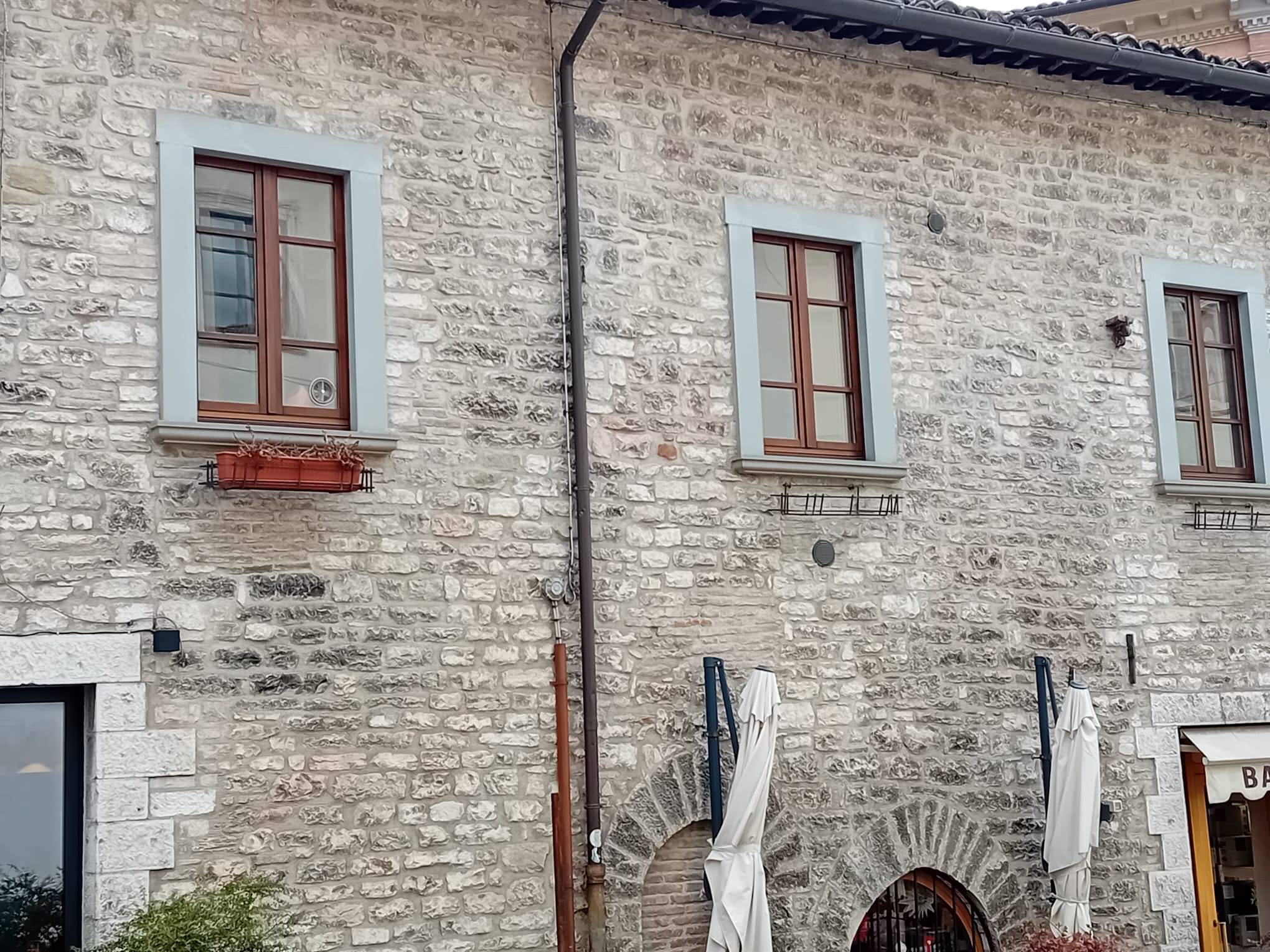
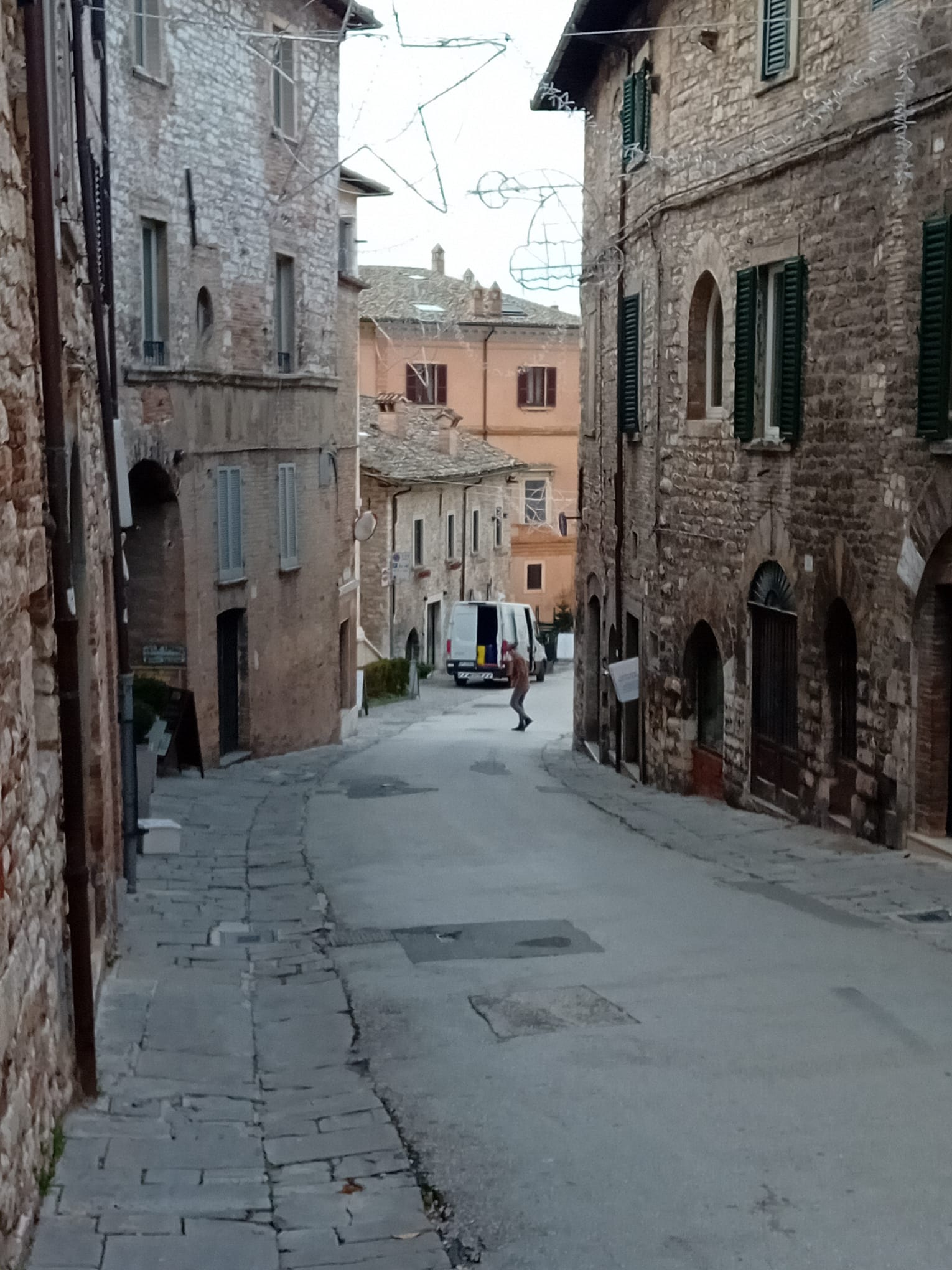
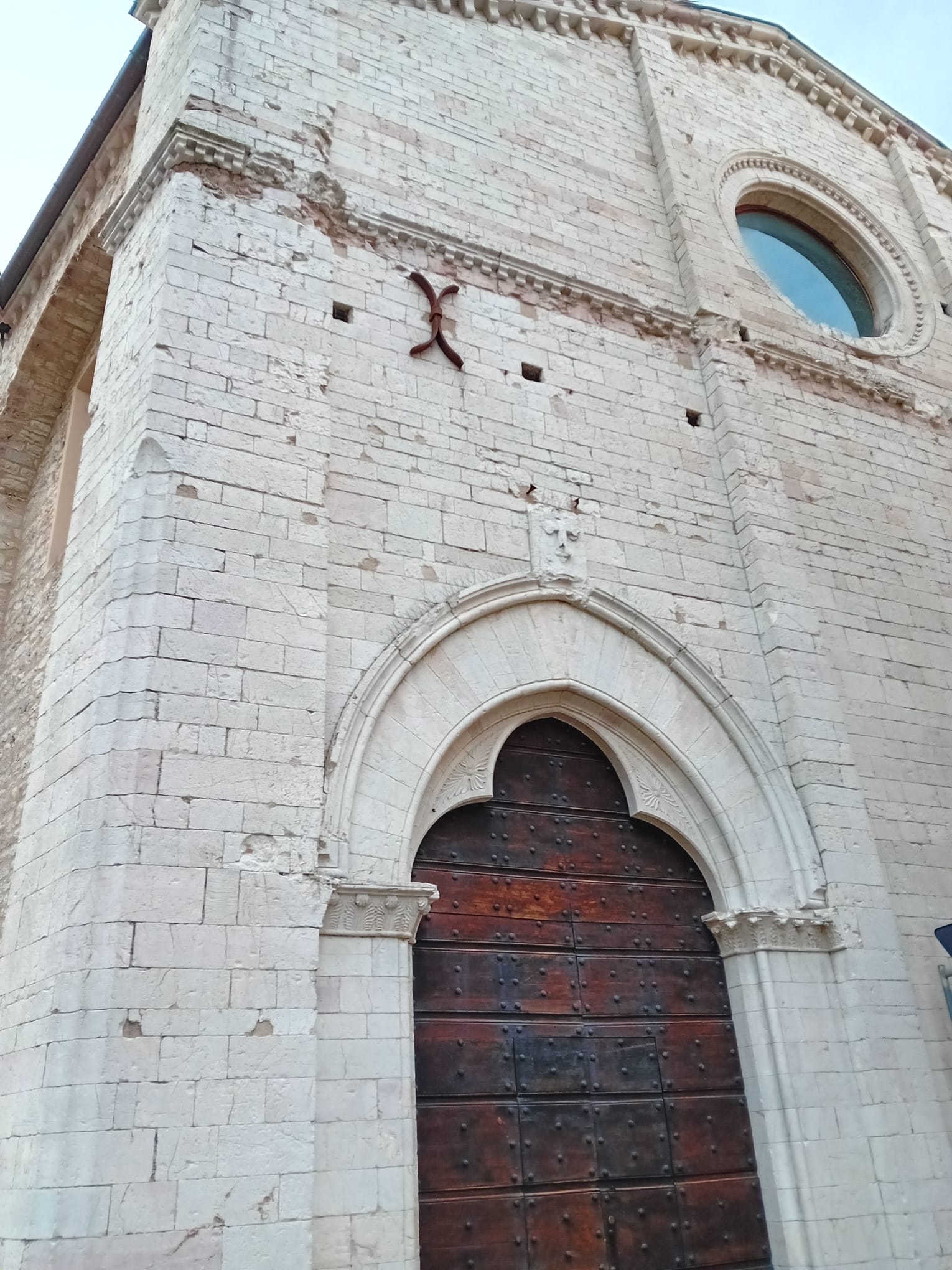
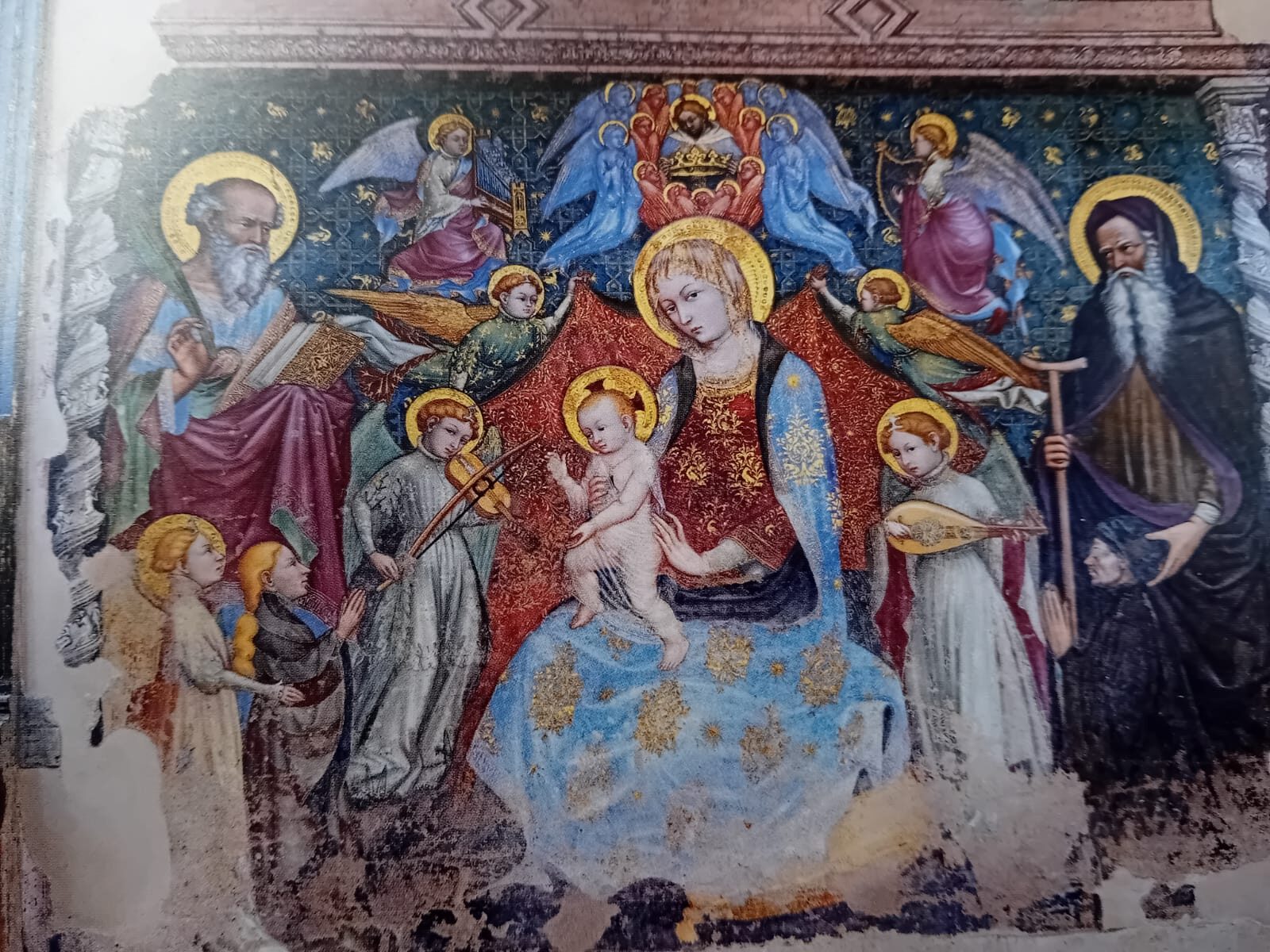
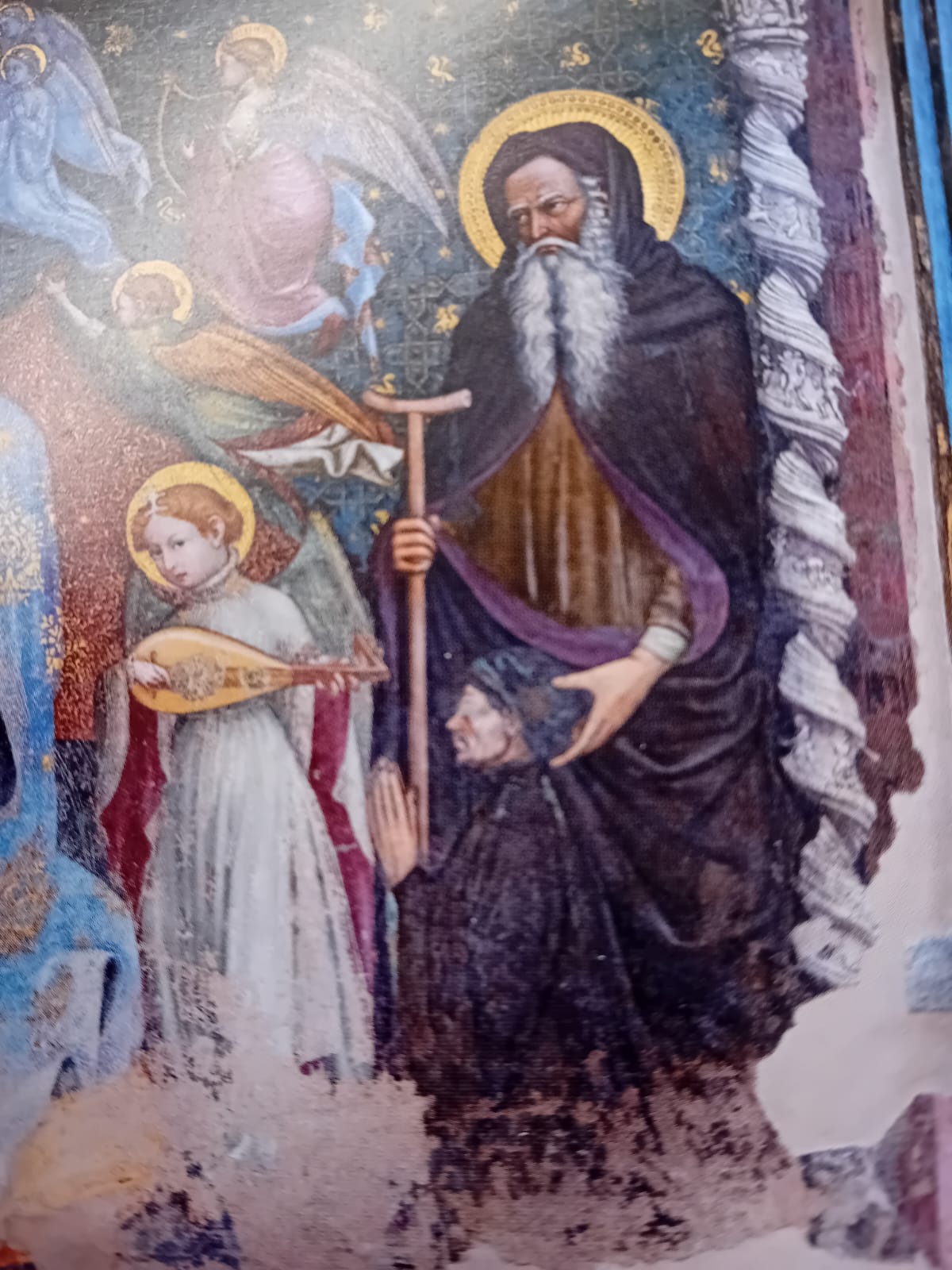
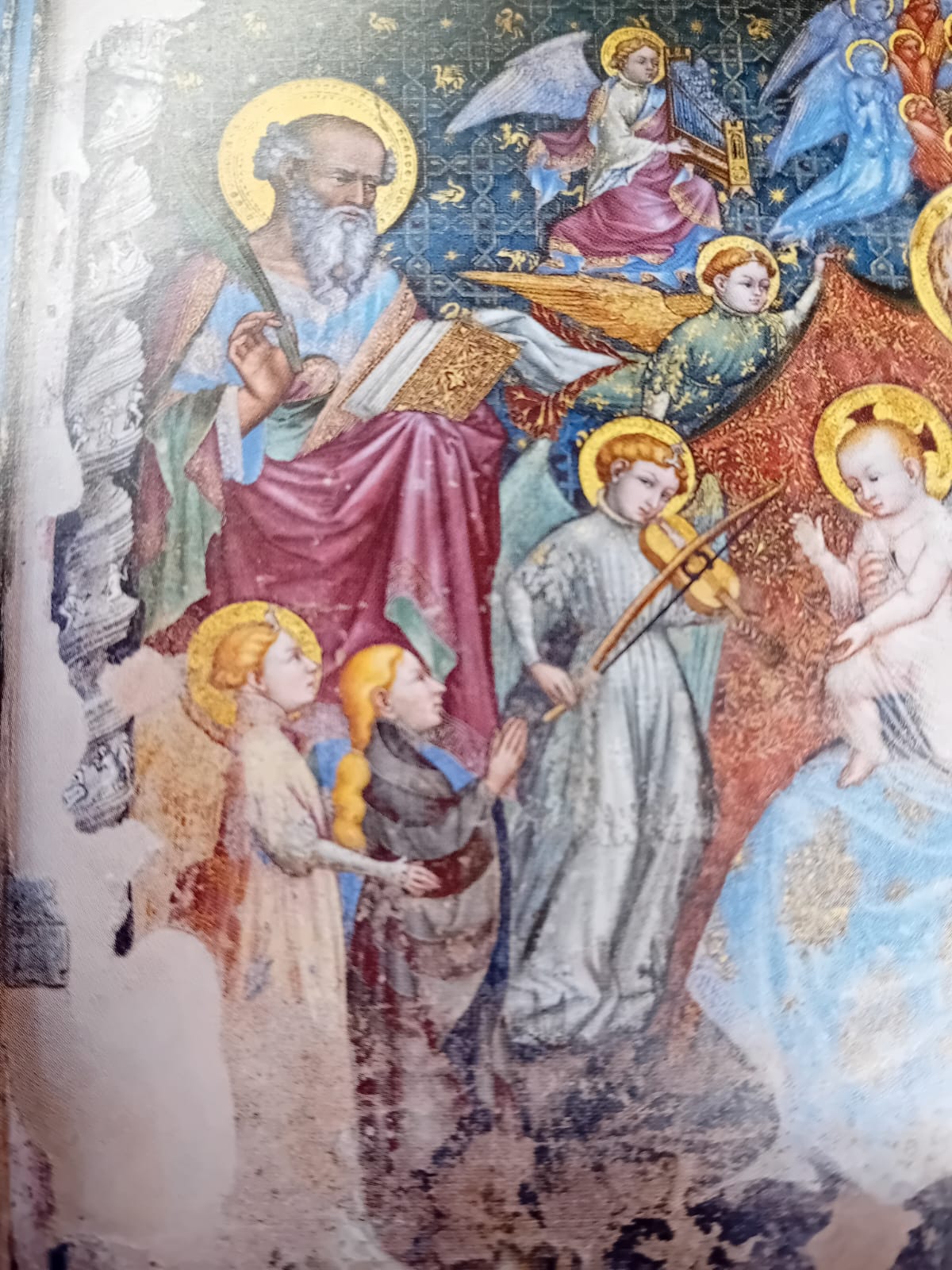
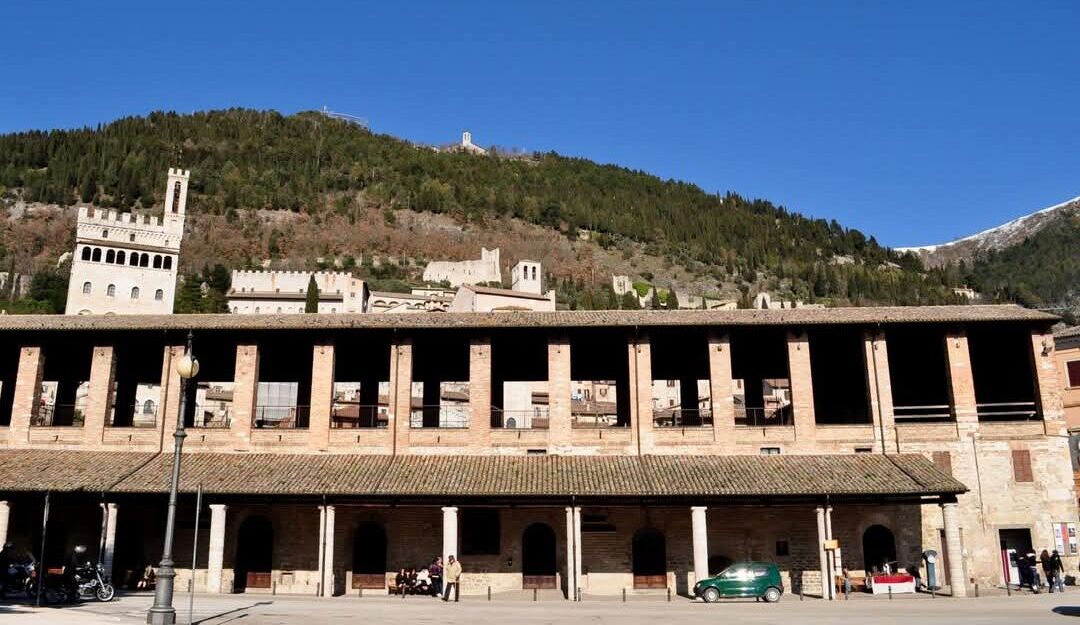
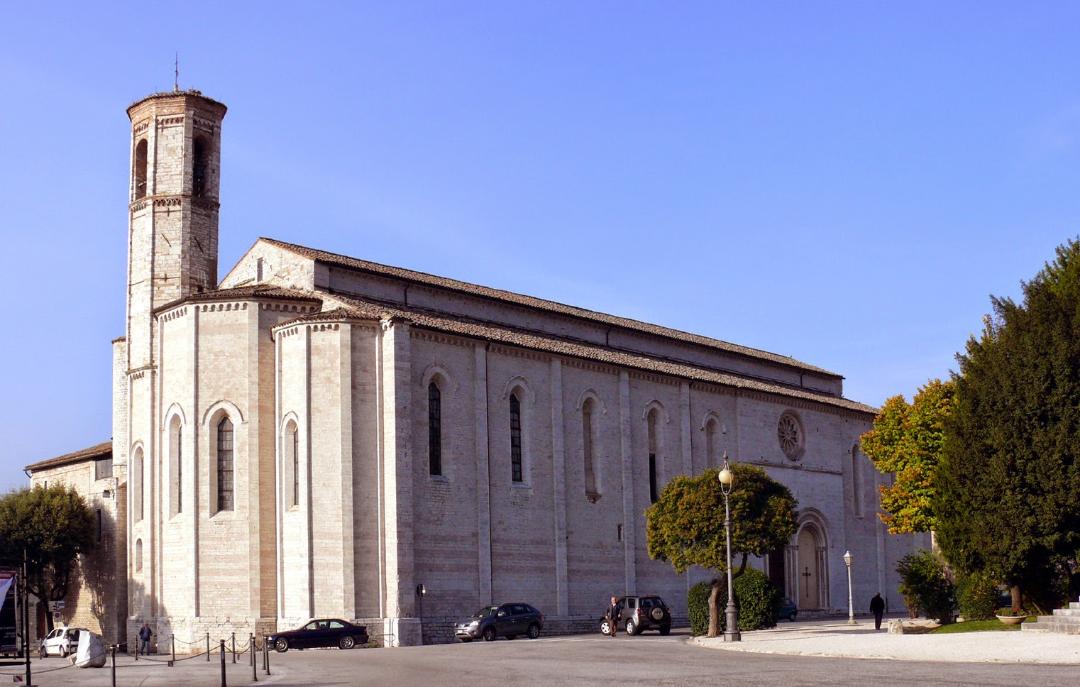
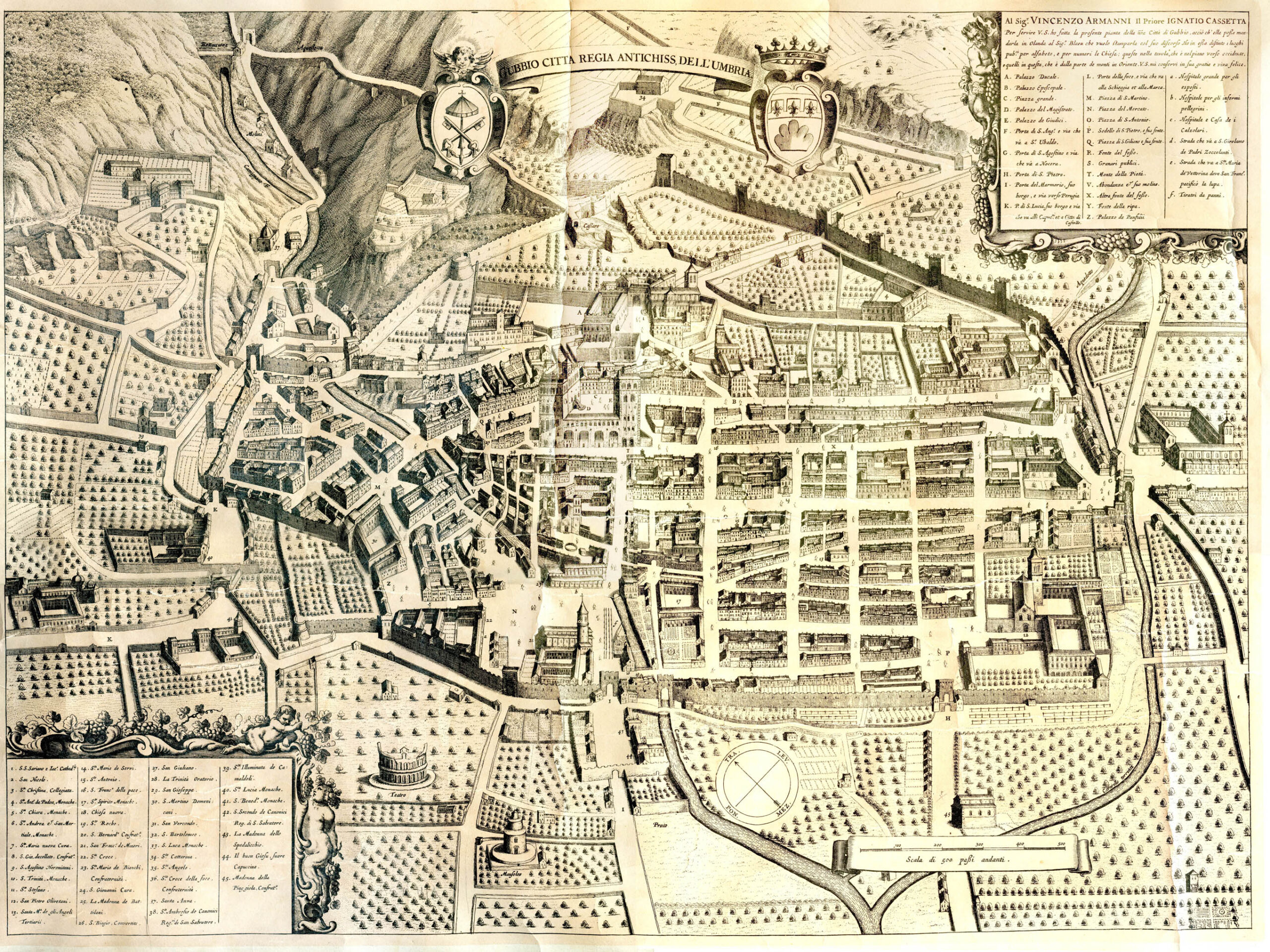
In Via dei Consoli, specifically on the façade of the building located on the left as one ascends towards the Palazzo del Bargello (at number 15), we encounter an interesting testimony of the presence of the Wool guild : a sheep sculpted in stone, set within an octagonal frame (photo 1). From this evidence, through a maze of streets and alleys, we arrive at the central hub of activities related to the production and finishing of wool and textiles: this was located in the vicus associated with the San Giuliano Quarter, now an integral part of the San Giovanni area, in the portion between today’s Via Piccardi and Via della Repubblica. Even today, in this small patch of land, there exist two streets, Via delle Conce (photo 2) and Via dei Battilana (photo 3), which recall some fundamental moments of the wool factories and, broadening the conceptual framework, those of leather as well. It is no coincidence that the Churches of San Giuliano and San Giovanni Battista (photo 4) were also important references for the Tailors’ Guild (affine to that of the wool workers), with some relics in the former and, in the latter, a true altar in the 15th century, later moved in 1588 to Santa Maria dei Servi al Corso. Passing through Via della Repubblica, at today’s number 4, one can see a building that once housed the residence of the dyers Brozzi (photo 5); a little further up, following the course of the aforementioned street, one encounters the historic residence of another important family of merchants linked to the wool trade: the Paoli family, a branch of which emigrated to Corsica, a land well-known to the illustrious family of Fabiani, also from Gubbio, who conducted lucrative business there… precisely with wool! To add another point of interest, it should be noted that the current street known as Via della Repubblica was once Via Paoli (photo 6). A fundamental reference for wool artisans was the Church of Santa Croce del Mercato, located next to the current municipal pharmacy, in the portion occupied by Via Cavour. Here, in 1599, there existed an altar erected by the Guild, whose prosperity also allowed for the construction of the Church of Santa Maria dei Battilana. Ascending towards Via XX Settembre via della Repubblica and the staircase of Via Lucarelli, we find a historical nucleus of remnants leading us up to the 19th century, the temporal dimension in which craftsmanship acquired industrial connotations: this is the case of the palace that housed the wool factory founded by the Scavizzi family, near today’s Hotel Bosone. Moving towards Palazzo dei Consoli and visiting the civic museum located within it, we can admire a painting attributed to Jacopo Bedi (15th century), who was also the Consul of Gubbio for the San Giuliano Quarter, depicting the members of the Confraternity of the Whites, presenting sacred figures with swaddled children and abandoned infants: the so-called exposed. Below the main depiction, scenes of assistance are set in the loggia (which we will discuss shortly) present in the market square of the city , where the Hospital of Santa Maria was located. Proceeding towards the San Pietro Quarter, and thus leaving the upper part of the City, we come across the Church of Santa Maria Nuova in Via Savelli della Porta: here is the magnificent Madonna del Belvedere, a fresco created by the Gothic painter Ottaviano Nelli commissioned by the wealthy dyer Antonio di Muzio or Mucciolo di Angeluccio. The work, a triumph of colors, golds, and decorations, was executed in 1403 or at the beginning of the 15th century, and features, respectively on the left and on the right, an unknown donor and Antonio di Muzio. According to some hypotheses, the female icon (presented by an angel before the Lord) was meant to be the dyer’s consort, who died at a young age, potentially identified as Ilaria del Carretto (photos 7-10) from Gubbio. Descending further down, we encounter the places that housed, for a long time, the so-called “tiratoi”: substantial facilities that ensured the stretching and pulling of wool in the fresh air, thereby assisting both the wool workers and the dyers. In the area from Porta di San Pietro and the adjacent tower to Ponte del Marmoreo and Piazza del Mercato, there were as many as 37 tiratoi recorded in 1377. The wool, first tanned and crumpled, dried in the open air and, when appropriately pulled, acquired the desired dimensions and shapes. In this area, the tiratoi (or tiratori, in archaic Italian) dominated the scene, until the construction of the raised loggias in the 17th century, an operation that aimed to satisfy the need for covered tiratoi, protecting the wools and textiles from the elements (photo 11). The site of the Hospital of Santa Maria since the 14th century. The area of the loggia underwent decisive changes over time: in 1505, other city hospitals merged with the existing hospital, and thus the building housed what was called the “Spedal grande,” active until 1628. From this perspective, the wealth attained by wool artisans stands out, as they became central in the framework of charity and assistance precisely due to their substantial resources. It is no coincidence that in 1402, the Wool guild received papal permission to rebuild the Hospital of Santo Spirito in the very area we are discussing. On the façade of the loggia complex, a fresco with the Madonna between Saints Peter and Paul from 1473 stood out, and still remains to this day, the work of a pupil of Nelli. The crisis in the wool sector led to the cessation of the activity of the covered tiratoi in the mid-1600s, and the generous efforts of Bishop Angelelli to revive the industry were in vain. Opposite the loggias of the tiratoi, we can admire the Church of San Francesco in the area where, once, the property of the Spadalonga family, traditionally linked to the wool activity and its trade, stood (photo 12). This historic family was also the first to host and provide for St. Francis, who had recently left his affluent home in Assisi; the Spadalonga family also woven for St. Francis the bigello habit that would accompany the Saint throughout his life of preaching and would become the model for the garments of his brethren. Nearby, there used to be the customs boundary of the City, later demolished with the Porta Marmorea in the 19th century (photo 13). Here, among other goods, shipments of linen and cotton, widely present in Gubbio’s factories, would have to pass, with secure and stable sources of supply: for cotton, the supply was guaranteed, barring brief periods of turmoil and difficulties, from the routes of Apulia, Calabria, and the Middle East, with the precious mediation of Venice, which had multiple and profound ties with our territory.