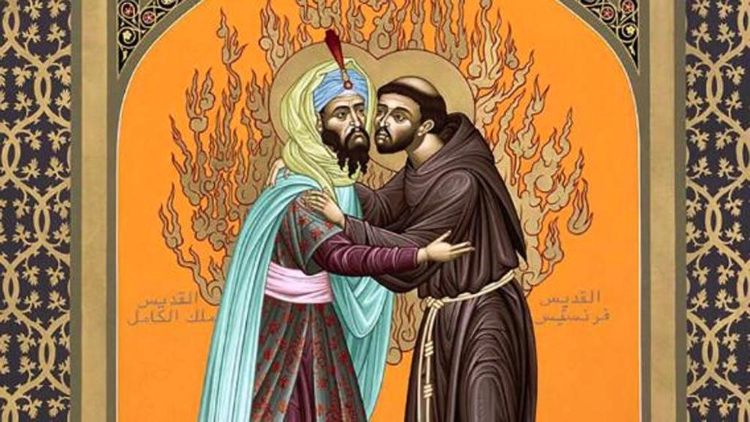
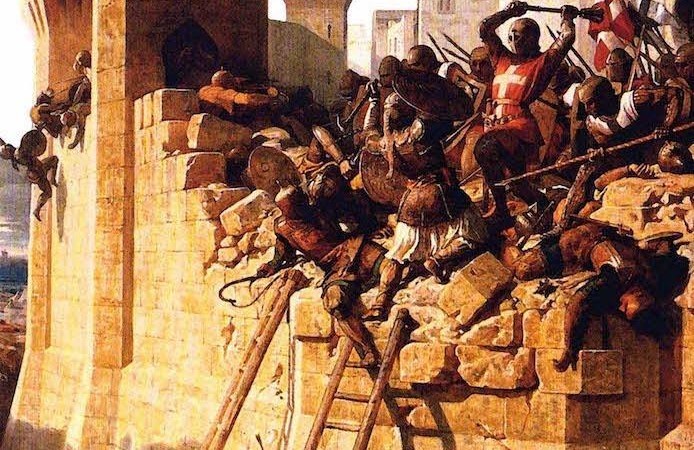
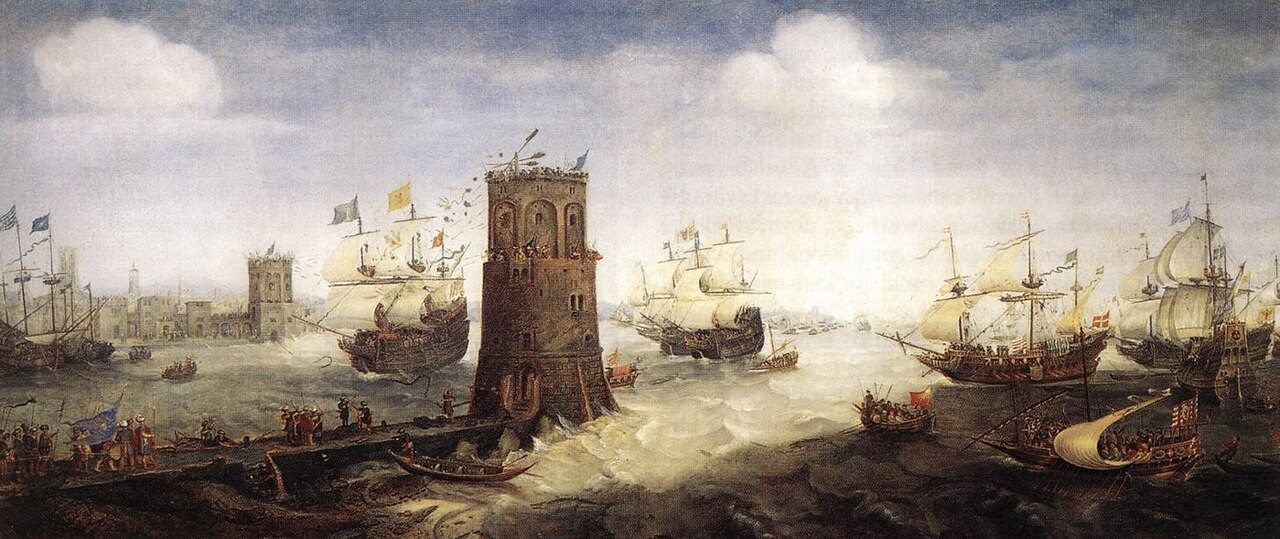
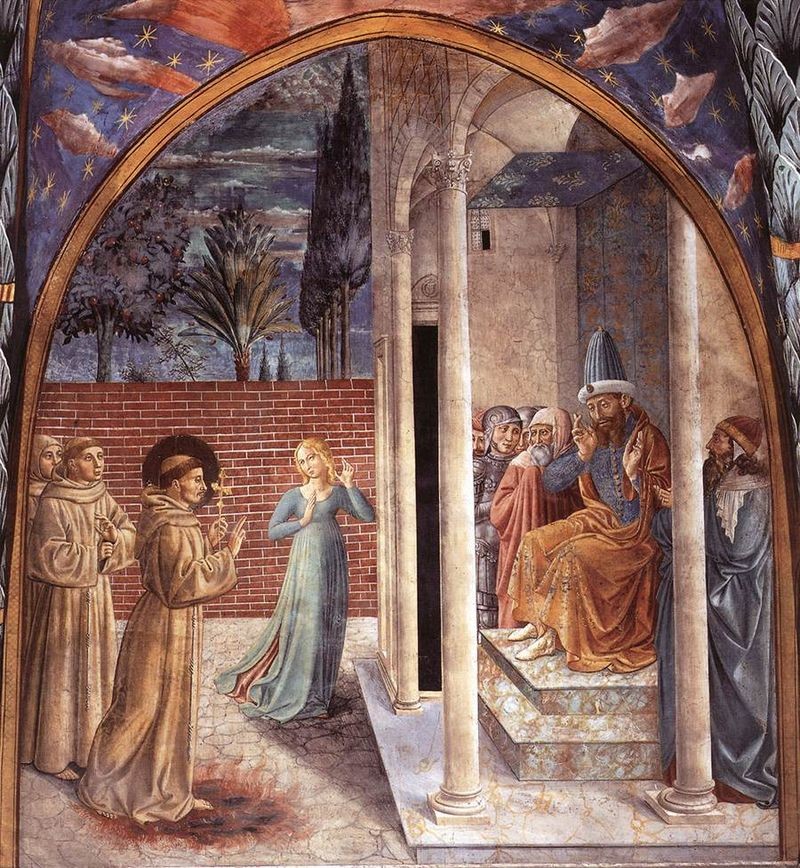
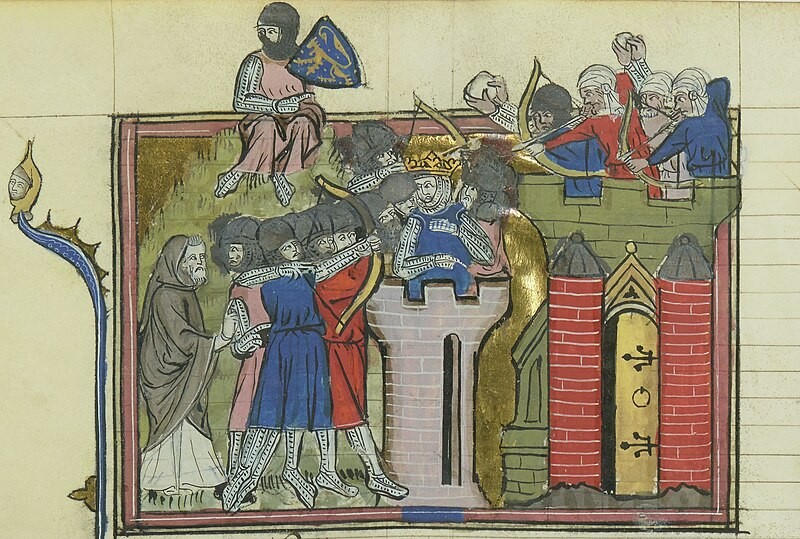
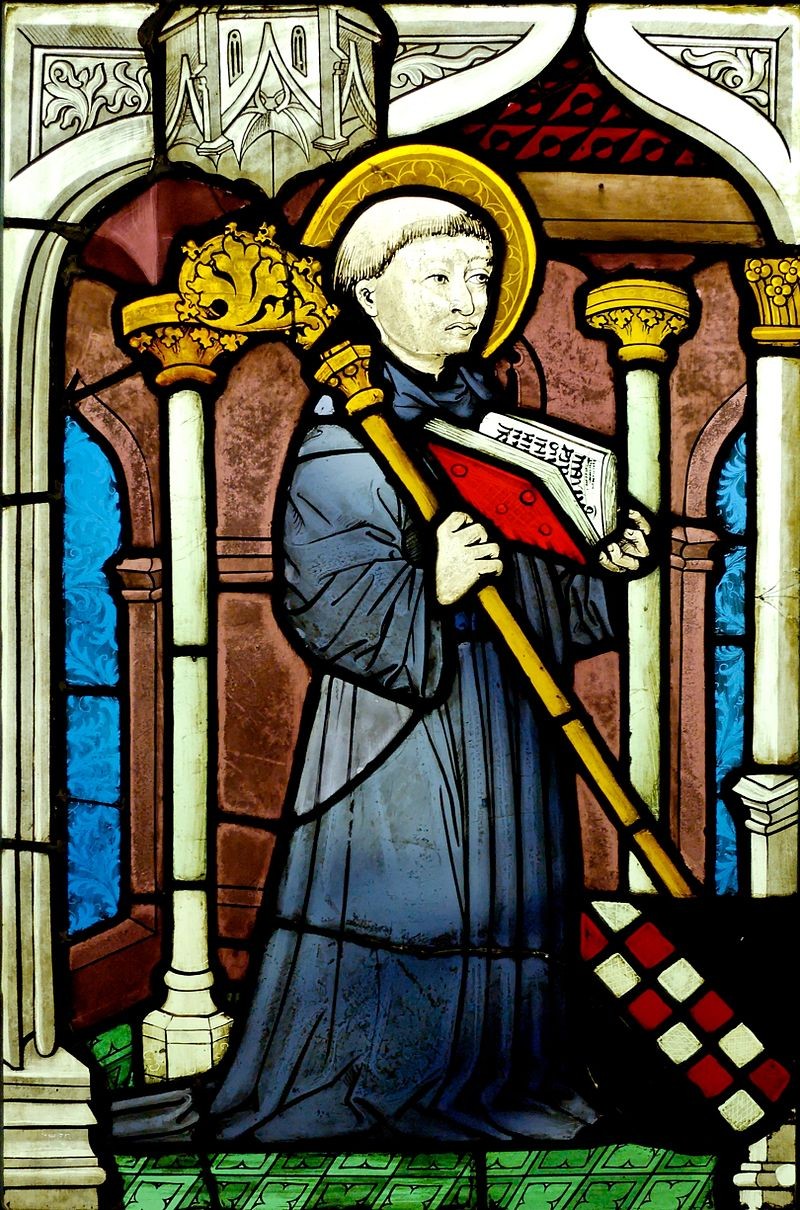
The opposing polarities of dialogue and confrontation, vividly depicted in these two illustrations, encapsulate the overall atmosphere of the Crusades – a complex historical period blending spiritual fervour, economic interests, adventurous spirit, Manichean theological visions, and other motivations driven by curiosity, dialogue, and discovery. How are the Crusades connected to the broader historical context in which Francis lived? And how does this environment relate to the figure and work of Saint Francis? Let us proceed step by step. The concept of Crusade matured in the Christian West and took shape between the 11th and 13th centuries. The First Crusade was proclaimed in 1095 at the Council of Clermont by Pope Urban II (Ottone de Lagery, Counts of Châtillon), a Benedictine monk, with the aim of liberating the Holy Places from the Seljuk Turks, who, having seized Anatolia from the Byzantines and inherited the Holy Land from the Arabs, posed a threat to Christendom. Byzantine Emperor Alexios I Komnenos sought aid, as he faced a near-isolation against the Turkish advance; however, mutual suspicion between East and West persisted, and the pillaging carried out by Crusaders in the East would, in retrospect, justify many of these fears. The First Crusade (1096–1099), involving approximately 10,000 men primarily recruited from Western Frankish regions, resulted in the establishment of Crusader states—namely the Kingdom of Jerusalem, the Principality of Antioch, the County of Tripoli, and the County of Edessa—and elevated three key figures: on the spiritual front, Peter the Hermit, a passionate organiser of the Crusade; in the military arena, Godfrey of Bouillon, a Frankish ruler; and his brother Baldwin. From 1147 to 1150, the Second Crusade took place, marking, among other things, a setback in the reconquest of the County of Edessa, which had fallen to the opposing forces, and signalling the beginning of expansion into Egypt—an area that, as we shall see, became the setting for the encounter between Saint Francis and the Sultan. The driving force behind this second venture was, above all, Bernard of Clairvaux, a Cistercian monk who inspired the Knights Templar, an order recognised at the Council of Troyes in 1228 with papal approval from Pope Honorius II. Fast-forward to 1181–82: Saint Francis was born, at a time when the crusading climate remained vigorous. A notable episode during his life exemplifies a different approach towards the Muslim East, contrasting with the prevailing hostility—an event that attests to a more conciliatory attitude. The Third Crusade (1187–1192), occurring during Francis’s childhood, had secured the recapture of the Kingdom of Jerusalem and the full accessibility of the Holy Places. This period also highlighted the charismatic figure of Saladin, the Kurdish sultan who rose to power within the Fatimid dynasty, distinguished for his intelligence and tolerance despite his fearsome reputation in the West. Upon Saladin’s death, his realm was divided among family members, with Al-Malik al-Kamil, the son of Saladin’s brother Saif ad-Din, inheriting Egypt. It was in this context that, in 1219, during the Fifth Crusade (1217–1221), Saint Francis, accompanied by some of his confrères, disembarked in Egypt and sought an audience with the sultan. According to some sources, Francis was briefly mistreated by Ayyubid guards, while others suggest he was treated with respect, recognised by the soldiers as a peaceful and peculiar preacher, whose sweat and humble presence touched them deeply. The fact that Francis wore his hooded habit led Muslims to associate him with a Sufi mystic—a term derived from the Arabic for hood—thus reinforcing the perception of him as a spiritual figure rooted in their own cultural context. To convey his peaceful intentions, Francis reportedly shouted, “Sultan! Sultan!” (referring to the ruler), and the soldiers quickly understood, escorting him to the sultan’s camp. The sultan, struck by Francis’s genuine spirituality, bestowed gifts upon him. Mutual respect and admiration grew; however, their exchanges also included challenging moments. One anecdote recounts that Francis proposed the sultan undergo an ordeal by fire to determine the true faith—if the sultan emerged unscathed, he would convert; the sultan refused, asserting that his soldiers would kill him if he converted. This request, rooted in a tradition of Christian and Islamic narratives of divine protection, reflected Francis’s boldness in establishing a direct, face-to-face relationship with the Muslim ruler—an approach markedly different from the often confrontational attitude typical of the period.
The sultan’s positive reception, along with the generous protection granted by other Muslim rulers such as Al-Mu’azzam of Damascus, indicates a moment of potential dialogue amid a generally turbulent era. It is also said that Francis, while in the Holy Land, was moved by the call to prayer as the muezzin sang, and that some of his confrères appreciated Islamic architecture, notably the elegant minarets of mosques. Furthermore, during a meal in the Holy Land, Francis is believed to have challenged the new prohibitions on meat—declaring that there is a principle of accepting what is offered: “There is a principle,” he supposedly said, “that one must accept what is offered; if meat is offered, then let us eat!”
In sum, these episodes exemplify a different, more dialogue-oriented approach to interreligious relations, even amid the broader context of conflict and crusading fervour. The attitude of mutual respect and openness displayed by Francis and the Muslim leaders reflects a nuanced, perhaps hopeful, possibility of understanding during a period often characterised by hostility—an attitude that foreshadows the potential for genuine dialogue and peace.