
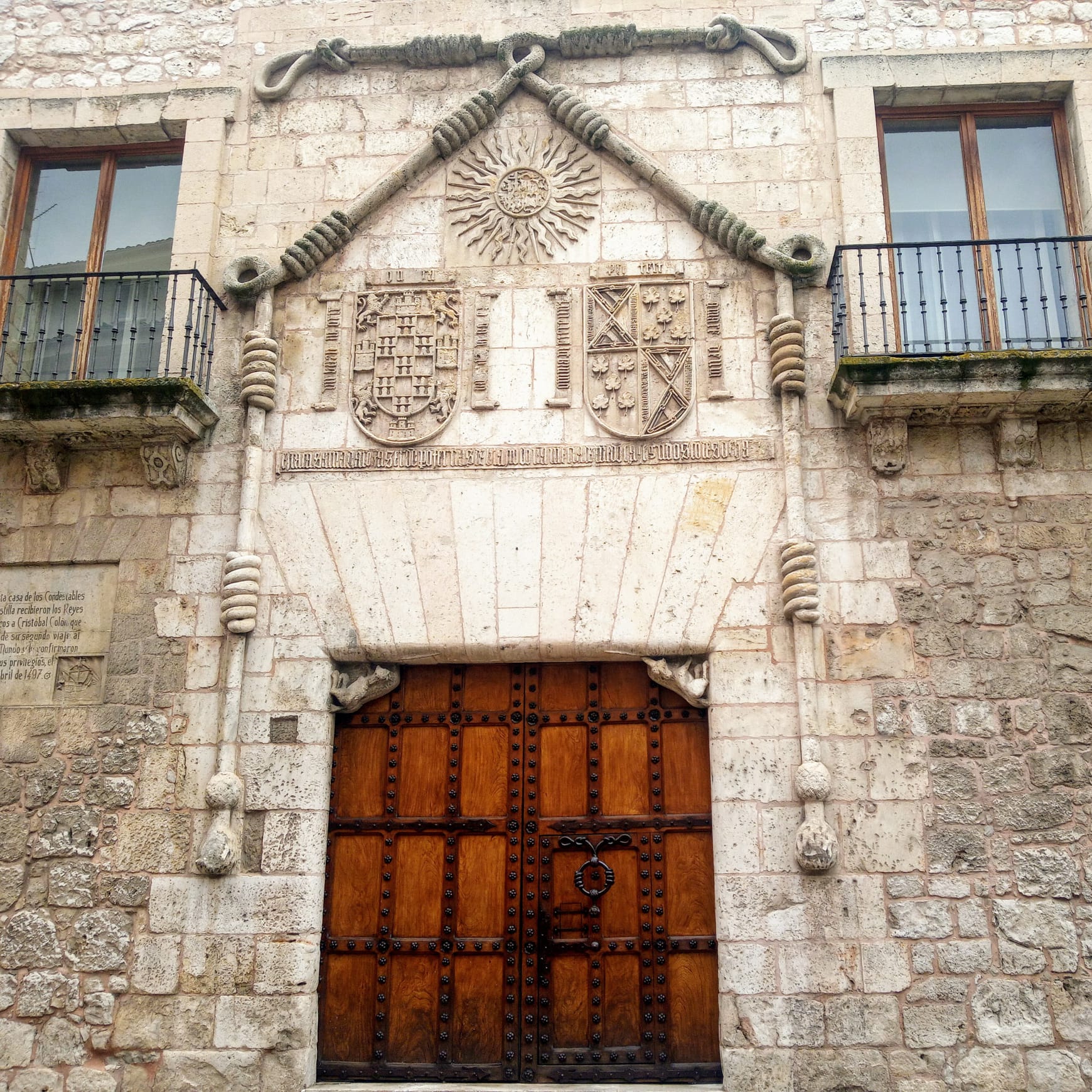
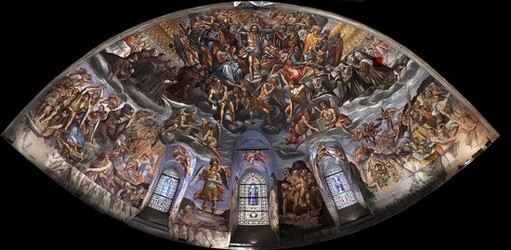


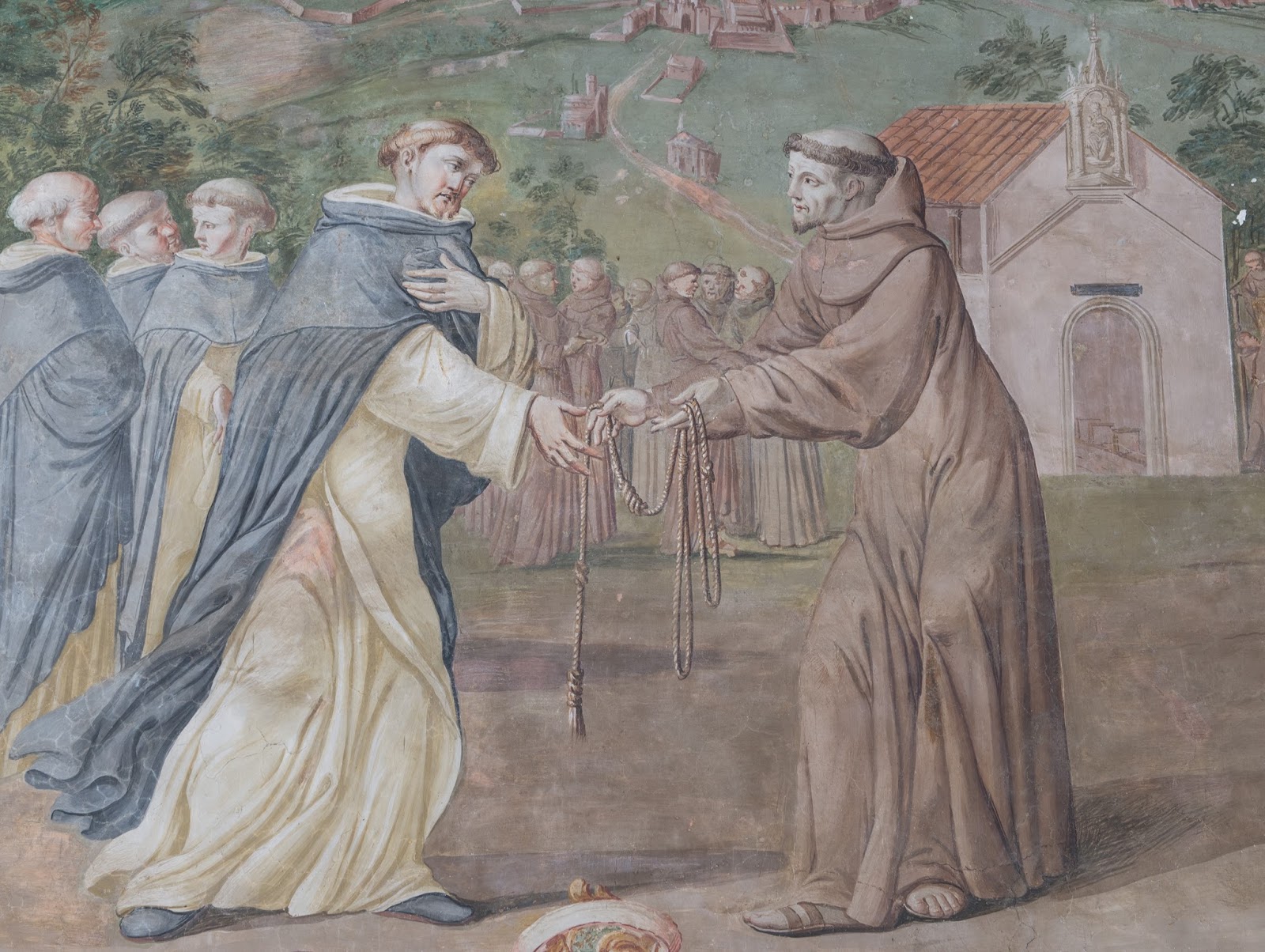
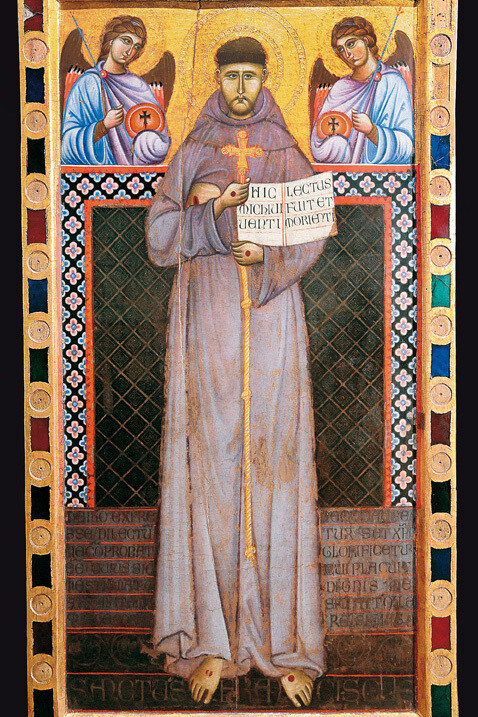
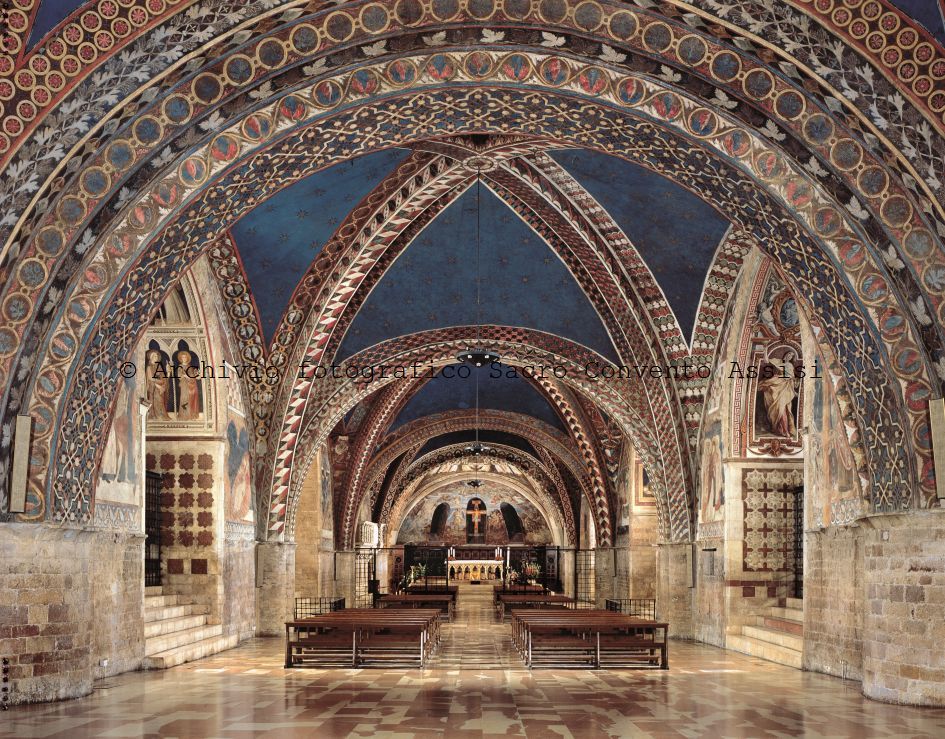

The origin of the devotion to the Cord of Saint Francis is traditionally traced back to certain episodes from the Saint’s life, particularly to Gospel readings heard at the church of the Porziuncola relating to the mission entrusted to the Apostles. According to Thomas of Celano, author of The Life of Blessed Francis (Vita prima), after exclaiming, “This is what I want, this is what I seek, this is what I long to do with all my heart,” Francis took off his sandals, laid aside his staff, put on a simple tunic, and replaced his belt with a cord. This gesture symbolised his embrace of a humble way of life, his renunciation of comfort, material security, social prestige, and power. From that moment on, the poor tunic—often mended with patches—and the cord of wool or cotton tied around the waist became the habit of the friars and of the Poor Ladies (the Poor Clares) who chose to follow his way of life and his teachings. The number of knots on the cord could vary from three to five. The three knots represented the three evangelical counsels or vows prescribed by the Franciscan Rule: Poverty, Chastity, and Obedience. The additional two knots referred to the Stigmata of Christ and of Francis. Thomas of Celano also records the devotion to the Franciscan cord of Dominic de Guzmán, founder of the Order of Preachers—later known as the Dominicans. Dominic had received the cord as a gift from Francis himself, after persistent requests, at the end of their famous meeting, and he habitually wore it beneath his inner garment. This encounter between Saint Francis and Saint Dominic is depicted in one of the frescoes painted between 1666 and 1682 by the Bolognese artist Francesco Providoni, in the sixteenth-century Great Cloister of the convent of the Porziuncola at Santa Maria degli Angeli. From the thirteenth century onwards, groups of cordigeri—the “wearers of the cord”—became widespread. These were lay devotees who girded themselves with the cord as a sign of devotion and as an expression of their desire to emulate the humble and penitential life of Saint Francis. They were organised into lay companies or confraternities open to both men and women, known for their charitable works and for commissioning artistic projects to adorn places dedicated to the memory of Saint Francis. The need to provide structure and order to these groups of devotees led the Franciscan pope Sixtus V to establish, on 19 November 1585, through the papal bull Ex supernae dispositionis, the Archconfraternity of the Cord of Saint Francis, headquartered at the high altar of the Lower Basilica of Saint Francis in Assisi. The papal bull granted the Minister General of the Conventual Franciscans the authority to found confraternities of Cord-bearers in churches of the Order, aggregating them to the Archconfraternity of Assisi. Later papal bulls extended this privilege to other Franciscan branches, such as the Observants, the Third Order Regular, and the Capuchins. The Archconfraternity was responsible for maintaining the dignity and decoration of the saint’s sepulchral church and was committed to works of piety and charity wherever possible, in order to spread devotion to Saint Francis. Among the distinguished members of the Cordigeri was the Umbrian painter Cesare Sermei, who portrayed himself in this capacity in his famous fresco of The Last Judgement, painted in 1623 for the Lower Basilica of Assisi. The devotion to the Cord of Saint Francis spread particularly widely between the sixteenth and seventeenth centuries, following the establishment of the Archconfraternity of Assisi. In addition to Sermei’s fresco, we may recall two notable oil paintings on canvas: The Allegory of the Cord of Saint Francis (1589) by Ercole Ramazzani, and Franciscan Allegory (1593) by Guglielmo Caccia, both inspired by an engraving by Agostino Carracci titled Saint Francis and the Cords (1586). In Gubbio, a Company of the Cord owned an altar in the church of San Francesco, from which came an altarpiece depicting The Allegory of the Cord of Saint Francis. The painting, executed in the early seventeenth century by the Gubbian artist Felice Damiani and now housed in the Civic Museum of Palazzo dei Consoli, is notable for its figures and symbols characteristic of the cordigeri confraternities—particularly devoted not only to the Cord of Francis but also to Saints Anthony of Padua, Bernardine of Siena, Bonaventure of Bagnoregio, Louis of Toulouse, Louis of France, Clare of Assisi, and Elizabeth of Hungary, as well as to the Immaculate Conception, the Eucharist, and the Crucifix. The work was commissioned with the support of two noblewomen from Gubbio, Teodora Andreoli and Camilla Baldinacci, members of the same company, who may be recognisable in the female faces depicted among the crowd in the central section of the painting. Of special note is the image of the tamed wolf beside Saint Francis—a symbol of his power as a peacemaker and a direct allusion to the Cordigeri’s mission of promoting reconciliation. In 1612, the confraternity decided to renovate the altar, giving it a more monumental aspect. Six large canvases depicting Scenes from the Life and Miracles of Saint Francis were commissioned from the painter Bernardino Brozzi to flank the great altarpiece. Devotion to Saint Francis inspired not only the faithful to gird themselves with the cord, but also led some nobles to incorporate it into their coats of arms. In Spain, the so-called Casas del Cordón (Houses of the Cord) still bear witness to the decorative use of the Franciscan cord as early as the late fifteenth century. The most famous example of this type is undoubtedly the Gothic Palace of the Constable of Burgos, which in the fifteenth century hosted the historic meeting between the Catholic Monarchs and Christopher Columbus. In the Chapel of Relics of the Basilica in Assisi are preserved numerous relics and objects that belonged to Saint Francis, including the parchment containing the Franciscan Rule approved by Pope Honorius III in 1223, his coarse wool habit, and the cord that became the object of such profound devotion.