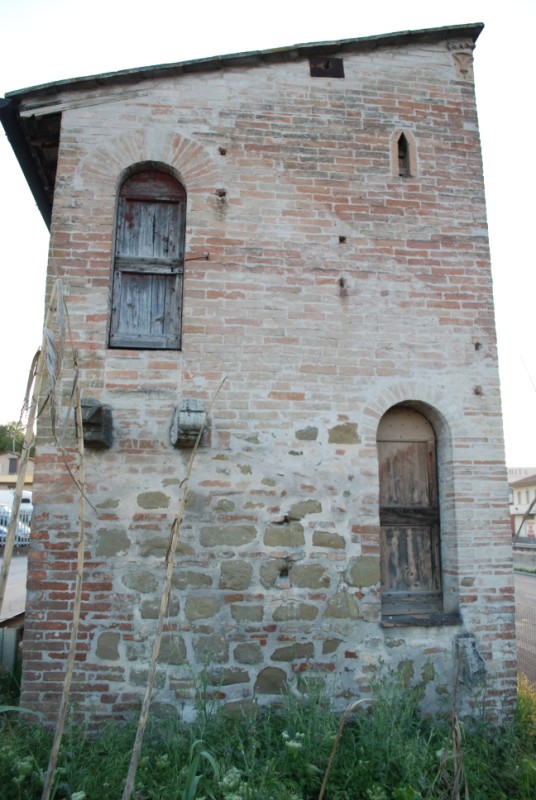
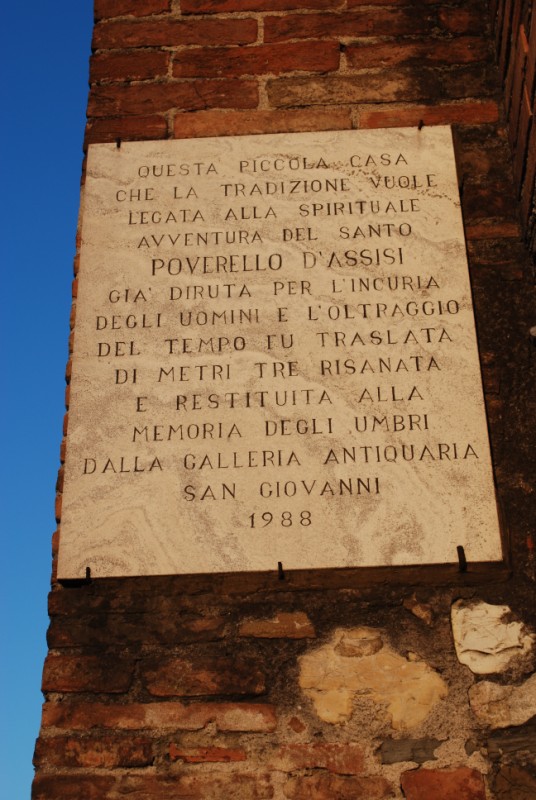
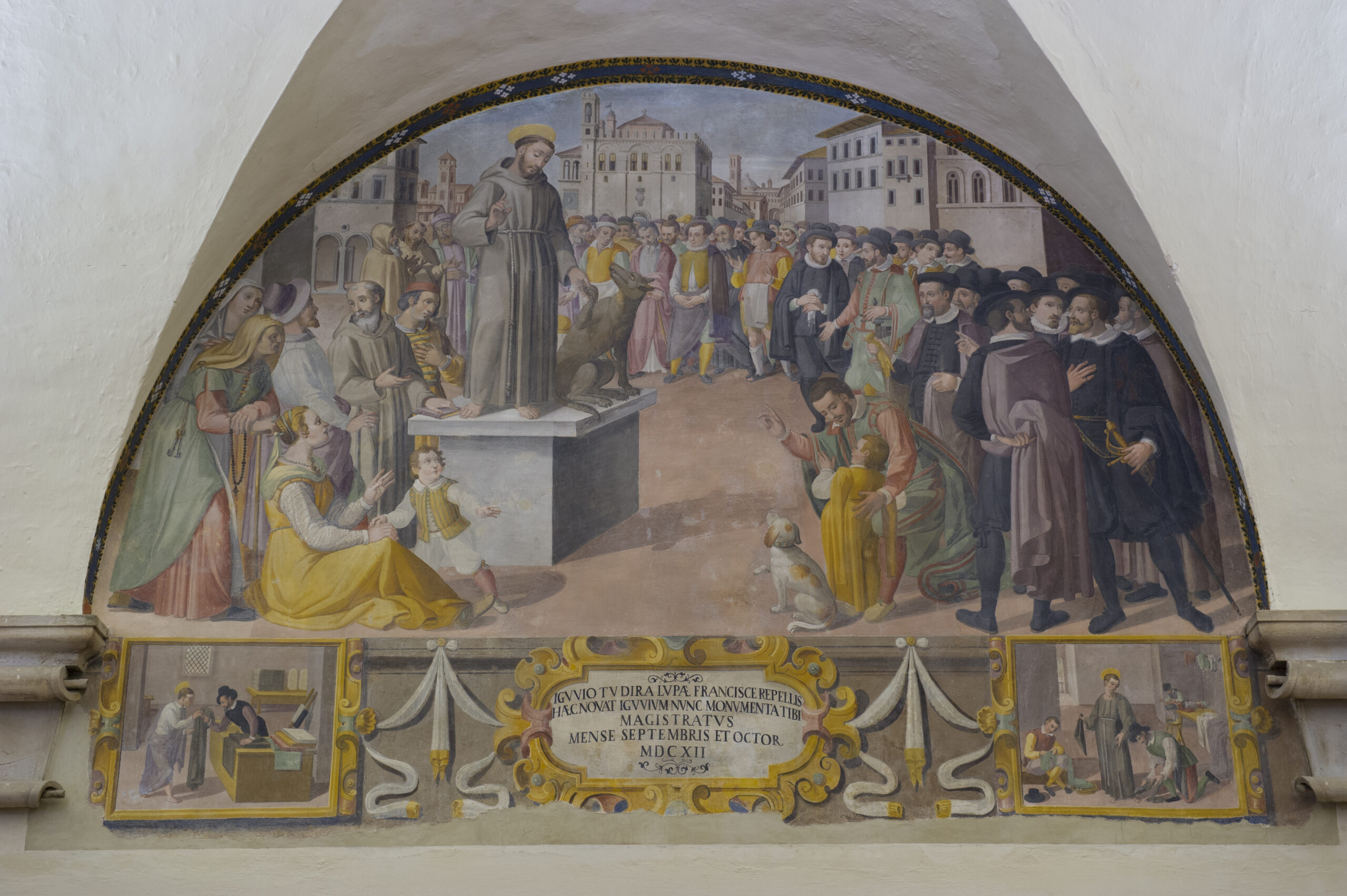
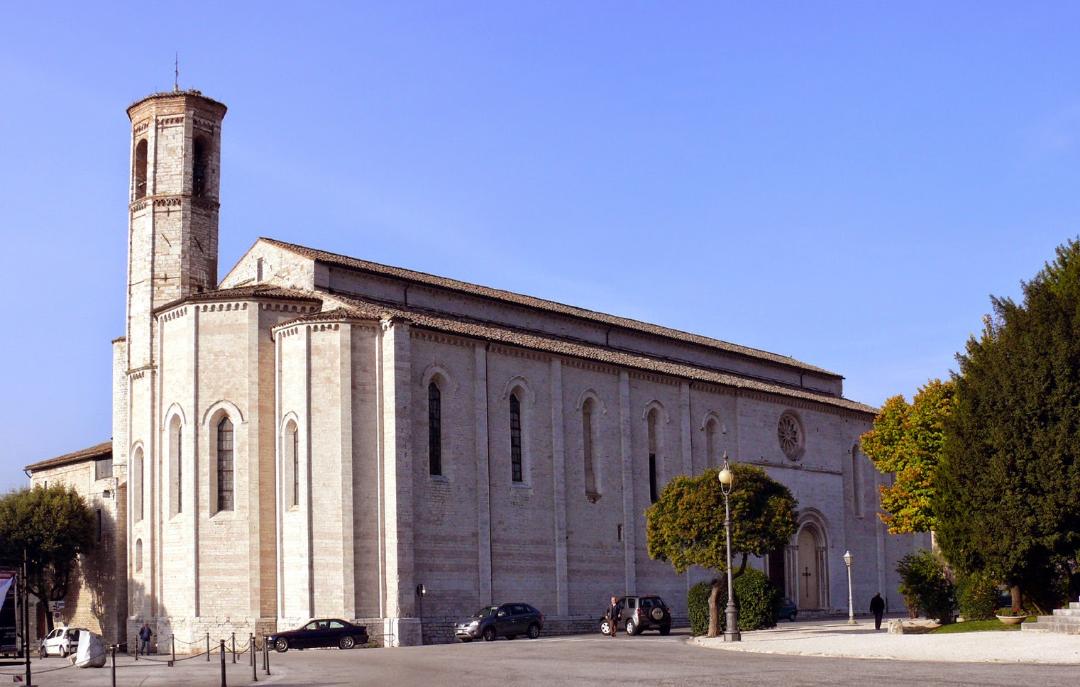
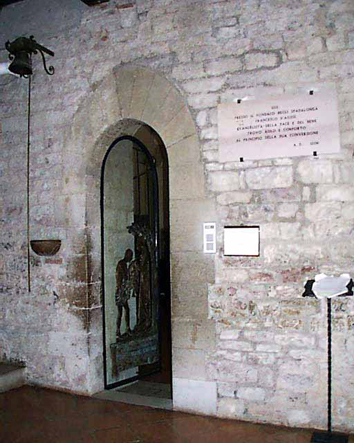
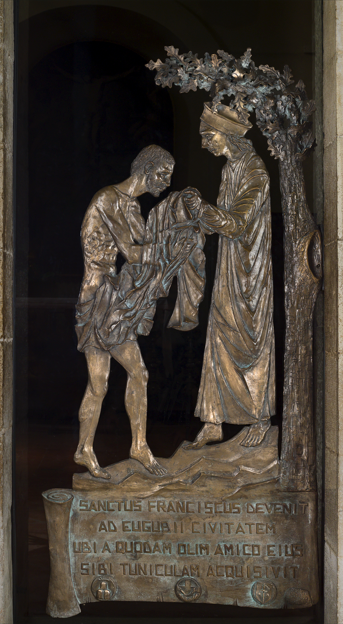
The Spadalonga family, of ancient Ghibelline and mercantile origin, played a crucial role in the life of Saint Francis of Assisi, particularly during the years of his conversion. The family name derived from Spada (“sword”). One of its members, Bernardo, was a tall man who came to be known as “Spada il Lungo” (“the Tall Sword”). This nickname eventually evolved into the hereditary surname Spadalonga. Bernardo maintained close commercial relations—and probably also a personal friendship—with Pietro Bernardone, the father of Francis. Pietro often entrusted his son with managing his business affairs, and for this reason the young Francis travelled to Gubbio on several occasions. The prosperous Spadalonga family not only offered Francis hospitality but also friendship through their sons, with whom he spent much of his time in Gubbio. One of them even became his companion-in-arms and fellow prisoner during the war between Assisi and Perugia in 1202 (the Battle of Collestrada). This violent conflict, fought between Guelph Perugia and Ghibelline Assisi, ended in a Perugian victory, resulting in territorial losses for Assisi. From 1202 onwards, Collestrada came permanently under Perugian control, with peace formally established on 2 September 1209. This small hill, overlooking the plain of the River Tiber and the territory of Assisi, was also home to an ancient Hospital of Saint Lazarus, which served pilgrims and lepers and was probably founded around 1099. Even today, monuments and place names recall the battle and the capture of Giovanni di Pietro Bernardone (as Saint Francis was then known). Among them is the Casina Piceller (photos 1 and 2), erected in memory of the battle and the spot where the saint was wounded and taken prisoner. His year-long imprisonment, combined with a serious illness and the ransom paid by his father, marked the beginning of Francis’s spiritual awakening and his gradual break from worldly life, leading to the foundation of the Franciscan Order. After his release, around the winter of 1206–1207, Francis decided to leave Assisi. He went to Gubbio, where the Spadalonga family welcomed him warmly, offering food, comfort, and—most importantly—a rough grey tunic, which became the first penitential habit of the Franciscan Order. To commemorate this episode—the making of Francis’s first habit by the Spadalonga family—the Civic Museum, Palazzo dei Consoli, preserves a fresco by the painter Federico Brunori, which also depicts the taming of the wolf by the saint (photo 3). At the beginning of the thirteenth century, the Spada family lived in Gubbio near the Platea Mercatali, close to the Porta Marmorea, where the Church of Saint Francis now stands (photo 4). Archaeological excavations have uncovered remains of their residence beneath the present church, and in the sacristy floor one can still see traces of their warehouse or workshop (photo 5). Shortly after the canonisation of Saint Francis, which took place in Assisi on 16 July 1228 by Pope Gregory IX in the Church of San Giorgio, the Spadalonga family donated their house, warehouse, and adjoining gardens to the Friars Minor for the construction of a new church and convent. This generous gift was warmly welcomed by the people of Gubbio, who regarded themselves as blessed and favoured by the saint—not only during his lifetime but even after his death, through the miraculous healings attributed to him. For this reason, the citizens of Gubbio eagerly collaborated in the building of the new complex, contributing substantial donations and labour with heartfelt devotion.