Iconographies of Saint Francis and the Wolf: from woodcut to graphic novel
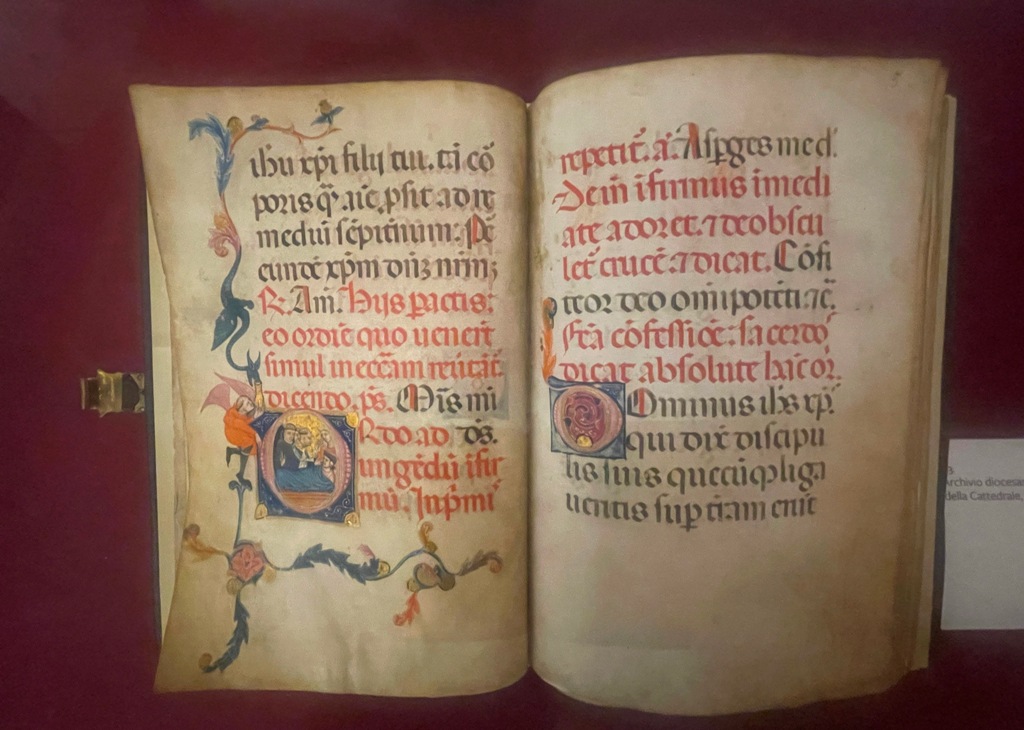
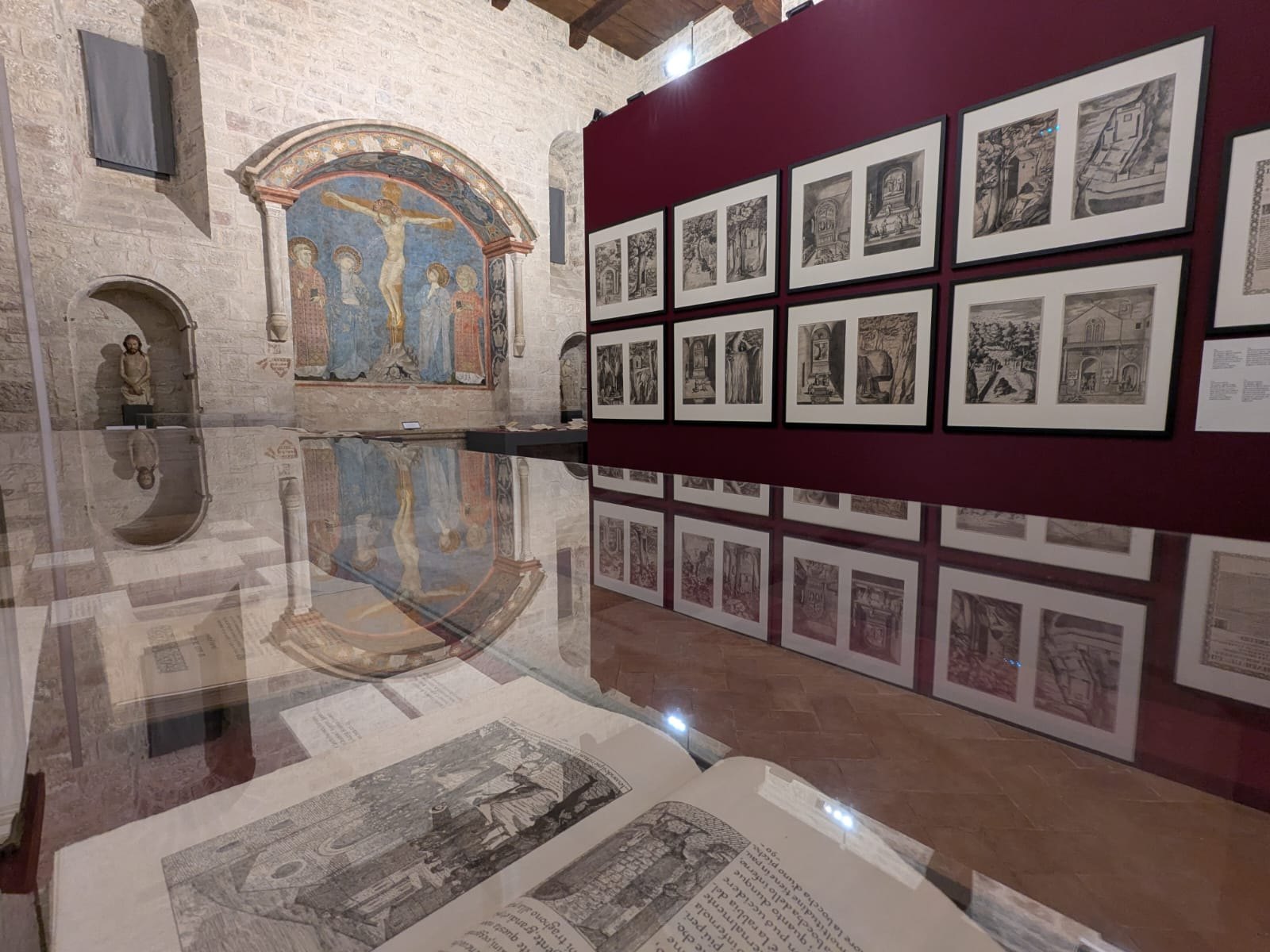
In 2025, Gubbio hosts the major exhibition dedicated to the iconography of Saint Francis and the Wolf, “Francis and Brother Wolf: Art Tells the Legend of the Encounter.” The section held at the Diocesan Museum traces the dividing line between iconographic representation and its diffusion in the field of graphic arts—from book illustrations to postcards, including printmaking.
The Little Flowers of Saint Francis, suspended between history and legend and enriched by deeply human and poetic episodes, are undoubtedly the most widespread and beloved work of Franciscan literature. Among its 53 chapters, chapter XXI, Of the most holy miracle that Saint Francis wrought when he converted the fiercest wolf of Gubbio, is perhaps the most memorable.
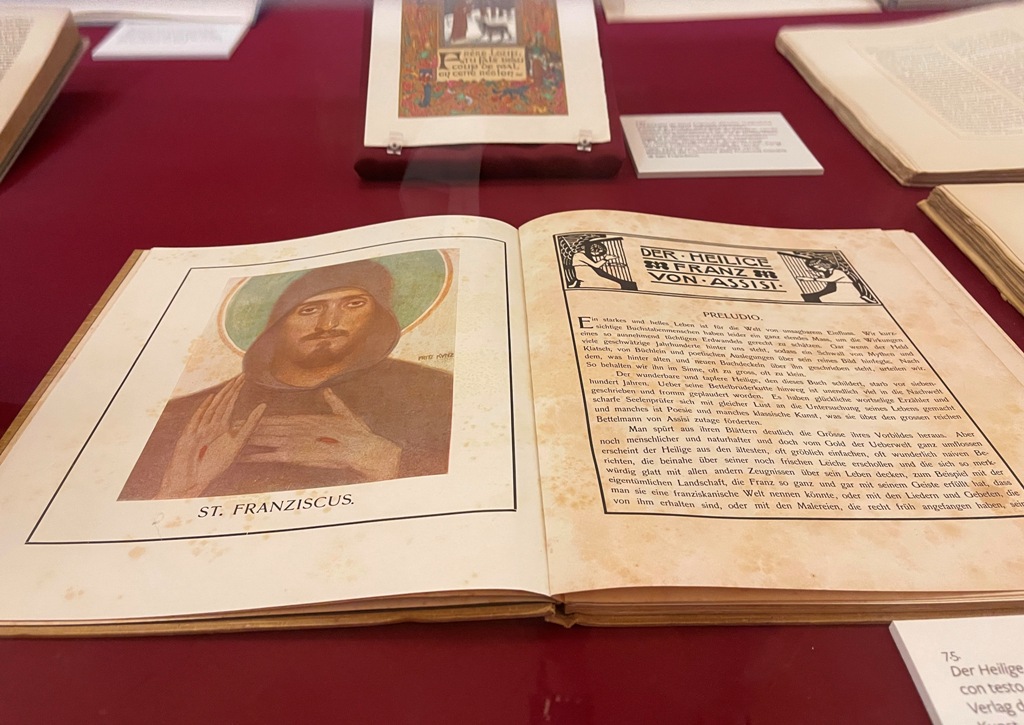
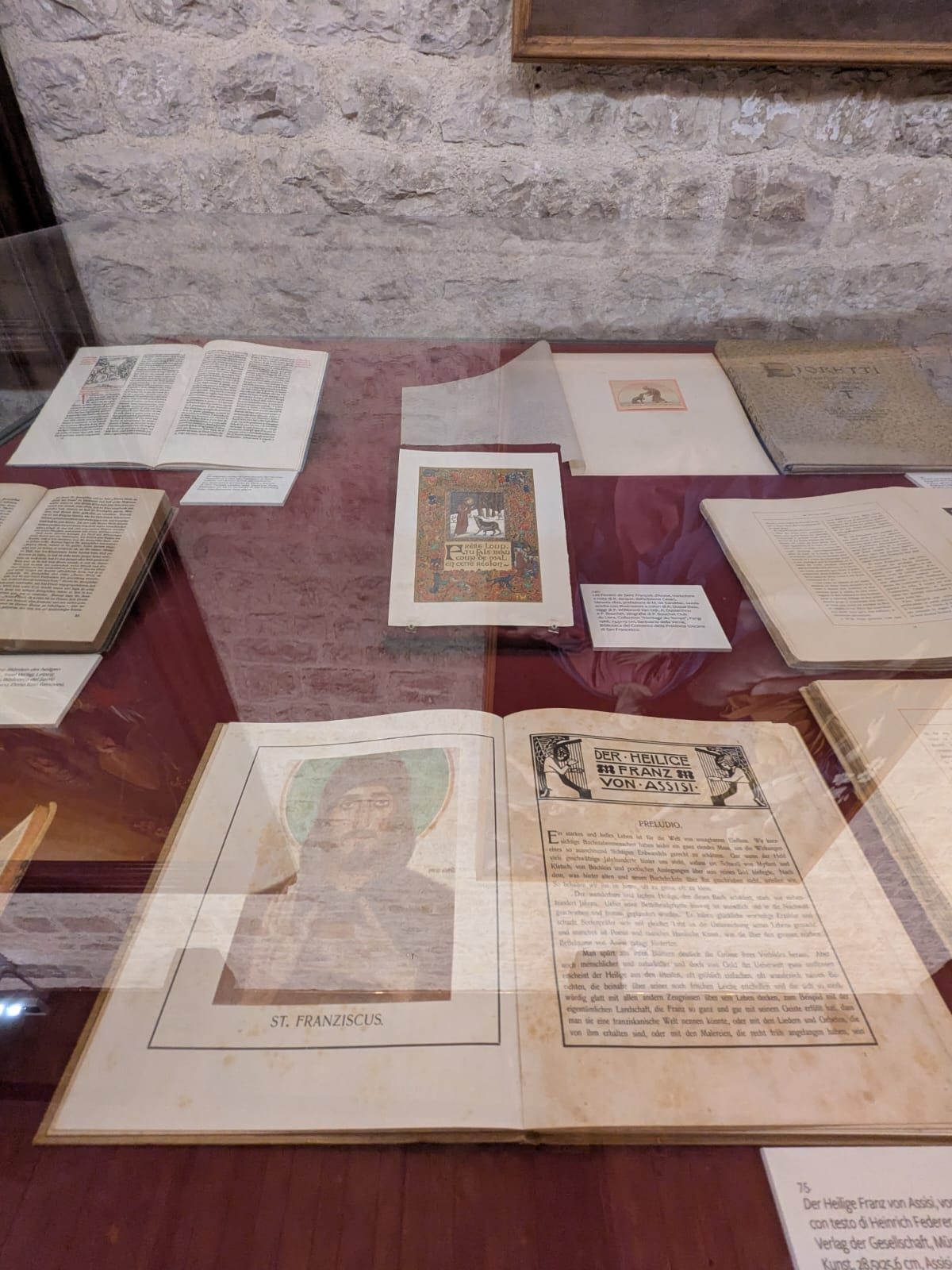
At the beginning of the 20th century, thanks to the universal popularity of Francis—due to studies on his life and the human and spiritual significance of his work—the Fioretti were published in numerous critical editions and translated into many languages. Illustrated editions of extraordinary artistic quality soon appeared, especially as the 1926 Franciscan centenary approached. Among these, worthy of mention are the editions by R. Gere, F. Kunz, M. Denis, E. Burnard, P. Subercaseaux, D. Cambellotti, J. Segrelles, E. Bernard, and P. Molnar, notable for their iconographic inventions and for stylistic approaches ranging from Symbolist and Art Nouveau accents to Expressionist interpretations and neo-medieval revivals.
After World War II—while high-level editions continued to appear, such as those accompanied by the plates of E. Legrand and A. Dussarthou—a new publishing phenomenon emerged: the spread of the figure of Francis through comic books, a format accessible to all due to its low cost and ease of reading, in which images and words integrate and strengthen each other in the unfolding of the narrative. This popular genre reached a peak of artistic quality around 1982, coinciding with the 8th centenary of the birth of Francis, when graphic-novel editions of the Fioretti illustrated by D. Battaglia and F. Pinter were published.
The figure of Francis and the stories of the Fioretti continue even today to inspire artists and fascinate readers. Evidence of this is the ongoing production of illustrated versions, especially intended for younger audiences, as well as recent exhibitions of comic art boards by well-known authors, such as San Francesco: storia di una esperienza di Dio held at the Convent of Villa Verucchio near Rimini in 2017, and Nostro fratello d’Assisi. Storia di una esperienza di Dio. San Francesco a fumetti, held in Milan, Pavia, and Greccio in 2023.
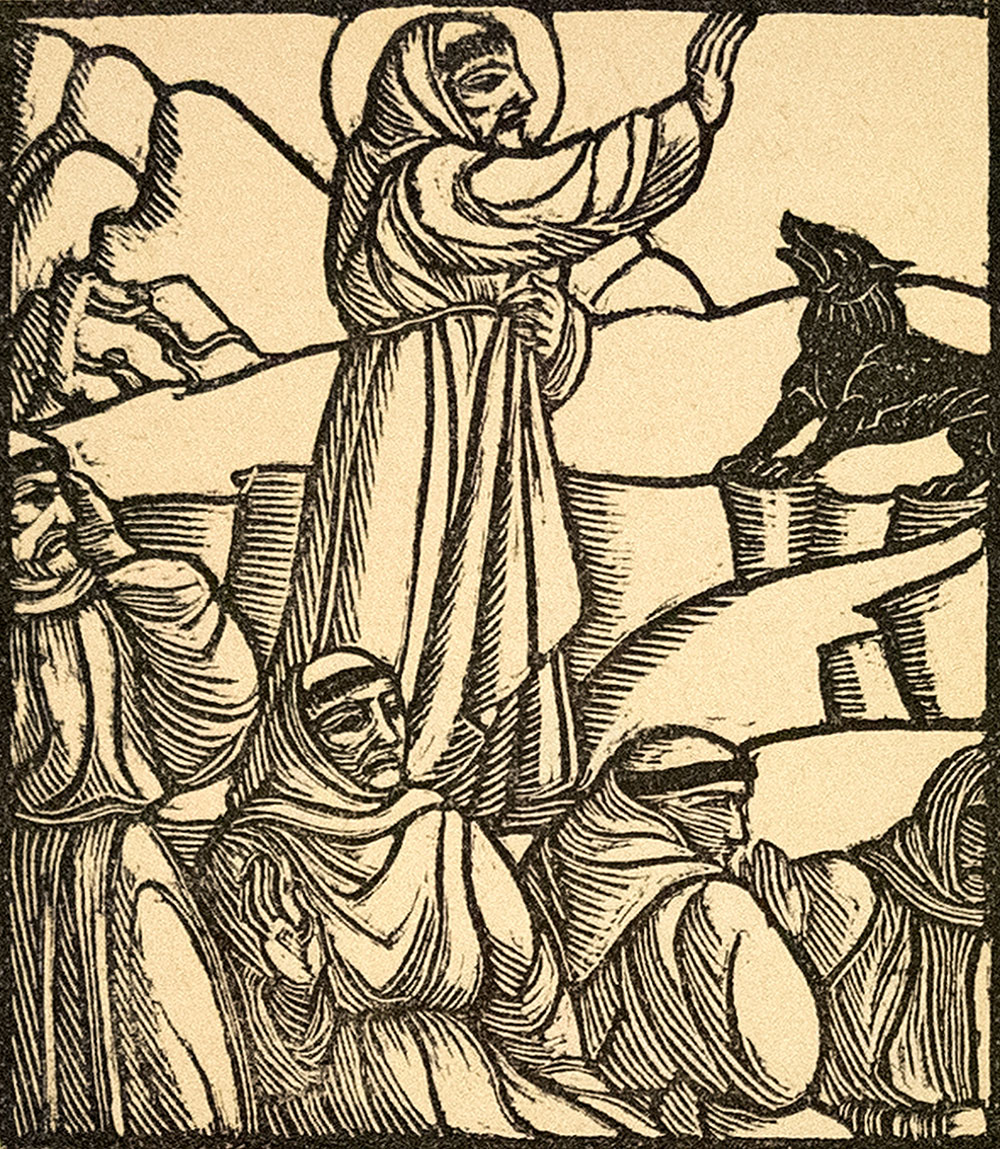
Printed works entered the artistic scene in Germany and Italy starting in the 15th century. The earliest technique was woodcut, consisting of carving an image into a wooden block and inking the raised surfaces.
The pursuit of more complex chiaroscuro effects led to intaglio techniques, using metal plates engraved directly with pointed tools (burin or drypoint) or indirectly by drawing lines on a wax-covered plate and then etching them with acid (etching and related methods). Printmaking served a dual function: to produce multiple copies of the artist’s invention, and to disseminate, through graphic translation, works already created.
Thanks also to the contributions of extraordinary masters—Dürer, Raphael, Titian, Rembrandt, Goya, Picasso, to name a few—who used printmaking directly or collaborated with skilled engravers, the medium achieved extraordinary results and earned a prominent place among artistic expressions.
Graphic art devoted to spreading the cult of Saint Francis offers a perfect example of the blend of art, popularity, and dissemination that defines the essence of printmaking. Over more than five centuries, recurring themes—such as the stigmata and ecstasy—form a continuous thread of Franciscan aesthetics. These motifs align with the direction given by Bonaventure of Bagnoregio in his Legenda Maior (1266), which aimed to present the Saint of Assisi as the perfect imitation of Christ.
The exhibition includes works by great masters such as Albrecht Dürer, Lucas van Leyden, and Federico Barocci, alongside those of skilled engravers like Nicolò Boldrini and Pietro Faccini, and leading figures such as Cornelis Cort (Titian’s engraver) and Agostino Carracci, brother of Annibale and cousin of Ludovico Carracci, who brought the Carracci artistic experience into graphic art.
Flemish art is represented by Raphael Sadeler I, a member of an important family of artists and a virtuoso of the burin. Central to the exhibition is the nearly complete series of engraved plates depicting the sites of La Verna, created in 1612 by Raffaello Schiaminossi, a follower of Barocci, together with the skilled engraver Domenico Falcini. Also of great emotional impact and strong communicative power are the works of Giovanni Francesco Grimaldi and the lesser-known Giovanni Domenico Picchianti of Florence and Alessandro Mochetti of Rome, all engravers of high technical ability.
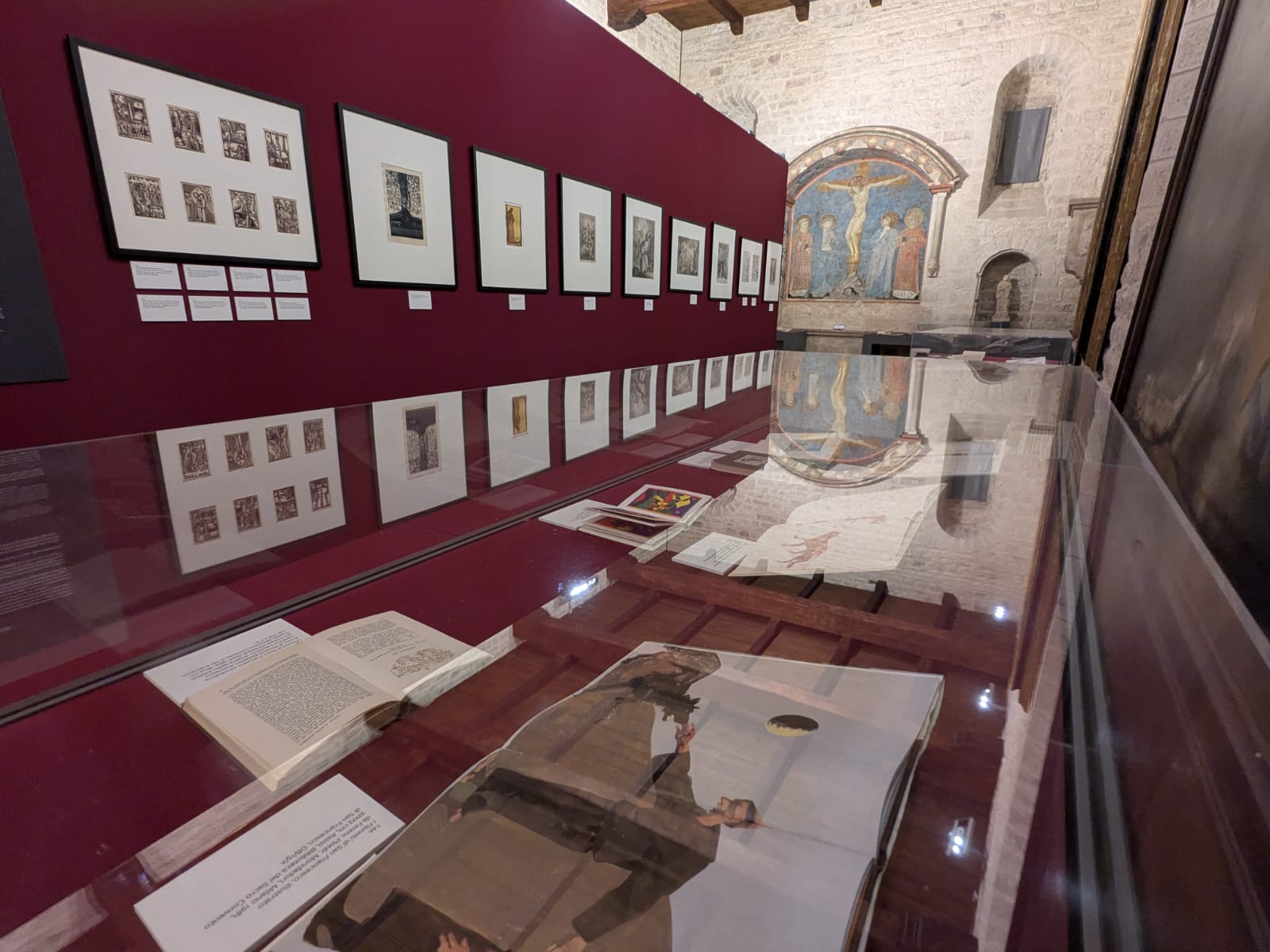
The exhibition concludes with works by Adolfo De Carolis, Bruno da Osimo, and Pietro Parigi, representatives of a movement that made woodcut an artistic medium aligned with the avant-gardes and artistic currents of the early 20th century.
⸻
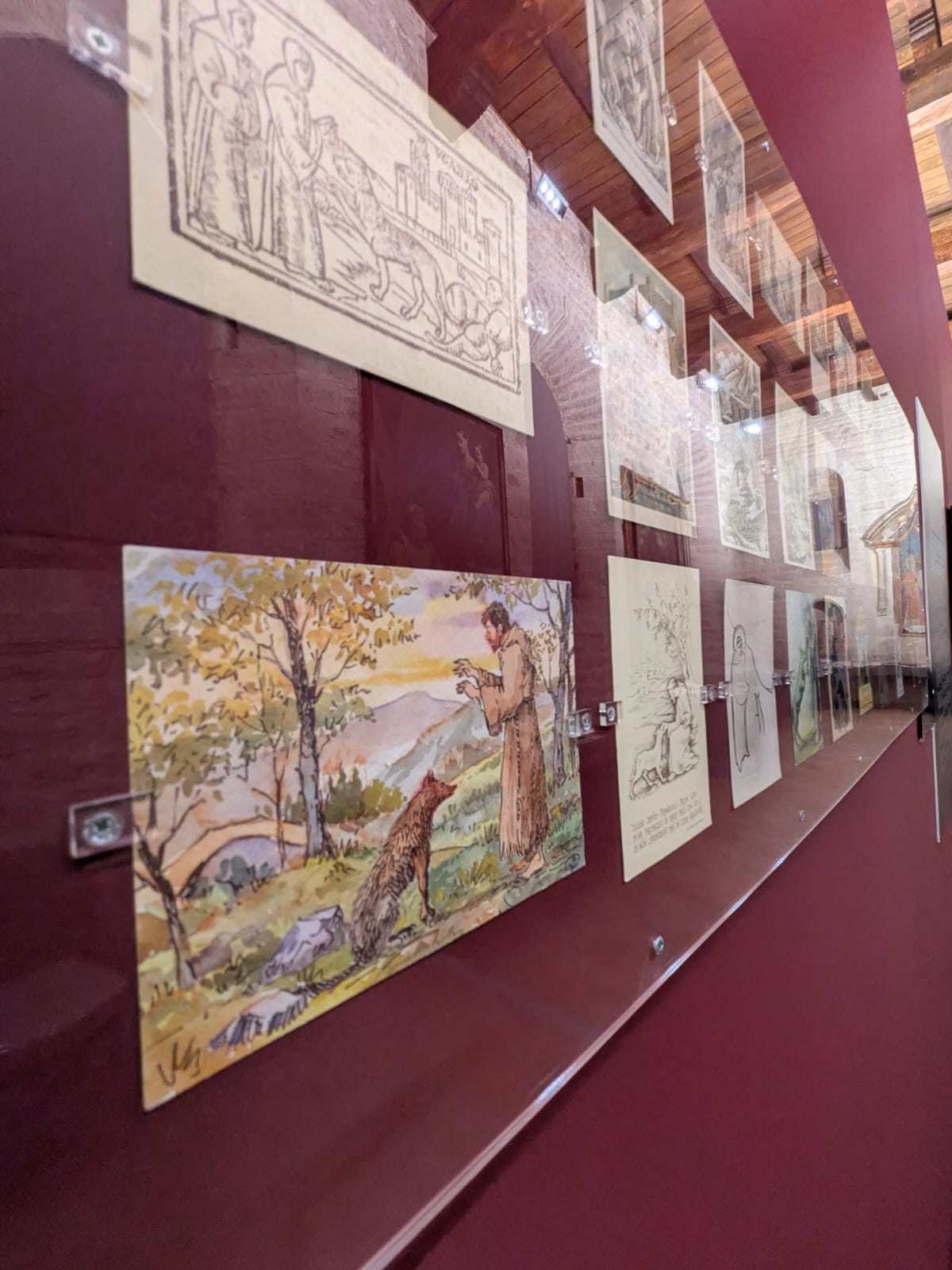
The iconography of Saint Francis and the Wolf, related to the episode narrated in chapter XXI of the Fioretti, has spread everywhere also through illustrated postcards. Publishers from Gubbio, Umbria, Italy, and abroad used the small correspondence card to reproduce images of the famous peace pact, creating postcards of every type—small and large, old and modern—in which true works of art sometimes appear, portraying the symbolic meeting between the Poor Man of Assisi and the ravenous wolf of Gubbio.
The selection of postcards on display documents the variety of drawings, engravings, and prints depicting this subject, both in black and white and in color, along with reproductions of paintings on canvas, panel, wall, and fine book illustrations, generally from the 20th century. Also present are photographic reproductions of artworks of various kinds—sculptures, freestanding statues, reliefs, wood carvings, ceramics, and more.
There are also several characteristic “Gruss aus” (“Greetings from”) postcards, mostly referring to Franciscan locations such as Assisi and Gubbio. Regarding Gubbio, illustrated series featuring major local monuments linked to the taming of the wolf—or otherwise bearing this specific iconography—are displayed, such as the so-called “pilgrim postcards”, published by the local PiccolAccoglienza.
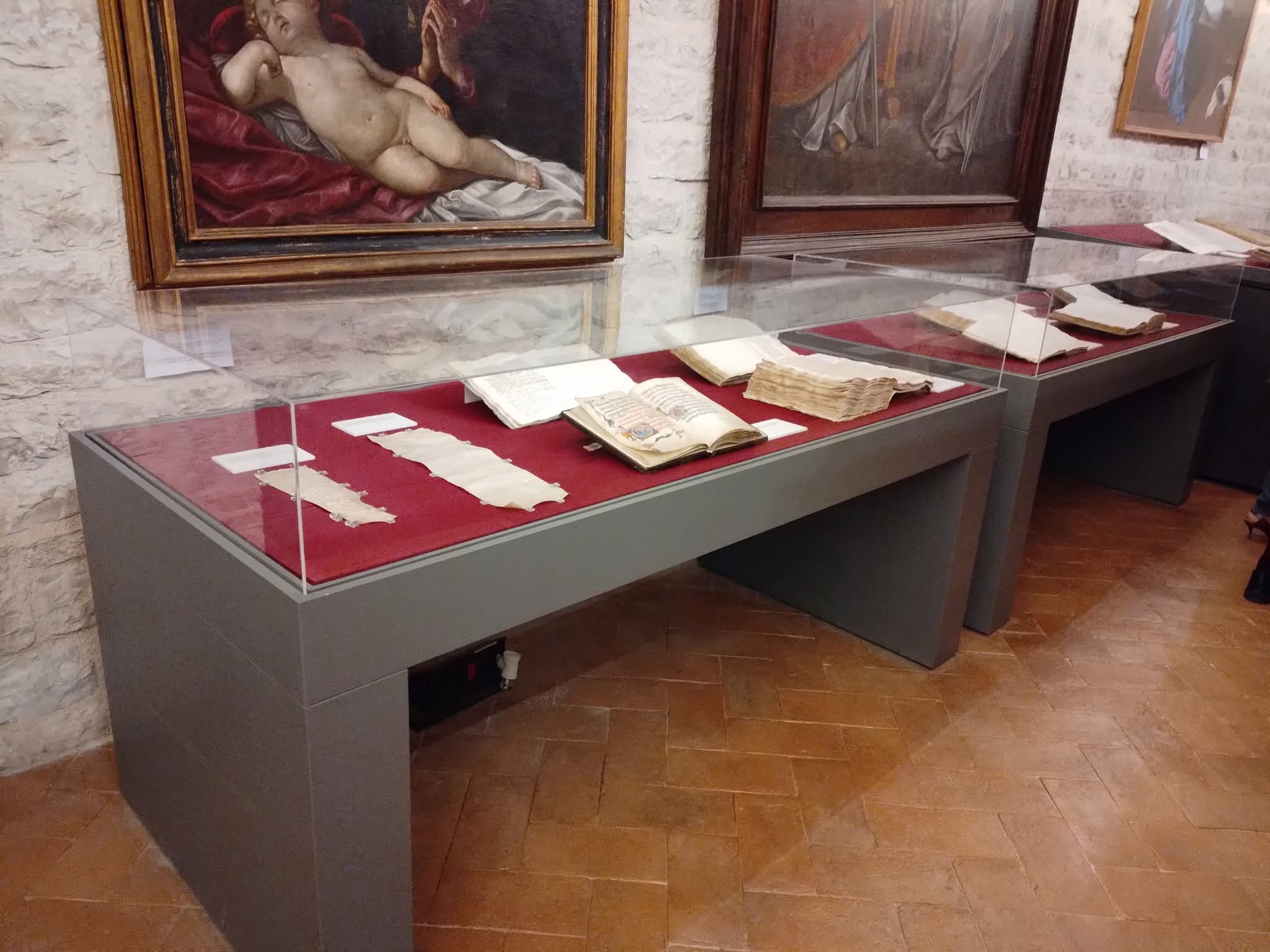
A special section is devoted to advertising postcards featuring Saint Francis and the Wolf, documented since the first half of the 20th century. The exhibition also includes significant examples of postal cancellations related to the famous episode from the Fioretti, as well as some other small paper images, such as devotional prints (the so-called santini) and illustrated cards included in the packaging of certain products (the so-called figurine).
Sources. From the catalogue “Francis and Brother Wolf: Art Tells the Legend of the Encounter”, Silvana Editoriale 2025, from the essays by Ezio Genovesi, Ettore Sannipoli, and Maurizio Bellucci.